
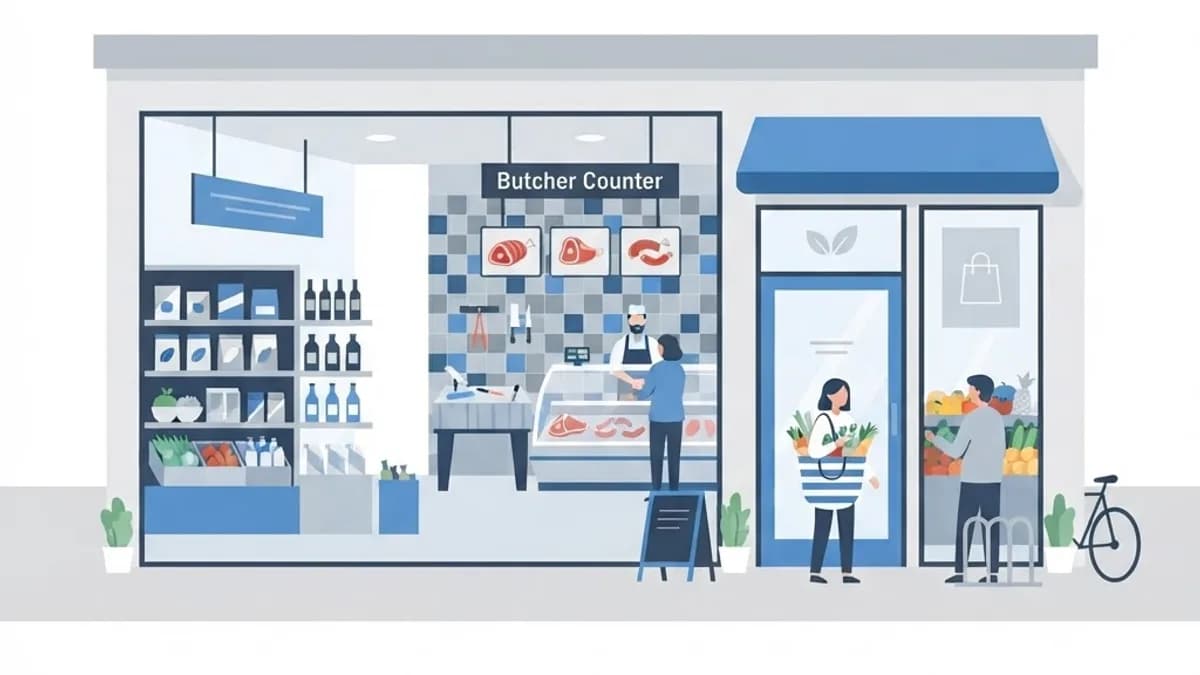
In an era dominated by national supermarket chains, an independent grocer like Peterson's Market in Riverton, Utah stands out for a simple reason: it competes on service and fresh departments rather than on being the cheapest shelf in town.
Family-operated Utah markets have carved out a durable niche around full-service meat counters, in-house prepared foods, and staff who recognize regular customers. That is a different business model than a warehouse club, and it attracts a different shopper.
This guide covers what to expect from an independent market like this, how to shop it well, and what lessons other local retailers can take from how these stores stay profitable.
What Is Peterson's Market?
Peterson's Market is an independent Utah grocery operation known for full-service departments, particularly fresh meat, deli, and prepared foods, serving communities in the Salt Lake Valley including Riverton.
Independent grocers survive by being what large chains cannot easily be. Their advantage is service depth, local product selection, and the ability to change quickly based on what customers ask for, not scale-driven pricing.
Practically, that means a butcher who will cut to order, a deli making salads and sides in-house, and a product mix that reflects local tastes rather than a national planogram set months in advance.
Who Shops at Independent Markets?
The customer base skews toward shoppers who value quality and service over lowest price.
- Home cooks who want specific cuts of meat prepared to order.
- Families hosting gatherings ordering party trays, roasts, and prepared sides.
- Neighborhood regulars who prefer a quick, familiar trip over a big-box run.
- Local businesses and caterers needing reliable small-volume fresh orders.
- Shoppers seeking Utah-made products that chains rarely stock.
Key Departments and Strengths
Full-Service Meat Counter
This is typically the anchor department. Custom cuts, house-made sausage, marinated options, and staff advice on cooking method create loyalty that packaged meat cases cannot match.
Deli and Prepared Foods
In-house salads, sides, sandwiches, and party trays serve both weeknight convenience and event catering. These items carry strong margins and drive repeat visits.
Local and Specialty Products
Independent buyers can stock regional sauces, baked goods, and specialty items quickly. That flexibility is a genuine differentiator against chain distribution systems.
Personal Service and Community Ties
Staff familiarity, local sponsorships, and community involvement build the kind of loyalty that discount pricing alone rarely produces. Reinforcing that identity consistently benefits from thoughtful logo design and clear branding.
How to Shop an Independent Grocer Well
A few adjustments make independent markets more useful than a default chain trip.
- Talk to the butcher about what came in fresh that day and what is priced well.
- Place orders ahead for roasts, party trays, and holiday items, which sell out early.
- Check the weekly ad, since independents often run aggressive loss leaders on meat.
- Combine trips: buy fresh here and bulk pantry items elsewhere if budget matters.
- Ask about special orders. Independents can often source items chains will not.
- Shop weekday mornings for the freshest counter selection and shortest waits.
Benefits of Supporting a Local Market
The value goes beyond the groceries in the bag.
- Better meat quality and cutting service than most self-service cases.
- Prepared foods made on-site rather than shipped in frozen.
- Special orders and genuine flexibility for events and dietary needs.
- Money circulating in the local Riverton economy.
- Shorter trips and faster checkout than large-format stores.
Potential Challenges
Independent grocers face structural disadvantages worth acknowledging.
- Packaged goods pricing usually cannot match national chain buying power.
- Smaller footprint means narrower selection in center-store categories.
- Limited or no delivery and pickup infrastructure compared with major chains.
- Thin technology budgets, which often leaves the website and online ordering behind competitors.
Best Practices and Tips
For shoppers and for grocers trying to stay competitive.
- Shoppers should build a habit around the strong departments rather than trying to do a full stock-up.
- Grocers should publish weekly ads online in a mobile-friendly format, not just as a printed flyer.
- Offer simple online ordering for catering trays and holiday meats, where margin is highest. A lightweight ordering system built with practical web applications pays for itself in one holiday season.
- Use email and SMS to promote weekly meat specials, which drives immediate traffic.
Real-World Example
Consider an independent Utah grocer whose butcher counter was widely praised locally but whose online presence consisted of a single outdated page. Holiday catering orders came in entirely by phone, which meant busy signals, transcription errors, and lost sales during peak weeks.
The store added a simple online order form for holiday roasts and party trays, posted the weekly ad as a fast mobile page, and sent a Tuesday email with meat specials. Holiday catering revenue rose sharply, phone chaos dropped, and staff spent less time taking orders and more time filling them. The store did not change what it sold, only how customers could reach it.
Why It Matters
A market like Peterson's Market in Riverton, Utah shows that independent grocery is still viable when the store leans into what chains handle poorly: service, custom cutting, prepared food quality, and local responsiveness.
The remaining gap is usually digital. Customers now expect to check an ad, place a catering order, or confirm hours from their phone. Independents that close that gap keep their service advantage and become genuinely competitive again.
Frequently Asked Questions
Are independent grocers more expensive than chain supermarkets?
On packaged goods, often yes. On fresh meat and prepared foods, independents are frequently competitive or better, and weekly specials can beat chain pricing outright.
Can I order custom cuts of meat at a local market?
Yes, that is a core advantage of a full-service counter. Calling ahead for large roasts or specialty cuts is recommended, especially around holidays.
Do independent Utah grocers offer catering or party trays?
Many do, built around their deli and meat departments. Ordering several days in advance is standard, and holiday windows fill quickly.
How can a small grocery store compete with national chains?
By focusing on service depth, fresh department quality, local products, and community relationships, while closing the digital gap with a fast website, online ads, and simple online ordering.
Conclusion
Independent markets earn loyalty through butcher counters, in-house prepared food, and staff who actually know their customers. Shop them for what they do best and order ahead for anything tied to a holiday.
If you run a local grocery or food business and your online presence is holding you back, consider website maintenance and support.
Enjoyed this article? Share it with others!