Every business that has ever spent money on ads eventually asks the same question: what did that actually produce? A performance marketing agency exists to answer it, because its entire model is built on measurable outcomes rather than impressions or awareness.
The distinction matters. Traditional agencies often optimize for reach and brand sentiment. Performance agencies optimize for tracked actions: purchases, qualified leads, signups, app installs, and the cost per each.
This guide defines what a performance marketing agency does, which services it delivers, how pricing typically works, and how to evaluate one without getting lost in dashboards and vanity metrics.
What Is a Performance Marketing Agency?
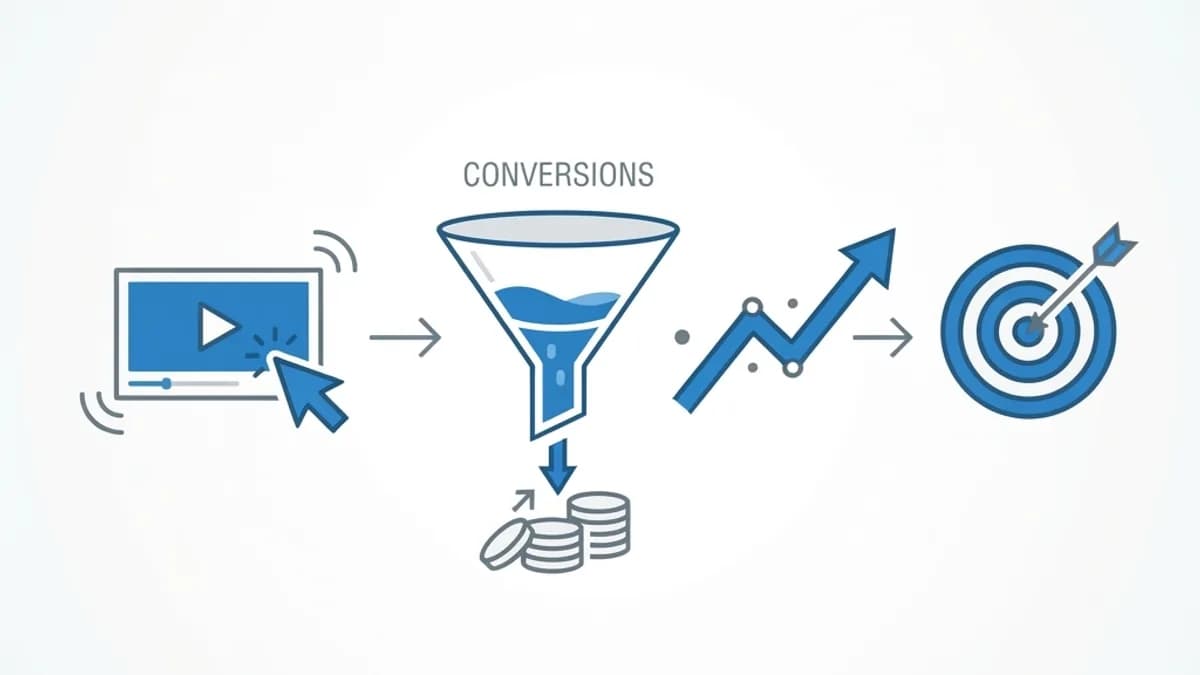
A performance marketing agency is a specialist partner that plans, executes, and optimizes paid acquisition campaigns where results are measured against defined conversion goals and cost targets.
Instead of reporting reach, it reports economics. The core deliverable is a repeatable relationship between money spent and revenue or qualified pipeline generated, tracked at the channel, campaign, and creative level.
That means the work extends beyond running ads. Landing page conversion, analytics setup, audience segmentation, and creative testing all fall inside scope, because any one of them can break the economics regardless of how well the media is bought.
Who Needs a Performance Marketing Agency?
Not every business is ready for one, and knowing the difference saves money.
- Ecommerce brands with clear product margins and enough volume to optimize against.
- SaaS and subscription companies tracking trials, demos, and lifetime value.
- Lead generation businesses such as home services, legal, insurance, and healthcare.
- Mobile apps measuring install cost against in-app revenue.
- Established local businesses ready to scale beyond referrals with tracked spend.
Core Services They Provide
Paid Media Management
This covers search, social, shopping, display, video, and retail media. The work includes bidding strategy, audience structure, budget pacing, and constant reallocation toward whatever is producing profitable conversions.
Creative Production and Testing
On modern ad platforms, creative is the main performance lever. Strong agencies produce and test high volumes of ad variations systematically. Consistent visual output usually depends on dedicated graphic design and video capability.
Conversion Rate Optimization
Sending traffic to a weak page wastes budget. CRO work includes landing page builds, form simplification, page speed improvements, and structured A/B testing.
Tracking, Analytics, and Attribution
With privacy changes and cookie deprecation, measurement has become genuinely technical. Server-side tracking, offline conversion imports, and incrementality testing separate credible agencies from those reporting inflated platform numbers.
How Engagement Typically Works
A well-run performance engagement follows a recognizable path.
- Audit existing accounts, tracking accuracy, and historical performance data.
- Define target metrics such as CPA, ROAS, or cost per qualified lead, tied to actual margin.
- Fix measurement before scaling spend, since bad data guarantees bad decisions.
- Build or improve landing pages so traffic has somewhere efficient to convert.
- Launch structured tests across channels, audiences, and creative angles.
- Scale what clears the target economics and cut what does not, weekly.
- Report on contribution and profitability, not just platform-reported conversions.
Benefits of Working With a Performance Agency
When the fit is right, the advantages are substantial.
- Accountability tied to metrics that connect directly to revenue.
- Faster learning through disciplined, high-volume testing.
- Access to specialists across media buying, analytics, and creative without hiring a full team.
- Better budget allocation, since underperforming channels get cut quickly.
- Improved infrastructure that keeps compounding, including faster landing pages built with modern React JS web development.
Potential Challenges
Performance marketing has real limitations that get glossed over in sales pitches.
- Attribution is imperfect, and platform-reported numbers usually overstate contribution.
- Rising ad costs compress margins, especially in competitive categories.
- Short-term optimization can starve brand building, which eventually raises acquisition costs.
- Low-volume businesses lack the conversion data needed for meaningful optimization.
Best Practices and Tips
These practices separate productive partnerships from expensive disappointments.
- Fix tracking and landing pages before increasing budget. Spend amplifies whatever already exists.
- Judge results against contribution margin, not platform ROAS alone.
- Require creative volume in the scope of work, since creative fatigue is the most common cause of declining performance.
- Ask how the agency handles automation and predictive bidding. Practical artificial intelligence services now play a real role in campaign optimization.
Real-World Example
Picture an ecommerce brand spending $40,000 monthly on paid social with a reported 3.1x return. Revenue looked acceptable, yet the business was barely breaking even, which is a common and confusing situation.
An audit found duplicate conversion events inflating results and a mobile checkout that lost roughly a third of users at the shipping step. After deduplicating tracking and rebuilding checkout, reported ROAS actually dropped to 2.4x because the numbers were finally honest, while real profit rose meaningfully. The agency then scaled spend confidently, knowing the reported figures reflected reality.
Why It Matters
Understanding the performance marketing agency model protects you from buying activity instead of outcomes. The right partner treats measurement, landing pages, and creative as one connected system and reports on profit rather than dashboards.
As acquisition costs rise and privacy rules tighten, the businesses that win are those with clean data and efficient conversion paths. Those are exactly the assets a good performance agency builds, and they keep paying off long after any single campaign ends.
Frequently Asked Questions
How do performance marketing agencies charge?
Common models include a flat monthly retainer, a percentage of ad spend, a hybrid of retainer plus performance bonus, and occasionally pure pay-per-result. Retainers and hybrids are most typical for serious engagements.
What is the difference between a performance and a digital marketing agency?
Digital marketing agencies often cover the full mix including brand, content, and organic channels. Performance agencies concentrate on tracked, paid acquisition measured against cost-per-outcome targets.
How long before a performance campaign shows results?
Expect initial signals within two to four weeks and reliable optimization after roughly 60 to 90 days, once enough conversion data exists to make decisions confidently.
What minimum budget makes performance marketing worthwhile?
It depends on your cost per conversion, but a useful rule is enough monthly spend to generate at least 30 to 50 conversions. Below that, results are mostly statistical noise.
Conclusion
A performance marketing agency should be judged on tracked, profitable outcomes and the quality of the measurement behind them. Clean data, fast landing pages, and constant creative testing are the foundation of any real return.
If you want acquisition tied to measurable revenue rather than impressions, explore digital marketing.
Enjoyed this article? Share it with others!