
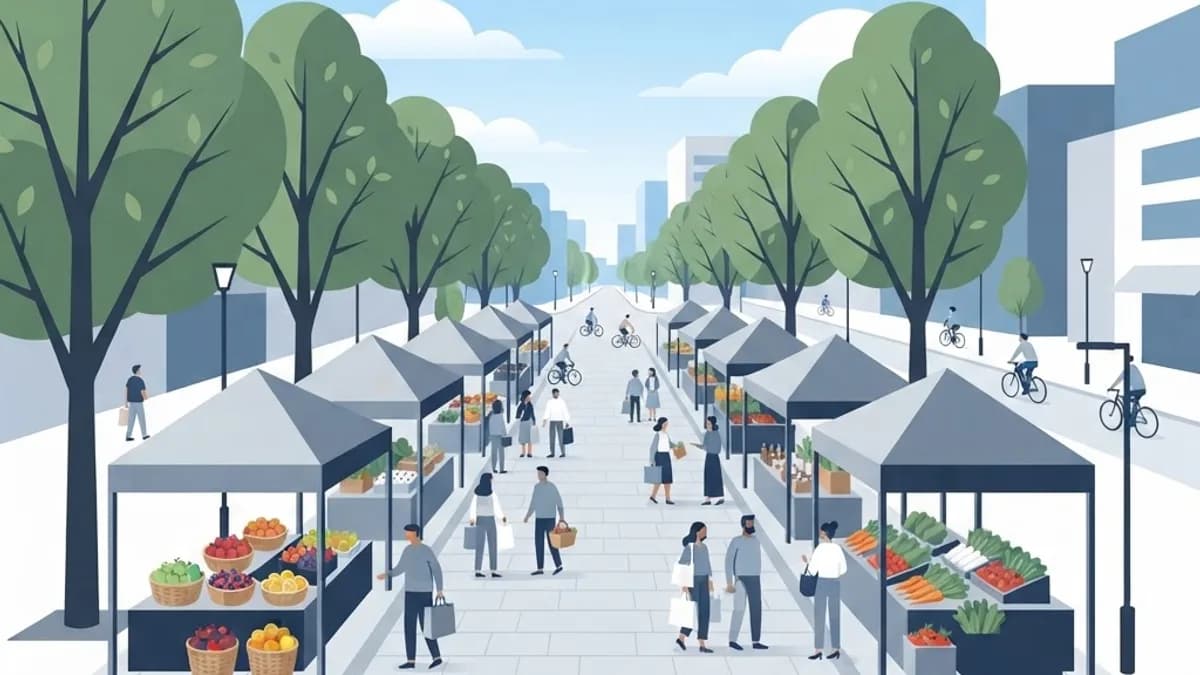
The Palo Alto Farmers Market on California Avenue is one of the Bay Area's most established weekly markets, closing a stretch of street each week so growers from across Northern California can sell directly to residents.
What makes it notable is the quality of the vendor list. California's year-round growing season means the market rarely feels thin, and proximity to major agricultural regions brings in farms that would be considered specialty producers almost anywhere else.
This guide covers what to expect, how the California seasons shape the stalls, practical logistics like parking, and how small food businesses in the region turn market day into a broader operation.
What Is the California Avenue Farmers Market?
It is a certified weekly farmers market held on California Avenue in Palo Alto, where the street is closed to traffic and lined with produce growers, bakers, prepared food vendors, and specialty food makers.
Certified status matters more than most shoppers realize. A certified California farmers market requires producers to sell what they actually grow, verified by county agricultural inspectors, which is a genuine guarantee rather than a marketing phrase.
The market operates year-round, a luxury of the California climate. Instead of closing for winter, the vendor mix simply rotates toward citrus, brassicas, and cool-season greens.
Who Shops and Sells Here?
The market serves a dense, food-literate community with high expectations.
- Local residents doing a weekly produce shop within walking distance.
- Central Valley and coastal farms selling direct at retail prices.
- Specialty food makers offering bread, olive oil, cheese, and preserves.
- Restaurant chefs sourcing distinctive ingredients in small quantities.
- Prepared food vendors serving breakfast and coffee to browsing crowds.
Key Highlights of the Market
Year-Round Seasonal Rotation
Winter brings citrus, avocados, greens, and root vegetables. Spring adds asparagus, strawberries, and English peas. Summer delivers stone fruit, tomatoes, melons, and corn. Fall shifts to persimmons, pomegranates, squash, and late grapes.
Specialty and Heirloom Varieties
Because vendors sell direct, they grow varieties chosen for flavor rather than shipping durability. Heirloom tomatoes, unusual stone fruit, and rare citrus appear here and almost nowhere in retail.
Artisan Bread, Cheese, and Oil
Northern California's artisan food scene shows up strongly, with bakers, cheesemakers, and olive oil producers who often sell nowhere else locally.
Street Closure Atmosphere
Closing the avenue creates a pedestrian environment that encourages lingering, which raises average spend and makes the market a genuine community gathering rather than a quick errand.
How to Plan Your Visit
A little preparation makes a dense urban market much easier.
- Arrive early for parking and the best selection of berries, bread, and eggs.
- Park in nearby structures or side streets rather than circling the closed block.
- Bring reusable bags and a small cart if you plan a full week of produce.
- Walk the entire market once, comparing similar produce across two or three farms.
- Ask growers what is peaking this week; the answer often beats your original list.
- Buy prepared food last so it is still warm when you leave.
Benefits of Shopping This Market
The advantages are concrete, not just atmospheric.
- Produce harvested within a day or two, with flavor that reflects it.
- Access to heirloom and specialty varieties absent from supermarkets.
- Year-round availability thanks to the California growing calendar.
- Direct conversations with growers about farming practices.
- Discovery of local food brands early, many of which later scale with strong social media posts and banner design.
Potential Challenges
Popularity and location create some predictable friction.
- Parking is genuinely difficult, particularly after the first hour.
- Prices reflect Bay Area costs and often exceed supermarket produce.
- Crowds peak midmorning, making browsing with strollers or carts slow.
- Single weekly market day limits flexibility for busy households.
Best Practices and Tips
Regulars tend to follow the same handful of rules.
- Shop the peak items rather than a fixed list. Flavor and price both favor what is in season.
- Buy for three to four days at a time, since market produce is riper than retail.
- Bring cash for speed even where cards are accepted, especially at busy stalls.
- Vendors should invest in a clear, fast website with market schedules and product availability. Modern Next JS web development handles that well and loads instantly on phones.
Real-World Example
Consider a small olive oil producer selling at Bay Area markets each weekend. Booth sales were strong, but growth stalled because the business could only reach as many people as could physically visit a stall.
The team built a simple online store with subscription options for regular buyers, then used market interactions to drive signups with a QR code on the tasting table. Within a year, subscriptions produced predictable monthly revenue that funded a second market location. The market stayed valuable as a tasting and acquisition channel, but it stopped being the ceiling on the business.
Why It Matters
The Palo Alto Farmers Market on California Avenue demonstrates what direct-to-consumer agriculture looks like when it works well. Growers capture retail margin, shoppers get food picked days earlier, and a public street becomes a weekly community space.
In a region where farmland is expensive and development pressure is constant, markets like this help keep small and mid-sized farms viable. That economic function is quieter than the atmosphere, but it is the reason the market genuinely matters.
Frequently Asked Questions
Is the California Avenue farmers market open all year?
Yes, markets in this part of California typically operate year-round because the growing season is continuous. The vendor mix and available produce rotate rather than pausing for winter.
Where should I park for the market?
Use nearby public parking structures and side streets, since California Avenue itself is closed during market hours. Arriving early makes this considerably easier.
Is farmers market produce more expensive in the Bay Area?
Often slightly, though peak-season items can be competitive. The tradeoff is freshness and access to varieties chosen for flavor rather than shelf life.
What does "certified farmers market" actually mean?
It means county agricultural officials verify that producers sell what they grow themselves. It is an enforceable standard, which is why certified markets differ from general vendor fairs.
Conclusion
Go early, park smart, shop what is peaking, and talk to the growers. That simple approach delivers noticeably better food than a supermarket run and supports regional farms directly.
If you are a food producer ready to sell beyond one market day, take a look at web development.
Enjoyed this article? Share it with others!