
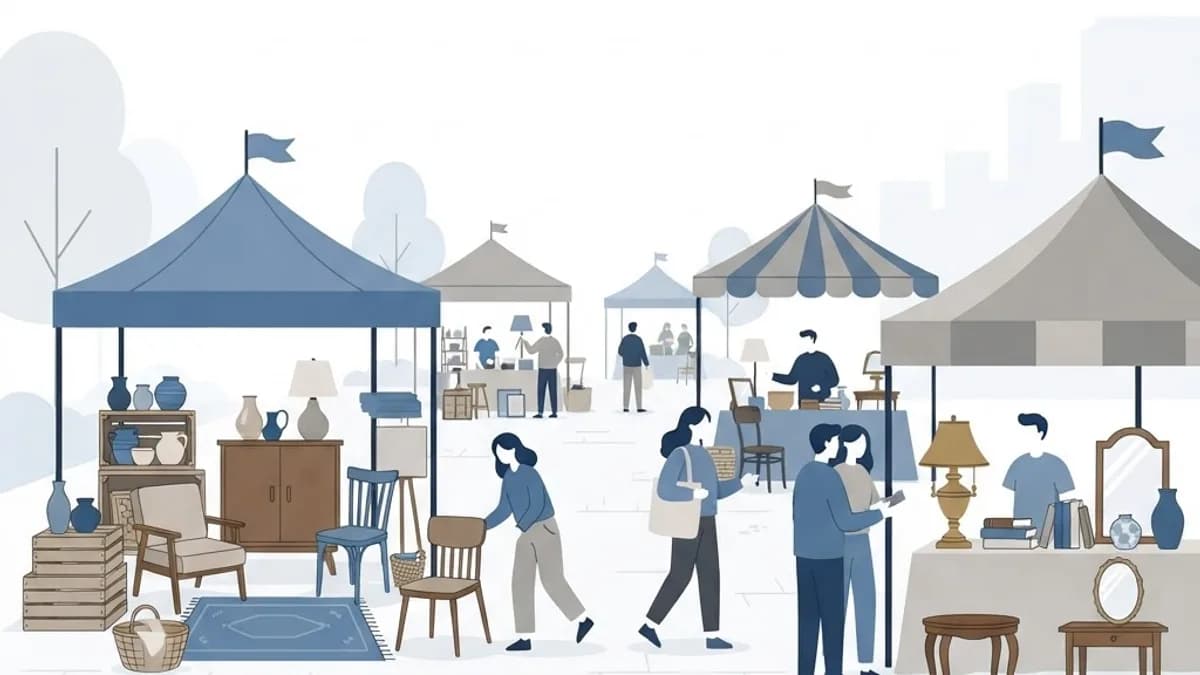
Few events transform a small town the way the Packwood Flea Market does. For a few weekends each year, this Washington community near Mount Rainier swells with thousands of vendors and tens of thousands of shoppers hunting antiques, tools, collectibles, and genuine oddities.
It is not a curated boutique market. It is sprawling, chaotic, and rewarding for people who enjoy the search. Serious collectors arrive with cash and a plan, while casual visitors treat it as a weekend adventure.
This guide covers how to shop it without getting overwhelmed, how vendors maximize a short selling window, and how flea market resellers turn seasonal sales into a sustainable business.
What Is the Packwood Flea Market?
The Packwood Flea Market is a large open-air flea market held in Packwood, Washington, traditionally over Memorial Day and Labor Day weekends. Vendors set up across town, in fields, yards, and lots, selling everything from vintage furniture to hand tools to handmade goods.
Its scale is the defining feature. This is a treasure-hunt market rather than a shopping destination with predictable inventory, which means the same booth may never carry the same items twice.
The atmosphere blends yard sale informality with serious antique dealing. Prices are negotiable almost everywhere, and the best deals tend to happen very early or very late in the weekend.
Who Attends?
The crowd is a mix of hobbyists and professionals, which affects how quickly good items disappear.
- Antique dealers and pickers sourcing inventory to resell at higher margins.
- Collectors hunting specific categories like glassware, signage, tools, or vinyl.
- DIY and restoration enthusiasts looking for furniture and salvage material.
- Casual weekend visitors combining the market with a Mount Rainier trip.
- Small makers using the event as a high-traffic sales opportunity.
Key Things to Know Before You Go
Scale and Layout
Vendors spread across multiple areas rather than one tidy venue. Walking the full market takes hours, so wear real shoes and plan your route instead of wandering randomly.
Cash Is Still King
Many sellers accept mobile payments now, but cash gets better prices and faster deals. Small bills matter because negotiating down from a round number is easier when you can pay exactly.
Negotiation Culture
Haggling is expected and not rude when done politely. Bundling multiple items from one seller is the most effective tactic, since sellers value moving volume over holding for full price.
Logistics and Transport
Large furniture and equipment require planning. Bringing a truck, straps, and a folding cart separates people who buy the good stuff from people who admire it and walk away.
How to Shop It Successfully
Approach a market this size with a system, not just enthusiasm.
- Arrive at first light on the opening day for the best selection, especially on antiques.
- Do a fast reconnaissance lap, photographing items you might return to.
- Research value on your phone before committing to anything expensive.
- Negotiate by bundling items rather than nickel-and-diming a single piece.
- Return on the final afternoon, when sellers discount heavily to avoid hauling inventory home.
- Inspect condition carefully. Nearly everything is sold as-is with no returns.
Benefits of Shopping and Selling at Large Flea Markets
The upside is real for both sides of the table.
- Access to unique, one-of-a-kind items unavailable in retail.
- Prices well below antique shop or online marketplace levels.
- Sustainability through reuse rather than new manufacturing.
- For sellers, enormous concentrated foot traffic in a short window.
- Direct customer feedback that helps resellers learn what actually moves. Many later expand through ecommerce solutions.
Potential Challenges
The scale that makes the market great also creates friction.
- Heavy traffic and limited parking, with significant walking required.
- Pacific Northwest weather can turn wet and cold with little warning.
- No returns or guarantees, so buyer inspection is essential.
- Accommodation in the area books out far in advance for market weekends.
Best Practices and Tips
Experienced attendees follow a few consistent rules.
- Bring layers, rain gear, water, and snacks. Food lines get long at midday.
- Carry a tape measure and your vehicle's cargo dimensions to avoid buying something that will not fit.
- Sellers should price everything visibly. Unpriced items lose impulse buyers who will not ask.
- Resellers should photograph inventory at the market for immediate online listing. Good product photos and a clean shop presentation benefit hugely from professional graphic design.
Real-World Example
Take a reseller who specializes in vintage hand tools. For years the routine was simple: buy heavily at Packwood, sell locally, and hope to clear inventory before the next event.
The shift came from treating the market as sourcing rather than selling. The reseller began photographing and cataloging every purchase on-site, listing items online within 48 hours, and tracking which categories sold fastest. Two seasons later, online sales exceeded in-person revenue, and buying decisions at the market became far more disciplined because the data showed exactly which tools moved and at what price.
Why It Matters
The Packwood Flea Market represents a form of commerce that predates and outlasts retail trends. Goods circulate, get repaired, and find new owners rather than heading to a landfill, and small sellers earn real income without storefront overhead.
It also demonstrates something practical for any small business: concentrated demand plus a clear plan beats constant low-level effort. The vendors who prepare inventory, pricing, and logistics in advance consistently outperform those who show up and improvise.
Frequently Asked Questions
When is the Packwood Flea Market held?
It has traditionally taken place over Memorial Day and Labor Day weekends in Packwood, Washington. Confirm current dates locally before traveling, since schedules can shift year to year.
Do I need cash to shop there?
Cash is strongly recommended. Many vendors take cards or mobile payments, but cash negotiates better prices and avoids issues with spotty cell service in the area.
What is the best time to find bargains?
Early on the first morning for the best selection, and the final afternoon for the deepest discounts, when sellers would rather cut prices than pack items back up.
Can I sell at the market as a first-time vendor?
Yes. Spaces are commonly rented from local property owners and organizers. Book early, price items clearly, and bring more change and packing material than you think you need.
Conclusion
Success at a market this size comes down to arriving early, negotiating in bundles, inspecting carefully, and planning how you will haul your finds home. Treat it as a hunt with a strategy and it consistently pays off.
If you resell finds and want a real online store instead of scattered listings, explore front-end web development.
Enjoyed this article? Share it with others!