
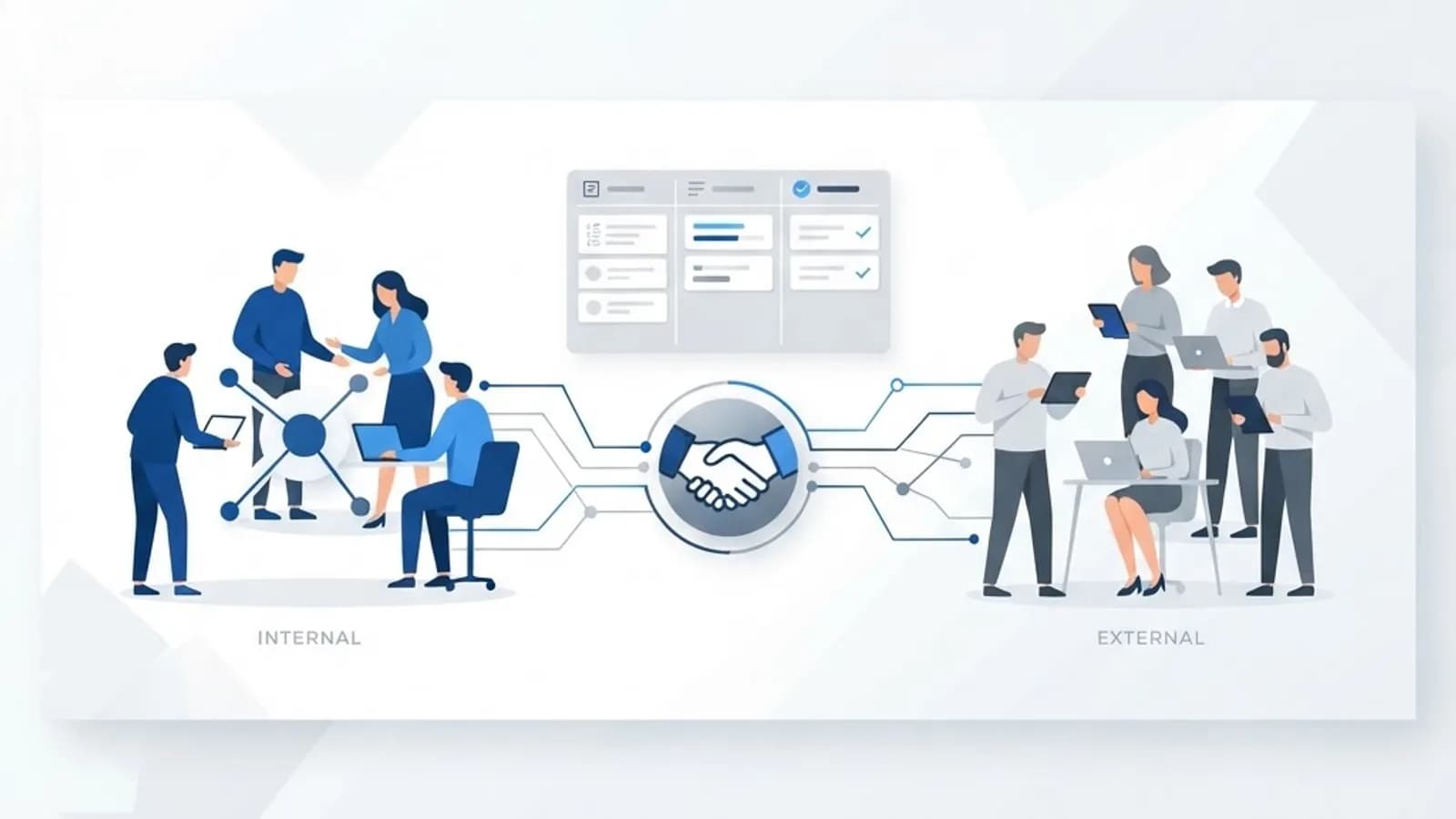
The decision to outsource digital marketing services usually arrives at a specific moment: your marketing needs have outgrown one person, but not yet justified a full department. Hiring feels premature, doing nothing feels worse.
Outsourcing solves that gap well when it is scoped clearly. It fails when companies hand over responsibility without handing over context, then wonder why the output feels generic.
This guide covers what to outsource, what to protect internally, how to price the arrangement fairly and how to run the first ninety days so the partnership actually produces results.
What Does It Mean to Outsource Digital Marketing?
Outsourcing digital marketing means contracting external specialists to plan or execute marketing activity that would otherwise require internal hires. It ranges from a single freelance specialist to a full external marketing department.
The critical variable is not who does the work but who owns the thinking. Strategy without internal ownership tends to drift, while execution without external expertise tends to stall. Most successful arrangements keep positioning and priorities internal while outsourcing craft and capacity.
Common outsourced functions include SEO, paid media management, content production, design, email automation and analytics implementation.
Who Should Consider It?
Outsourcing suits particular situations more than others, and recognising yours saves money.
- Small businesses needing several skills but able to fund only one salary
- Scale-ups whose marketing demands have outpaced their current team mid-year
- Companies with deep product expertise but no marketing execution capability
- Businesses testing a new channel before committing to a permanent hire
- Organisations with seasonal peaks that make permanent headcount inefficient
Key Features of a Good Outsourcing Arrangement
Clearly Defined Scope and Ownership
Every deliverable should have a named owner, a frequency and an acceptance standard. Vague retainers described as marketing support inevitably produce disputes by month four.
Structured Knowledge Transfer
External teams cannot invent your customer knowledge. A proper onboarding, including sales call recordings, objection lists and product training, is the single biggest predictor of output quality.
Shared Tooling and Visibility
Work should happen in systems you can see: a shared project board, shared analytics, shared document library. Opaque processes make it impossible to judge whether you are getting value.
A Realistic Ramp Period
Expect the first six to eight weeks to produce foundations rather than headline results, particularly if tracking or website design needs attention before campaigns can perform.
How to Get Started
A sensible process for moving from decision to working partnership.
- List every marketing task currently done, half done or not done at all in your business.
- Mark each as strategic, specialist or repetitive, then outsource the specialist and repetitive ones first.
- Write a brief describing outcomes, constraints and the internal time you can realistically commit.
- Select a partner based on relevant problem-solving evidence rather than service breadth.
- Run a structured onboarding covering customers, objections, competitors and past results.
- Agree a ninety-day plan with weekly check-ins and one clear primary metric.
- Review honestly at ninety days and adjust scope rather than quietly tolerating gaps.
Benefits
Done well, outsourcing changes your cost structure and your speed simultaneously.
- Access to multiple specialisms for less than the cost of one experienced hire
- Immediate capability rather than a three-month recruitment and onboarding cycle
- Flexibility to scale activity up or down as budget and demand change
- Exposure to practices and tooling developed across many other businesses
- Reduced key-person risk compared with relying on a single internal marketer
Potential Challenges
Every outsourcing arrangement carries predictable risks worth mitigating upfront.
- Loss of institutional knowledge if the partner relationship ends abruptly
- Slower feedback loops when approvals must travel between organisations
- Generic output when the partner lacks genuine access to customers and subject experts
- Misaligned incentives if the partner profits from activity rather than outcomes
Best Practices and Tips
Practical habits that separate productive partnerships from expensive ones.
- Keep brand positioning and pricing decisions internal, always
- Give your partner direct access to a subject-matter expert for thirty minutes weekly
- Document processes as they are built so knowledge stays with you, not the vendor
- Review the partnership against outcomes quarterly rather than renewing on autopilot
Real-World Example
A specialist insurance broker had one marketing coordinator handling everything from events to the website. Quality suffered across the board. Rather than hiring two more people, they outsourced content production, paid search and design, keeping strategy and client relationships internal.
The coordinator became a marketing manager coordinating external specialists. Content volume tripled, paid search efficiency improved substantially once managed by an experienced practitioner, and brand consistency improved through dedicated graphic design support. Total cost was roughly equal to one additional senior salary, but the capability gained was considerably broader.
Why It Matters
Marketing has fragmented into dozens of specialisms, and no single hire covers them competently. Expecting one generalist to run technical SEO, paid media, lifecycle email and creative production is how most small marketing teams end up mediocre at everything.
Outsourcing, structured properly, is simply an acknowledgement of that reality. It lets a small business access senior-level skill in each discipline while keeping the strategic centre of gravity where it belongs: inside the company.
Frequently Asked Questions
What should never be outsourced?
Brand positioning, pricing strategy, customer relationships and final approval of messaging. These require commercial context that no external partner can fully absorb.
How much does outsourcing typically cost?
Retainers for small businesses commonly range from a few thousand to low five figures monthly depending on scope. Compare against fully loaded employment cost, including tools, training and management time, not just salary.
Is offshore outsourcing a good idea?
It can work well for production-heavy tasks such as design, development and data work. Strategy and customer-facing writing usually benefit from closer cultural and market familiarity.
How do I avoid becoming dependent on a vendor?
Own all accounts, insist on documented processes, and keep at least one internal person fluent in what is being done. Building your own platform through custom web application development also prevents lock-in to a vendor's proprietary tooling.
Conclusion
Outsourcing digital marketing services works best as a deliberate structure, not a rescue plan. Define what stays inside, brief thoroughly, measure one clear outcome, and review with honesty every quarter.
Get the foundations right before scaling activity. A fast, conversion-focused front end makes every outsourced campaign work harder from day one.
Enjoyed this article? Share it with others!