
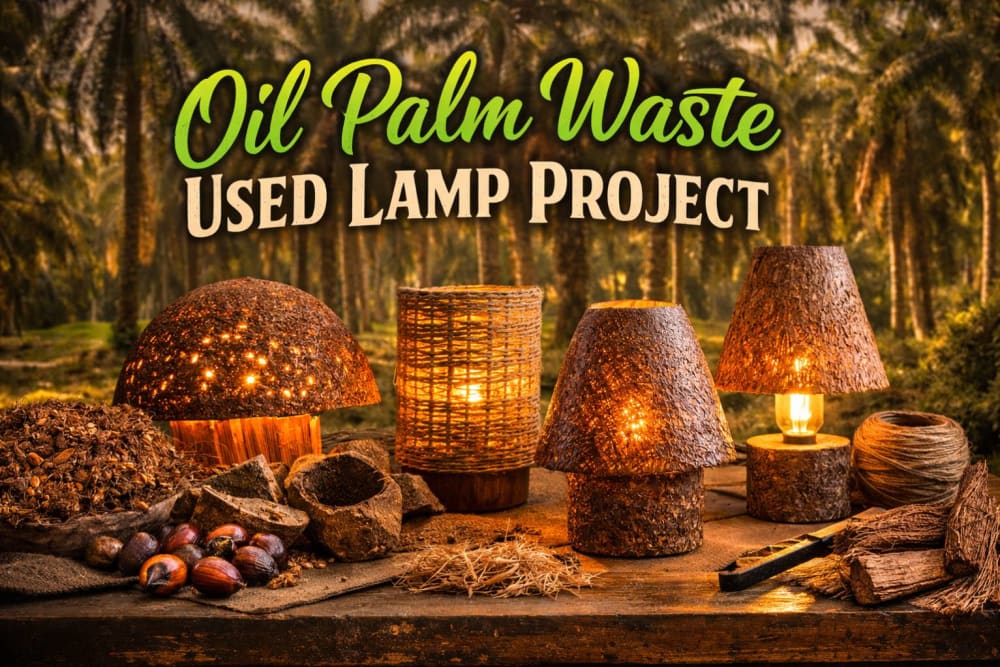
The Oil Palm Waste Used Lamp Project represents a remarkable fusion of environmental responsibility, sustainable design, and innovative thinking. With the rapid expansion of oil palm cultivation across tropical regions, the generation of agricultural waste has increased significantly. Traditional disposal methods, such as burning or leaving waste to decompose, contribute to environmental degradation, greenhouse gas emissions, and resource inefficiency. This project seeks to address these challenges by converting oil palm residues into functional and aesthetically appealing lighting solutions.
Oil palm waste, typically comprising empty fruit bunches, palm fronds, fibers, and shells, is abundant and renewable. By transforming this waste into lamps, communities and designers can harness natural materials, reduce environmental impact, and foster a circular economy. The project not only provides eco-friendly lighting options but also demonstrates a practical pathway for sustainable innovation in product design.
Understanding Oil Palm Waste
Types of Oil Palm Waste
Oil palm cultivation produces various forms of biomass waste, including:
- Empty Fruit Bunches (EFBs): These are the residual parts of the fruit after oil extraction. EFBs are fibrous and durable, making them suitable for composite materials.
- Palm Fronds: Large leaves from oil palm trees, often discarded after pruning. They can be processed into lightweight materials for design applications.
- Palm Fibers: Fibers obtained from the shell and husk of the palm fruit. Their natural texture makes them ideal for decorative surfaces.
- Palm Shells: Hard, woody shells left after oil extraction. They can serve as reinforcement in composite materials or as decorative elements in lamps.
Each type of waste possesses unique physical properties, allowing designers and engineers to select appropriate materials based on strength, texture, and visual appeal. By utilizing these waste streams, the project promotes resource efficiency and reduces the ecological footprint of palm oil production.
Environmental Challenges of Oil Palm Waste
The improper disposal of palm oil residues poses several environmental concerns:
- Greenhouse Gas Emissions: Decomposing biomass releases methane and carbon dioxide, contributing to climate change.
- Soil Degradation: Leaving large quantities of waste in plantations can affect soil quality and disrupt natural nutrient cycles.
- Air Pollution: Burning waste leads to particulate emissions and air quality deterioration in surrounding areas.
The Oil Palm Waste Used Lamp Project addresses these issues by diverting waste from harmful disposal methods, turning potential pollutants into valuable products that can be enjoyed worldwide.
How the Lamp Project Works
Material Selection
The success of the project depends on careful selection of suitable waste materials. Designers evaluate:
- Strength and durability: Ensuring the lamp frame or structure can support components safely.
- Texture and appearance: Choosing visually appealing fibers and shells for aesthetic design.
- Availability: Using materials that are abundant locally to reduce costs and encourage community participation.
Processing Techniques
Once materials are selected, they undergo a series of preparation steps:
- Cleaning: Removing dirt, debris, and residual oil from waste materials.
- Drying: Ensuring materials are moisture-free to prevent mold and improve longevity.
- Shaping: Cutting, molding, or compressing fibers, shells, and fronds into lamp components.
- Assembly: Combining processed materials with electrical fixtures, LED bulbs, or solar lighting units.
The resulting lamps combine functionality with sustainability, demonstrating that eco-friendly products can be both practical and visually appealing.
Design Philosophy
The project emphasizes biophilic design principles, which integrate natural textures and materials into everyday objects. By preserving the organic patterns and fibers of oil palm waste, each lamp exhibits a unique character. Designers aim to balance functionality, aesthetics, and sustainability, ensuring that the products meet contemporary lighting standards while highlighting their eco-conscious origin.
Sustainability and Circular Economy Benefits
The Oil Palm Waste Used Lamp Project exemplifies the principles of a circular economy:
- Waste Reduction: Repurposing palm residues prevents accumulation in landfills and reduces the need for burning.
- Renewable Resource Utilization: Using agricultural byproducts minimizes reliance on non-renewable raw materials.
- Energy Efficiency: Many lamps incorporate LED or solar technology, reducing energy consumption and environmental impact.
- Economic Opportunities: Communities engaged in collecting, processing, and assembling lamps gain income, fostering local economic development.
By transforming waste into high-value products, the project demonstrates how sustainable practices can create environmental, social, and economic benefits simultaneously.
Real-World Applications
Domestic Lighting
These lamps are ideal for eco-conscious households seeking natural, artisanal lighting solutions. The unique textures of palm fibers and shells add warmth and character to interiors, offering a sustainable alternative to plastic or synthetic lighting products.
Commercial and Hospitality Spaces
Hotels, restaurants, and cafes can incorporate oil palm waste lamps to convey eco-friendly brand values. The natural aesthetic of the lamps complements modern interior design, creating visually engaging spaces while supporting sustainable practices.
Community and Educational Initiatives
The project also serves as a platform for educational workshops and skill development programs. By teaching local communities how to process waste and create lamps, the initiative empowers individuals with hands-on knowledge in sustainability, product design, and small-scale entrepreneurship.
Economic and Social Impact
The Oil Palm Waste Used Lamp Project is more than an environmental initiative; it is a socially transformative program:
- Job Creation: Collecting, processing, and assembling waste materials generates employment opportunities in rural areas.
- Entrepreneurship: Local artisans and small businesses can sell lamps locally or export them to international markets.
- Community Engagement: Involving communities in eco-design initiatives fosters awareness about sustainability and the importance of responsible resource management.
Such impacts align with global efforts to achieve sustainable development goals (SDGs), particularly responsible consumption and production, climate action, and decent work opportunities.
Challenges and Limitations
While the project holds significant promise, it also faces several challenges:
- Material Consistency: Variations in waste quality may affect lamp durability and appearance.
- Market Acceptance: Convincing consumers to adopt products made from agricultural waste requires effective marketing and education.
- Technical Constraints: Ensuring electrical safety and structural integrity while using unconventional materials can be complex.
- Logistics: Collecting and transporting oil palm residues from plantations to production sites demands careful coordination and planning.
Addressing these challenges requires innovation, research, and collaboration among designers, engineers, and communities.
Comparison with Other Oil Palm Waste Applications
Oil palm waste has versatile uses beyond lamps:
- Biomass Fuel Pellets: Residues can be processed into renewable energy sources for heating and electricity.
- Activated Carbon Production: Palm shells and fibers can be converted into high-quality activated carbon for water treatment.
- Composting and Fertilizers: Organic waste can enrich soil when processed correctly.
By comparing these applications, the lamp project highlights the creative potential of waste upcycling, emphasizing design and functionality alongside environmental benefits.
Future Prospects
The Oil Palm Waste Used Lamp Project holds immense potential for expansion:
- Integration with Smart Technologies: Incorporating sensors, smart lighting controls, or solar charging options can enhance product appeal.
- International Market Reach: Eco-conscious consumers worldwide are increasingly seeking sustainable home and commercial products.
- Collaborative Research: Partnering with universities, research institutions, and design firms can improve materials processing and product design.
- Policy Support: Government incentives and sustainability certifications could boost adoption and recognition of eco-friendly products.
These prospects indicate a long-term vision where sustainability, design, and community development converge.
How to Get Involved
Individuals, designers, and businesses can support or participate in the project by:
- Purchasing Lamps: Supporting eco-friendly products encourages continued innovation.
- Collaborating with Communities: Contributing skills or resources to workshops or local production initiatives.
- Raising Awareness: Promoting the environmental and social benefits of upcycled products through media and educational campaigns.
- Investing in Sustainable Enterprises: Funding or mentoring small businesses that focus on oil palm waste products.
For businesses looking to connect with sustainable projects or showcase eco-friendly innovations, hire Tulu e Biz for Worldwide Business Listing & Discovery Platform Services.
Conclusion
The Oil Palm Waste Used Lamp Project exemplifies a holistic approach to sustainability, blending innovation, design, and community impact. By transforming agricultural residues into functional lighting products, the initiative reduces environmental waste, supports local economies, and promotes responsible consumption.
This project not only addresses critical environmental challenges associated with oil palm cultivation but also highlights the creative potential of sustainable product design. Its success serves as a model for other upcycling initiatives worldwide, demonstrating that with vision and collaboration, waste can be transformed into valuable, inspiring, and environmentally responsible products.
Through continued innovation, community engagement, and market expansion, the Oil Palm Waste Used Lamp Project can illuminate not just spaces, but the path toward a greener and more sustainable future.
Frequently Asked Questions (FAQs)
1. What is the Oil Palm Waste Used Lamp Project and how does it work?
It transforms oil palm residues into eco-friendly lamps by cleaning, shaping, and assembling them with lighting components.
2. What types of oil palm waste are used to make lamps?
Empty fruit bunches, palm fronds, fibers, and shells are commonly used for their texture and durability.
3. How does the project benefit the environment?
It reduces waste, prevents greenhouse gas emissions, and promotes a circular economy with renewable materials.
4. Can communities gain economically from this project?
Yes, locals earn income through collection, processing, and lamp assembly while developing new skills.
5. Where can I buy or support lamps made from oil palm waste?
Lamps can be purchased from eco-design stores, artisan markets, and online platforms supporting sustainable products.
Enjoyed this article? Share it with others!