
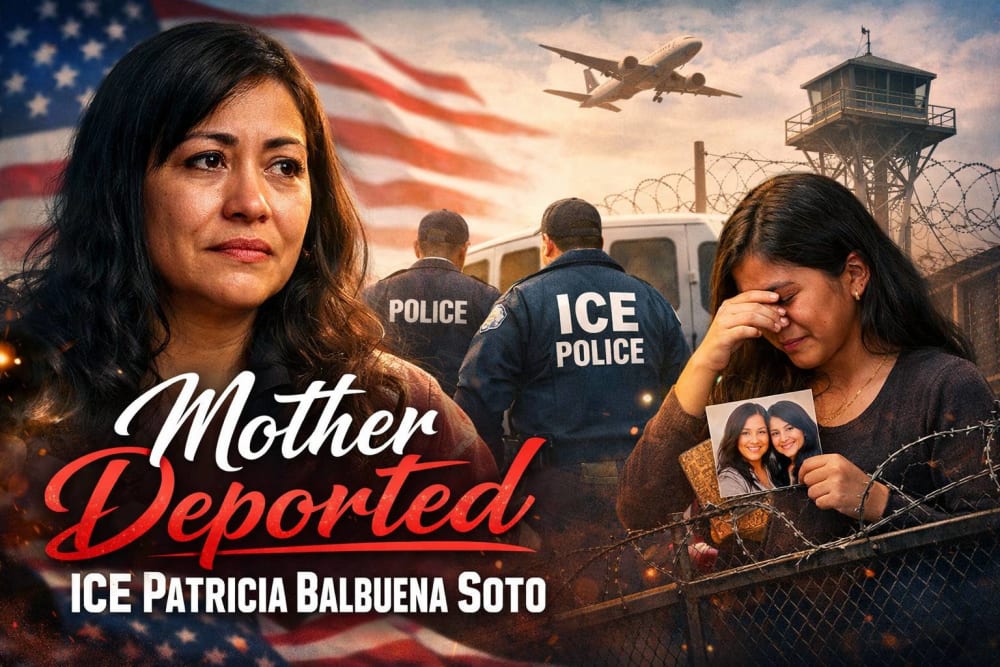
The deportation of mother deported ice patricia balbuena soto, a mother and long-term U.S. resident, has drawn significant attention across the nation. Having lived in the United States for approximately 30 years, Patricia established a life, worked, and raised her children, including a teenage daughter who was left behind after her removal by ICE. Her case highlights the complex intersection of immigration enforcement, legal proceedings, and family separation, raising questions about how enforcement policies affect individuals and communities with deep ties to the country.
Patricia’s arrest, detention, and eventual deportation to Mexico in August 2025 unfolded rapidly, leaving her family struggling to navigate the sudden absence of a parent. While government authorities cited prior convictions and a final removal order as the legal basis for her deportation, her family and advocates emphasized the emotional and logistical challenges, including limited access to legal representation and communication during detention. This case offers insight into the broader impact of immigration policies on families, communities, and individuals who have lived in the United States for decades.
Understanding the Deportation of Patricia Balbuena Soto
In a case that has drawn national attention and highlighted ongoing debates about immigration enforcement in the United States, Patricia Balbuena Soto, a longtime resident of New Jersey, was deported by U.S. Immigration and Customs Enforcement (ICE) after living in the country for approximately 30 years.
Balbuena Soto’s story is not just about one individual’s removal from the United States; it reflects broader tensions in immigration policy, due process concerns, and the profound impact deportation can have on families, particularly when children and long-standing community ties are involved.
Who Is Patricia Balbuena Soto?
Patricia Balbuena Soto was a mother of three children, including a teenage daughter, who had lived in the United States for the vast majority of her adult life. She originally came to the U.S. when she was about 19 years old and had made her life and livelihood in New Jersey, working in local businesses and embedding herself deeply within her community.
For decades, the United States was the only home she knew. Her children were U.S. citizens, and she had become part of the daily fabric of life in her city.
Arrest and Detention
Balbuena Soto’s life changed dramatically on July 24, 2025, when she was arrested by local police at her workplace in Somers Point, New Jersey. She was detained in connection with prior charges, and soon after, she was transferred into ICE custody.
Her daughter later explained that she received a call from a coworker telling her that her mother had been taken into custody but wasn’t notified directly by authorities. This communication gap became a major point of contention as the case unfolded.
Once in ICE custody, Balbuena Soto was held at the Elizabeth Detention Center in New Jersey before being moved to the Port Isabel Detention Center in Texas, a facility far from her family, supporters, and legal counsel.
Legal Status and Deportation Order
According to the Department of Homeland Security, Balbuena Soto had a prior shoplifting conviction, had been deported from the United States four times previously, and had returned to the country after those removals, which the government said constituted a felony offense.
DHS also confirmed that she had a final order of removal, which legally required her deportation. Under U.S. immigration law, a final removal order means that all avenues of review and appeal, including voluntary departure and judicial stay, have been exhausted, and the individual must be removed from the country.
On August 5, 2025, she was deported to Mexico. Authorities flew her by plane to her country of origin, where she now resides with extended family.
Family Response and Contentions
Balbuena Soto’s family, particularly her daughter, raised serious concerns about how her detention and deportation were handled.
One significant issue was that her mother was not given a meaningful opportunity to access legal representation. Despite hiring a lawyer, her daughter claims that Balbuena Soto was not allowed to meet with that attorney while in ICE custody.
Another allegation made by family members was that she was prevented from contacting the Mexican consulate, which is a usual right afforded to foreign nationals. Consular access provides vital guidance and protection for individuals facing detention or removal in foreign countries, and denying this access is seen by many immigration advocates as a serious impropriety.
These claims have amplified debate around whether her removal was processed in a way that fully respected her legal and human rights.
Impact on Her Children
The most emotionally charged aspect of this case is its impact on Balbuena Soto’s children, especially her 17-year-old daughter.
Her daughter spoke about feeling abandoned and alone following her mother’s removal. She described the upheaval in her life, the emotional and practical challenges of continuing school, and the overall uncertainty she and her family now face.
Beyond the emotional hardship, cases like this raise broader questions about the welfare and stability of children who grow up in immigrant families. When a parent is suddenly deported, the household dynamic, financial situation, and social environment can be drastically disrupted.
Deportation Within Broader Immigration Policy
Balbuena Soto’s deportation did not happen in isolation. Her case occurred amidst a broader trend of heightened immigration enforcement in the United States.
Under the prevailing administration during the time of her removal, immigration enforcement was intensified, prioritizing removal of individuals without legal status, including those with prior deportation orders. This approach has led to increased arrests, detentions, and removals, often encompassing individuals who have lived in the U.S. for many years.
Critics of this enforcement strategy argue that it prioritizes numbers and immigration quotas over human considerations, due process, and community stability. Supporters contend that enforcing existing laws is essential for national sovereignty and upholding the rule of law.
Balbuena Soto’s case sits at the heart of this debate, a personal story that reflects larger questions about how immigration policy is executed and experienced on the ground.
Questions of Due Process
Due process refers to legal protections that ensure fair procedures before the government can deprive someone of life, liberty, or property. In immigration law, this typically means access to counsel, the ability to present evidence, notice of hearings, and the right to appeal decisions.
The allegations surrounding Balbuena Soto’s detention, especially the claim that she was prevented from meeting with her lawyer, raise questions about whether her rights to due process were fully upheld while she was in ICE custody.
Because immigration proceedings are civil rather than criminal, individuals do not have the automatic right to government-appointed counsel. However, they still have the right to retain and consult with private attorneys. Denying that opportunity can significantly undermine the fairness and integrity of proceedings.
Furthermore, allegations that her family was unable to maintain consistent communication with her during detention compound concerns about transparency and procedural fairness.
Life After Deportation
After being deported, Balbuena Soto now lives in Mexico with extended family members. Her daughter remains in the United States, continuing her education and grappling with the long-term effects of her mother’s removal.
For many families affected by deportation, the separation is not temporary. It can last years or become permanent. The emotional toll on children, the disruption of family support structures, and the challenges of living apart from loved ones are profound consequences that extend far beyond legal rulings.
Conclusion
The case of Patricia Balbuena Soto illustrates the profound personal and familial impact of immigration enforcement. Her deportation after 30 years in the United States left her teenage daughter and family members facing sudden separation and emotional hardship. It also underscores the challenges that arise when legal procedures, government enforcement, and family rights intersect, showing how individual lives are deeply affected by policy decisions and administrative actions.
Patricia’s story highlights the human side of immigration enforcement, offering a perspective that goes beyond statistics or legal documents. Understanding cases like hers helps communities, policymakers, and the public recognize the broader implications of deportation, from family disruption to questions of due process and support for long-term residents. Sharing and discussing these experiences fosters awareness and encourages thoughtful consideration of the balance between law enforcement and human impact.
FAQs
1. Who is the mother deported ice patricia balbuena soto and why was she deported?
Patricia Balbuena Soto is a longtime New Jersey resident and mother of three who was deported after living in the U.S. for around 30 years. She had prior deportations and a criminal record, and ICE carried out her removal following a final order of removal. Her case sparked debates about due process and family separation.
2. How did Patricia Balbuena Soto’s deportation affect her children?
Her deportation left her teenage daughter and other children in the U.S., creating emotional and practical challenges. The separation disrupted family life and highlighted concerns about the impact of immigration enforcement on citizen children of undocumented parents.
3. What legal rights did Patricia Balbuena Soto have during detention?
Even though immigration proceedings are civil, she had the right to retain and consult with a lawyer and access the Mexican consulate. Allegations suggest she faced obstacles in exercising these rights, raising questions about due process.
4. What was the timeline of Patricia Balbuena Soto’s arrest and deportation?
She was arrested in July 2025 by local authorities in New Jersey, transferred to ICE custody shortly after, held at detention centers in New Jersey and Texas, and deported to Mexico in early August 2025, highlighting a rapid removal process.
5. What broader immigration policies does this case reflect?
Her case reflects intensified immigration enforcement priorities, where individuals with prior deportations or legal violations face strict removal. It also underscores the human consequences of policy decisions, particularly for families with deep community ties.
Enjoyed this article? Share it with others!