
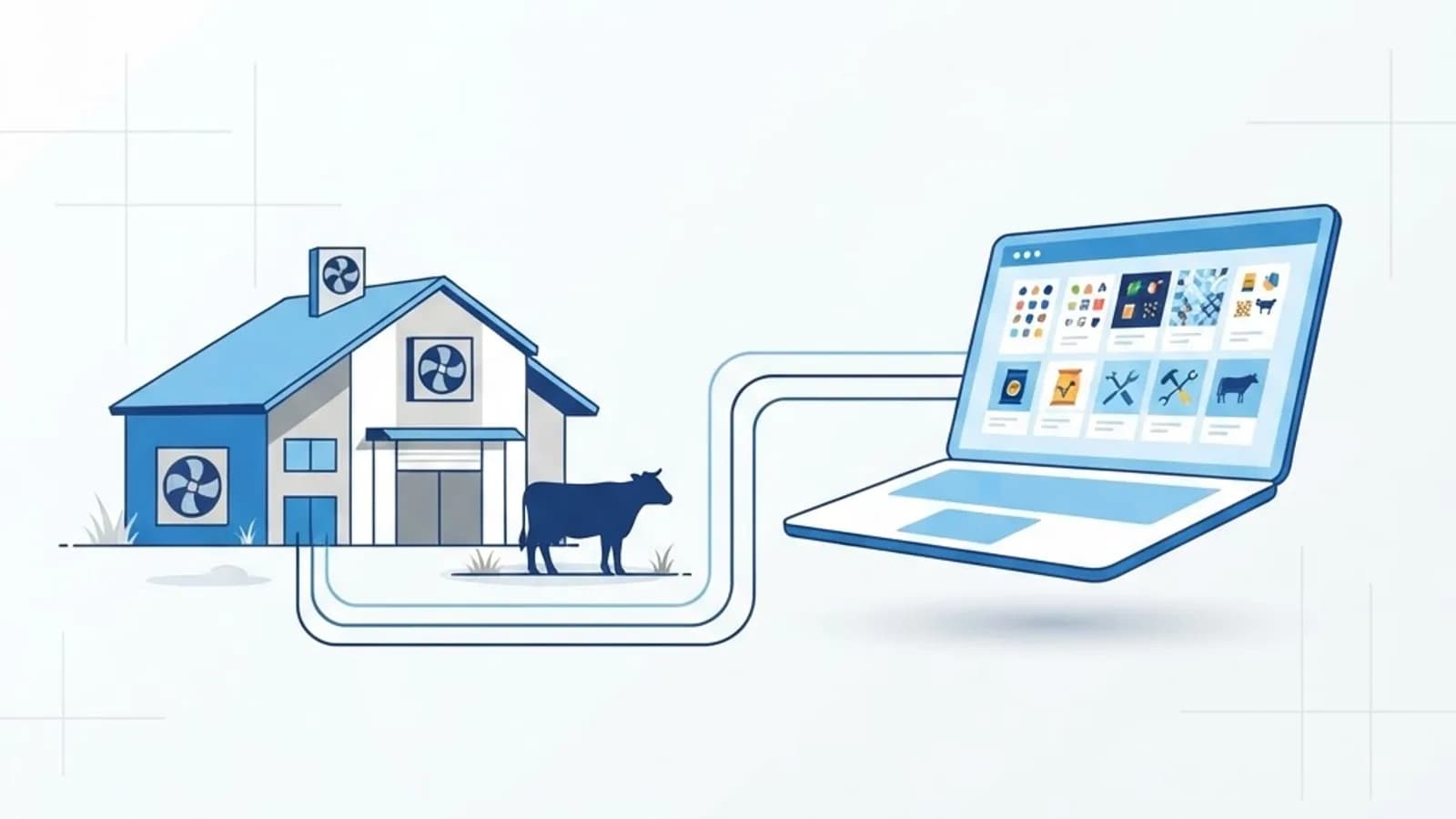
Selling barns, ventilation systems and confinement structures is a long, technical, high-value sale. Livestock housing company digital marketing has to respect that reality rather than borrowing tactics from consumer ecommerce.
Your buyer is a producer or farm manager making a capital decision that will affect animal welfare, labour costs and profitability for fifteen years or more. They research quietly, compare specifications carefully, and talk to peers before they ever complete a contact form.
This guide sets out the practices that consistently generate qualified project enquiries for livestock housing suppliers, from technical content to trade relationship building online.
What Is Livestock Housing Digital Marketing?
It is the use of search visibility, technical content, project documentation and targeted outreach to reach agricultural producers who are planning or evaluating new housing infrastructure.
Unlike fast-moving sectors, the emphasis sits on credibility and specification detail. Producers buy engineering confidence, not marketing enthusiasm, so the content that works tends to look more like a technical resource library than a brochure.
The channel mix is narrow but deep: organic search for equipment and design queries, a specification-rich website, email nurture over long cycles, and video walkthroughs of completed facilities.
Who Uses It?
Several types of business in the livestock infrastructure supply chain benefit directly.
- Barn and confinement building manufacturers serving swine, poultry, dairy or beef operations
- Ventilation, feeding and manure handling system suppliers
- Design-build contractors specialising in agricultural facilities
- Equipment dealers covering multi-state territories
- Retrofit and upgrade specialists targeting ageing facilities
Key Features of an Effective Approach
Specification-Led Content
Producers search for very precise things: ventilation rates per animal, slat dimensions, insulation values, welfare compliance requirements. Publishing clear technical pages on these subjects attracts exactly the right visitor and demonstrates competence immediately.
Documented Project Case Studies
A completed facility case study covering herd size, layout decisions, budget range, build timeline and measured outcomes is the single most persuasive asset you can produce. Photograph and document every project as a matter of routine.
Video Walkthroughs
Producers want to see airflow, flooring and handling layouts in operation. Short, well-shot facility tours answer more objections than any written page can. Working with a professional video production team once a year produces enough footage for months of content.
Long-Cycle Email Nurture
A producer downloading a ventilation guide may build in three years. Segmented email that shares useful technical updates keeps you present without pestering, and costs almost nothing to maintain.
How to Get Started
A practical rollout for a supplier with limited marketing resource.
- Interview your sales team and list the thirty questions producers ask most often.
- Turn the top ten into detailed technical pages written in producers' own language.
- Document three completed projects with photographs, specifications and outcome data.
- Ensure your website loads quickly and displays specification tables cleanly on mobile.
- Create one downloadable planning guide to capture early-stage enquiries.
- Build a simple email sequence that delivers genuine technical value over several months.
- Run targeted paid search on specific equipment and design terms with clear intent.
Benefits
Digital visibility changes the shape of the sales pipeline in this sector considerably.
- Enquiries arrive better informed, shortening the technical qualification stage
- Geographic reach expands beyond the territory your sales representatives can physically cover
- Reduced dependence on trade shows, which are expensive and increasingly less attended
- Technical content doubles as sales enablement material for dealers and representatives
- Stronger positioning against imported low-cost alternatives competing purely on price
Potential Challenges
The sector presents real obstacles that need planning rather than optimism.
- Purchase cycles can exceed two years, making short-term ROI measurement misleading
- Search volumes are low, so keyword tools often underestimate genuine opportunity
- Technical accuracy is essential, and engineering review slows content production
- Commodity price cycles cause sudden, sector-wide freezes on capital spending
Best Practices and Tips
Small disciplines that compound significantly over a few seasons.
- Publish content under named engineers or specialists to establish genuine expertise
- Include realistic budget ranges where possible, since vague pricing deters serious buyers
- Capture enquiry stage on forms so you can nurture appropriately rather than pushing for a sale
- Keep a photographer's checklist for every completed build so documentation never gets skipped
Real-World Example
A swine housing manufacturer covering four states relied on dealer referrals and two annual trade shows. Enquiries were sporadic and heavily weighted toward existing relationships. They began publishing detailed pages on ventilation design, flooring options and welfare compliance, each reviewed by their lead engineer.
They also rebuilt their product configurator using a modern MERN stack development approach so producers could explore layout options and receive an indicative specification by email. Enquiry volume roughly doubled over eighteen months, and more importantly, the average enquiry arrived with a defined herd size and timeline, which cut sales cycle length noticeably.
Why It Matters
Agricultural buyers have shifted their research online just as decisively as any other sector, but supplier marketing in livestock housing has not kept pace. That gap is an opportunity for whoever moves first in each category.
Because these are capital purchases with long replacement cycles, the supplier a producer trusts during the research phase usually wins the contract. Being visible and genuinely helpful three years before the build is not a long game by accident; it is exactly how this market works.
Frequently Asked Questions
Do farmers really research housing equipment online?
Yes, extensively. Producers routinely compare specifications, watch facility tours and read welfare guidance online before contacting suppliers, often outside business hours from a phone.
How do we measure success with such long sales cycles?
Track intermediate indicators: guide downloads, configurator completions, return visits and email engagement. Record original enquiry source in your CRM so contracts closed years later can still be attributed correctly.
Is social media useful in this sector?
Selectively. Facebook groups and YouTube are genuinely active among producers, particularly for facility tours and equipment discussion. Polished corporate posting on other platforms tends to be ignored.
Should we sell equipment directly online?
Full structures, no. Components, parts and accessories often sell well through a simple online catalogue, and a straightforward ecommerce setup can generate steady aftermarket revenue between capital projects.
Conclusion
Livestock housing company digital marketing works when it behaves like good technical sales: precise, evidence-led and patient. Publish what your engineers know, document every project, and stay useful throughout a multi-year decision.
If your current site cannot present specifications clearly on a phone in a field, fix that first. A technically capable website is the working tool that carries all of this.
Enjoyed this article? Share it with others!