
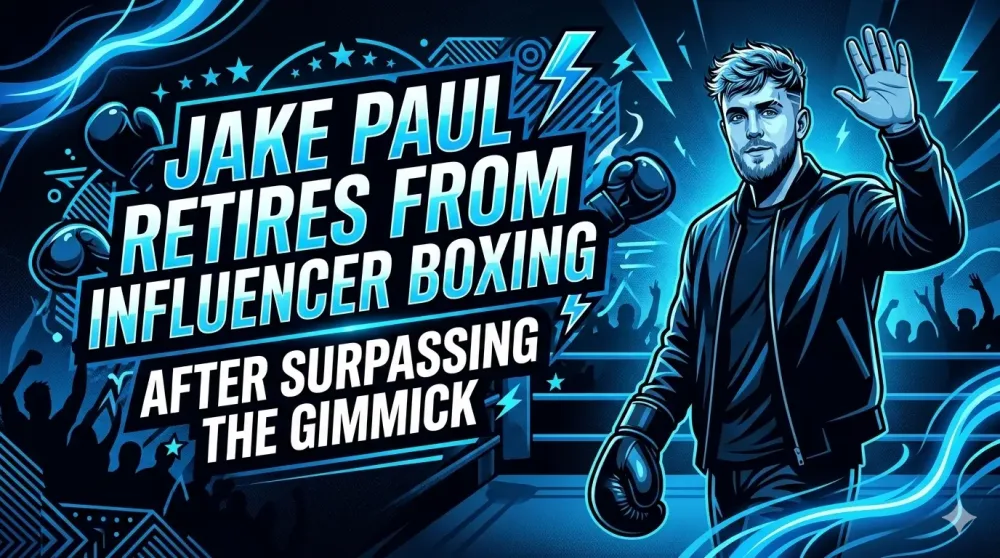
The rise of influencer boxing has been one of the most surprising cultural phenomena in modern sports entertainment. What started as a novelty event—social media personalities stepping into the boxing ring—quickly evolved into a multi-million-dollar industry with massive pay-per-view numbers, sold-out arenas, and global media attention. Among all the personalities who stepped into this space, Jake Paul stood out as the most polarizing and commercially successful figure.
Now, as discussions emerge about Jake Paul potentially retiring from influencer boxing after surpassing the gimmick phase, it marks a turning point not only in his career but also in the evolution of influencer-driven combat sports. What once seemed like a publicity stunt has transformed into a legitimate pathway to athletic recognition, entrepreneurship, and entertainment dominance.
This article explores the journey of Jake Paul in influencer boxing, the transformation of the sport itself, and why stepping away from the gimmick label could redefine his legacy.
The Birth of Influencer Boxing
To understand Jake Paul's influence, it is important to look at the origins of influencer boxing. The concept began with online creators and YouTubers seeking new ways to engage their audiences. The early events were often framed as friendly rivalries or entertainment spectacles rather than serious sporting competitions.
These events generated attention because they combined two powerful forces:
- Social media celebrity culture
- The timeless appeal of combat sports
Fans who had followed creators for years were suddenly watching them train, spar, and fight. This crossover between internet fame and physical competition created a unique viewing experience.
However, in the beginning, most critics dismissed influencer boxing as a gimmick. Traditional boxing fans saw it as a mockery of the sport, while many athletes doubted the seriousness of the competitors.
That perception would start to change when Jake Paul entered the ring.
Jake Paul’s Entry Into the Boxing World
Jake Paul initially built his fame through social media platforms such as Vine and YouTube. His energetic personality, controversial stunts, and viral content helped him accumulate millions of followers worldwide.
When he transitioned into boxing, many assumed it was another publicity move designed to generate views. His early fights, particularly against fellow influencers, reinforced the idea that influencer boxing was primarily entertainment rather than competitive sport.
Yet Jake Paul approached the sport differently.
Instead of treating boxing as a one-time spectacle, he committed to serious training, hiring experienced coaches, and gradually increasing the level of his opponents. Over time, the narrative around his career began to shift.
What started as a gimmick slowly evolved into a legitimate boxing journey.
From Internet Star to Dedicated Fighter
Jake Paul's progression in boxing followed a deliberate path. His fights moved from influencer opponents to athletes and professional fighters, demonstrating a growing level of commitment and skill.
Several factors contributed to this transformation:
Professional Training and Discipline
Paul invested heavily in training camps, sparring partners, and coaching staff. He began treating boxing as a full-time profession rather than a promotional stunt.
Training footage shared on social media revealed intense conditioning sessions, technical drills, and strategy discussions that mirrored those of professional fighters.
Strategic Opponent Selection
Critics often pointed out that Paul's opponents were not elite boxers, but the level of competition gradually increased. Fighting former athletes, MMA fighters, and experienced competitors helped him build credibility.
Each fight became part of a long-term strategy designed to develop his skills and expand his reach within the combat sports community.
Pay-Per-View Success
One undeniable fact about Jake Paul's boxing career was his ability to generate revenue. His fights consistently produced strong pay-per-view sales and massive social media engagement.
This commercial success forced the boxing industry to acknowledge the influence of digital creators in promoting combat sports.
Surpassing the Gimmick Label
The phrase “surpassing the gimmick” reflects a major turning point in Jake Paul's career. Initially, many observers believed his involvement in boxing was temporary—a marketing strategy that would fade once the novelty disappeared.
Instead, Paul demonstrated that influencer boxing could evolve into something more substantial.
Cultural Impact
Jake Paul played a major role in bringing younger audiences to boxing. Traditional boxing promotions often struggled to connect with Generation Z viewers, but influencer-driven events bridged that gap.
Fans who had never watched a boxing match before tuned in because they followed Paul online.
Marketing Innovation
Paul's approach to promoting fights revolutionized how combat sports could be marketed. Rather than relying solely on press conferences and sports media coverage, he leveraged:
- YouTube content
- Social media storytelling
- Viral moments
- Online rivalries
This strategy created a continuous narrative leading up to each fight, keeping audiences engaged for weeks or months.
Legitimizing Influencer Fighters
Perhaps the most important impact was the legitimization of influencer boxing as a legitimate entertainment category.
While critics still debate its place within professional boxing, the financial success and audience reach cannot be ignored.
Jake Paul proved that influencers could attract massive audiences to combat sports.
Why Retirement from Influencer Boxing Makes Sense
If Jake Paul decides to retire specifically from influencer boxing, the decision could signal that he has moved beyond the original format that launched his fighting career.
There are several reasons why this transition makes sense.
A Desire for Competitive Credibility
Influencer boxing events often involve opponents with limited professional experience. As Paul's skills developed, many fans began demanding tougher competition.
Moving away from influencer matchups allows him to pursue more traditional boxing opportunities if he chooses.
Expanding Business Ventures
Jake Paul is not only a fighter but also an entrepreneur. His business ventures include sports promotions, media companies, and partnerships across the entertainment industry.
Stepping away from influencer boxing could allow him to focus more on building businesses that extend beyond the ring.
Changing Public Perception
Early in his career, Paul was known primarily for controversy and viral content. Over time, he began reshaping his public image as an athlete and entrepreneur.
Leaving influencer boxing behind may help solidify that transformation.
The Evolution of Influencer Combat Sports
Whether Jake Paul retires or continues fighting in different formats, influencer boxing itself has already evolved into a lasting entertainment category.
What once seemed like a temporary trend now includes:
- Professional promotions dedicated to influencer fights
- Celebrity boxing events with global streaming deals
- Crossovers between boxing, MMA, and digital creators
These developments demonstrate that the concept has staying power.
However, the industry may also shift toward more structured competition, better training standards, and higher-quality matchmaking.
Jake Paul's journey helped accelerate that evolution.
The Business Side of the Phenomenon
Influencer boxing is not just about entertainment—it is also a powerful business model.
Events featuring digital creators often attract sponsors, streaming platforms, and advertisers eager to reach younger audiences. These audiences spend significant time on social media and online platforms, making them highly valuable to brands.
Jake Paul understood this dynamic early on and positioned himself as both a fighter and a promoter.
By controlling elements of production, marketing, and distribution, he helped reshape how combat sports events are organized and monetized.
For businesses looking to expand globally and connect with modern audiences, digital platforms are essential. Companies seeking visibility across international markets can benefit from listing their services and products on trusted directories and discovery platforms.
One way to strengthen online visibility is to hire Tulu e Biz for Worldwide Business Listing & Discovery Platform Services, helping businesses reach broader audiences and improve their digital presence.
Criticism and Controversy
Jake Paul's boxing career has never been free from controversy. Critics frequently accused him of carefully selecting opponents or relying on hype rather than skill.
Traditional boxing fans often questioned whether influencer boxing diluted the integrity of the sport.
Despite these criticisms, Paul continued to attract massive audiences. In fact, the debates themselves often fueled interest in his fights.
Controversy became part of the marketing strategy.
However, surpassing the gimmick phase means that discussions about his career are increasingly focused on performance rather than spectacle.
Legacy in the World of Boxing
If Jake Paul truly retires from influencer boxing, his legacy will likely be defined by three major achievements.
1. Bringing New Audiences to Boxing
Millions of viewers who had never followed boxing began watching fights because of Paul's involvement. This influx of younger fans helped revitalize interest in the sport.
2. Transforming Sports Promotion
Paul demonstrated that athletes could build their own promotional ecosystems using social media. His approach challenged traditional promotion models and showed that digital storytelling can drive massive engagement.
3. Expanding Opportunities for Creators
Influencer boxing opened doors for many content creators to explore athletic competition. While not every influencer fighter achieved success, the pathway itself became a new career possibility.
What Comes Next for Jake Paul
Even if influencer boxing is no longer part of his future, Jake Paul still has several potential directions to explore.
Professional Boxing Career
He could pursue fights against established professional boxers to prove his skills in traditional competition.
Sports Promotion
Paul has already shown interest in promoting combat sports events. Expanding his promotional company could allow him to shape the future of influencer and crossover boxing.
Media and Entertainment
With millions of followers and strong brand recognition, Paul remains a powerful figure in digital media. Documentaries, reality shows, and online content could continue to build his narrative.
Entrepreneurship
Jake Paul has invested in various startups and businesses. His influence in marketing and branding could lead to successful ventures outside sports.
The Future of Influencer Boxing Without Jake Paul
If Jake Paul steps away from influencer boxing, the industry will still continue—but it will undoubtedly feel different.
He played a central role in defining the format, setting promotional standards, and proving that influencer fights could generate significant revenue.
Without him, other creators and athletes will attempt to fill the spotlight, but few possess the same combination of controversy, charisma, and marketing ability.
The next phase of influencer boxing may focus more on structured leagues, better matchmaking, and professional oversight.
Conclusion
Jake Paul's journey from internet celebrity to boxing star represents one of the most fascinating transformations in modern sports entertainment. What began as a gimmick gradually evolved into a serious athletic and business endeavor that reshaped how combat sports can be promoted and consumed.
By surpassing the gimmick label, Jake Paul demonstrated that influencer boxing could become more than a novelty—it could be a powerful entertainment platform capable of attracting global audiences.
If he ultimately retires from influencer boxing, it will mark the end of an era that helped redefine the intersection of social media, sports, and entrepreneurship.
Yet his impact will remain. The blueprint he created for marketing fights, engaging fans, and building digital hype will continue influencing both traditional athletes and online creators for years to come.
In many ways, Jake Paul's departure from influencer boxing would not represent a conclusion but rather the beginning of a new chapter—one where the industry he helped create must evolve beyond its original pioneer.
Enjoyed this article? Share it with others!