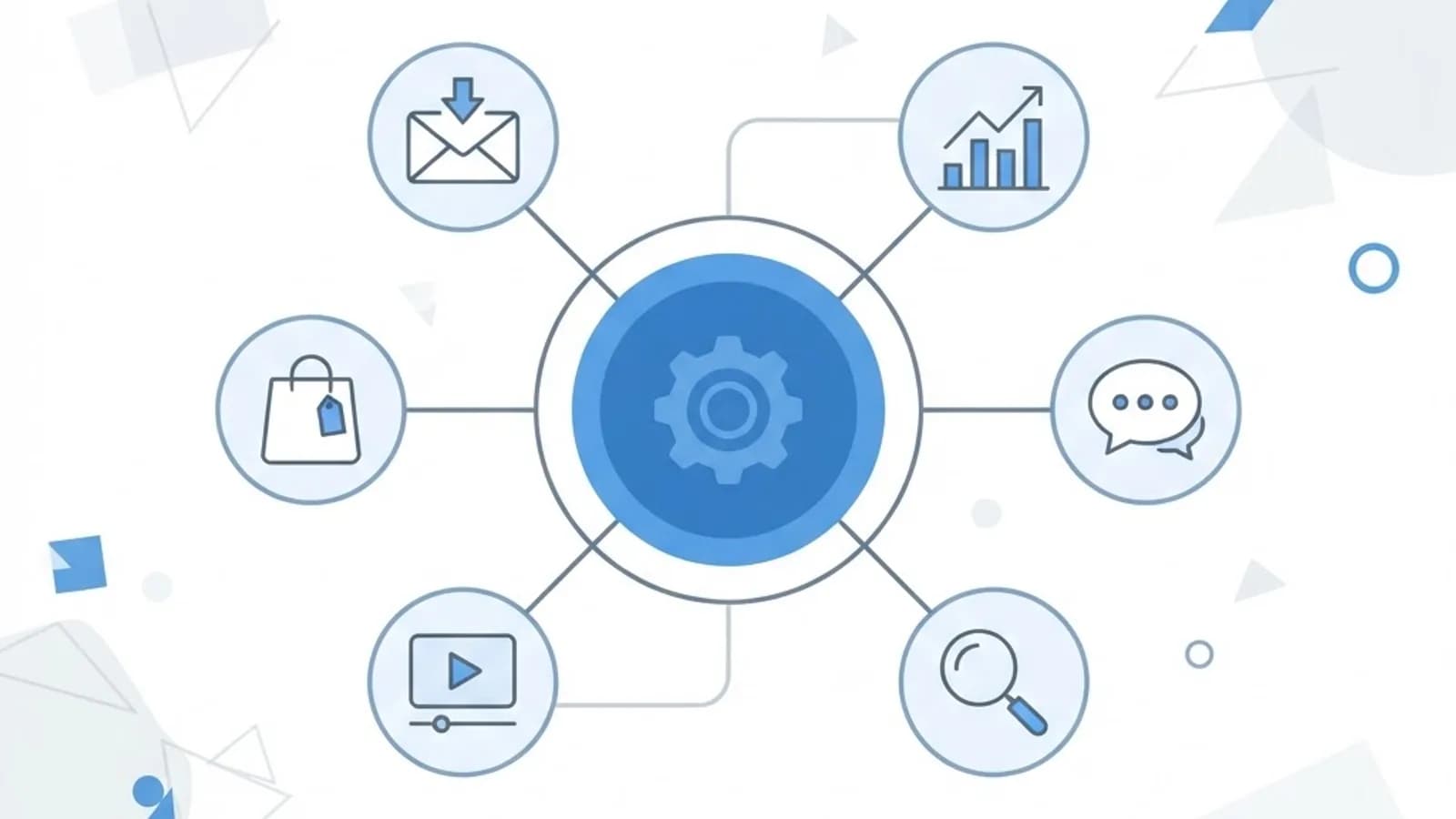
Most marketing underperforms not because any single channel is bad, but because the channels never talk to each other. An integrated digital marketing agency exists to solve that specific problem: one team, one strategy, one measurement framework across everything.
The alternative is familiar to anyone who has managed several vendors. The SEO consultant wants more content, the ads team wants different landing pages, and the email provider reports numbers nobody can reconcile with the website analytics.
This article explains what integration actually means in practice, when it delivers meaningfully better results, and when a specialist partner would serve you better.
What Is an Integrated Digital Marketing Agency?
It is an agency that plans and executes across multiple channels under a single strategy, with shared data and shared accountability for a common set of business outcomes.
The defining feature is not the service list. Plenty of agencies offer many services while running them as isolated departments. True integration means insight from one channel changes the plan in another, automatically and quickly.
For example, search query data revealing an unexpected use case should reshape ad copy, email subject lines and product page content within the same fortnight, not the next quarterly review.
Who Benefits Most?
Integration adds the most value where the customer journey crosses several touchpoints before a decision is made.
- Businesses with considered purchases involving research across multiple sessions and devices
- Companies running both brand awareness activity and direct response campaigns simultaneously
- Organisations managing several vendors who blame each other when results dip
- Brands launching a product where messaging must stay consistent everywhere at once
- Teams without an internal marketing director able to coordinate specialists
Key Features of Genuine Integration
A Single Measurement Layer
All channels report into one analytics framework with agreed definitions. A lead means the same thing in the email report as it does in the paid search report. This sounds basic and is surprisingly rare.
Shared Creative and Messaging Systems
One message architecture feeds every channel, adapted to format rather than reinvented. Consistency compounds recognition, and a shared asset library through coordinated social media and banner design keeps production costs down as volume grows.
Cross-Channel Feedback Loops
Paid search reveals which phrases convert; those phrases inform SEO targeting and content briefs. Email engagement reveals which topics resonate; those topics guide social content. The loops are deliberate, documented and reviewed regularly.
Unified Planning Cadence
One roadmap, one monthly review, one set of priorities. When every channel has its own separate meeting, integration exists on the org chart but not in the work.
How to Get Started
Moving from a fragmented setup to an integrated one is a transition, not a switch, and it works best in stages.
- Document every marketing activity currently running and who owns each one.
- Define one primary business metric that all channels will be judged against collectively.
- Consolidate analytics so every channel reports into the same property with consistent naming.
- Audit messaging across channels and note every inconsistency in how you describe your offer.
- Appoint a single point of accountability, internal or agency-side, with authority to reallocate budget.
- Run a ninety-day integrated plan with one review cadence before adding new channels.
Benefits
The gains from integration tend to appear in efficiency before they appear in raw growth.
- Lower total cost because creative, research and landing pages are reused across channels
- Faster learning, since a discovery in one channel improves several others immediately
- Cleaner attribution, making budget reallocation decisions defensible rather than political
- Consistent brand experience, which measurably improves conversion for considered purchases
- Less management overhead for your internal team, often the most underrated benefit
Potential Challenges
Integration is not automatically superior, and it introduces its own risks.
- Depth can suffer if the agency spreads specialist talent too thinly across channels
- Concentration risk increases, since one underperforming partner affects everything at once
- Consolidation projects take time before producing visible results, testing patience
- Larger integrated retainers can obscure which activities are actually earning their keep
Best Practices and Tips
A few safeguards keep integration honest.
- Ask for channel-level reporting inside the integrated report so weak areas cannot hide
- Verify the agency has genuine senior specialists, not generalists covering every discipline
- Keep ownership of all accounts and data so switching remains possible
- Review the integrated plan quarterly and be willing to bring in a specialist for one channel
Real-World Example
A speciality food brand ran SEO with one freelancer, paid social with a second agency and email in-house. Each reported growth, yet total revenue was flat. Consolidating under one integrated team revealed the cause within weeks: paid social was driving first-time visitors to a page that the SEO freelancer had restructured, breaking the message match entirely.
Rebuilding those landing pages through a single ecommerce solutions workstream, then aligning email flows to the same messaging, lifted conversion rate by more than a third without any increase in traffic. Nothing new was added; the pieces simply stopped working against each other.
Why It Matters
Customers do not experience your marketing as channels. They experience a series of impressions that either build a coherent picture or a confusing one. Integration is the operational discipline that makes the coherent version possible.
As privacy changes continue to erode granular tracking, the ability to reason across channels holistically becomes more valuable than optimising any single one in isolation. An integrated digital marketing agency is, in effect, buying you that capability.
Frequently Asked Questions
Is an integrated agency more expensive than several specialists?
Total fees are often similar, but the internal cost of coordination drops significantly. Most companies underestimate how many hours their own team spends translating between vendors.
Can integration work with an in-house team?
Yes, and it often should. Many companies keep strategy and brand in-house while an integrated partner handles execution across channels using the same framework.
How quickly do results appear?
Efficiency gains usually show within one to two months as duplicated work disappears. Compounding growth from aligned search and content activity typically becomes clear between months four and eight.
What if one channel needs deeper expertise?
Good integrated agencies acknowledge this and either bring in a partner or recommend one. Technical work such as AI-driven automation and personalisation sometimes sits better with a dedicated specialist alongside the integrated team.
Conclusion
An integrated digital marketing agency earns its place by removing the friction between channels rather than by adding more of them. If your reports look healthy while revenue stays flat, fragmentation is the most likely culprit.
Start by unifying measurement and messaging before expanding activity. A single coordinated marketing programme usually outperforms four excellent but disconnected ones.
Enjoyed this article? Share it with others!