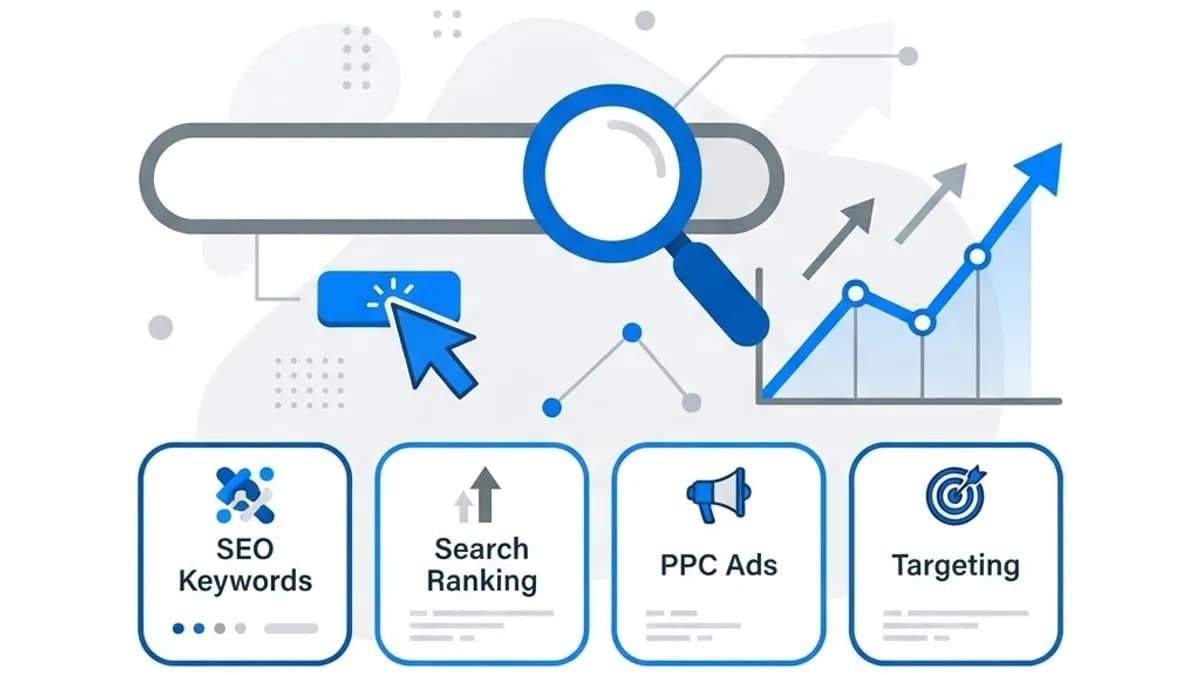
Most teams treat search as two separate departments. One chases rankings, the other buys clicks, and neither shares data. That split is why so much budget underperforms — and why digital marketing SEO PPC integration is one of the fastest wins available to a marketing team.
Run together, the two channels feed each other. Paid search tells you which keywords actually convert. Organic search lowers your long-term cost of acquisition. Ignore the overlap and you pay twice for the same lesson.
This guide covers how each channel works, when to lean on which, and how to build one search strategy instead of two competing ones.
What Is SEO and PPC in Digital Marketing?
SEO, or search engine optimization, earns unpaid visibility by making your site the most relevant, credible, technically sound answer to a query. PPC, or pay-per-click advertising, buys immediate placement in the ad slots above and around those results.
SEO compounds slowly and cheaply. PPC delivers instantly but stops the moment you pause spending. The strategic insight is that they answer different questions on different timelines, so the right mix depends on how urgently you need volume versus margin.
Together they form the backbone of intent-based marketing: reaching people who are already looking for what you sell rather than interrupting people who are not.
Who Needs Both Channels?
Almost any business selling to people who search, though the balance shifts by margin, sales cycle, and competition.
- Ecommerce brands needing both shopping ads and category page rankings
- Local service businesses competing in map packs and local ad units
- B2B SaaS companies with long research cycles and high customer value
- Startups that need immediate pipeline while organic authority builds
- Established brands defending branded search from competitor bidding
Key Features of an Integrated Search Program
Shared Keyword and Intent Research
One keyword map should serve both channels, tagged by intent stage and commercial value. Paid data reveals which terms convert; those terms become your organic content priorities.
Technical Foundation and Site Speed
Crawlability, structured data, Core Web Vitals, and clean internal linking affect rankings and ad quality scores alike. Solid Next.js development for fast, crawlable pages improves organic visibility and lowers cost per click at the same time.
Landing Page Experience
PPC punishes weak landing pages with higher costs, and SEO punishes them with poor engagement signals. Message match, fast load, and one clear action are non-negotiable in both.
Unified Measurement
Blended cost per acquisition across paid and organic prevents bad decisions, such as cutting content that assists conversions attributed to ads. Consistent conversion tracking is the price of admission.
How to Get Started
Use paid search as your research lab, then let SEO harvest the winners.
- Build one keyword map covering informational, commercial, and transactional intent.
- Launch a small PPC test on your highest-value commercial terms.
- Measure which keywords and ad copy angles actually produce revenue.
- Fix technical SEO basics: indexing, speed, metadata, internal links.
- Create in-depth organic pages for the proven converting terms.
- Retarget organic visitors with paid ads to shorten the decision cycle.
- Shift budget gradually from paid to content as rankings mature.
- Report blended CAC monthly and rebalance based on marginal return.
Benefits of Combining SEO and PPC
Integration produces results neither channel reaches alone.
- Faster learning cycles because paid data validates organic bets in weeks, not months
- Greater share of the results page when you appear in both ads and organic listings
- Lower blended acquisition cost as organic traffic replaces paid volume
- Better resilience — an algorithm update or bidding war cannot wipe out all visibility
- Stronger copy across the board, since ad testing reveals the messages people respond to
Potential Challenges
Integration is a management problem as much as a technical one.
- Attribution complexity when users touch both channels before converting
- Rising click costs in competitive categories squeezing paid profitability
- Internal silos where SEO and PPC teams report on conflicting metrics
- Impatience — organic investment is often cut just before it compounds
Best Practices and Tips
A few disciplined habits deliver most of the upside.
- Never send paid traffic to a page you have not tested for conversion
- Bid on your brand terms if competitors are, but measure incrementality
- Build topic clusters instead of isolated blog posts to earn topical authority
- Review search term reports monthly and mine them for content ideas
Real-World Example
A mid-sized B2B software company was spending heavily on broad category keywords with a thin return. Instead of increasing budget, the team analyzed twelve months of search term data and found that only a handful of problem-specific phrases produced qualified demos.
They narrowed paid spend to those phrases, then built detailed organic resources around each one, complete with comparison tables and implementation guides. Over the following year, organic traffic took over the top of the funnel, paid budget dropped meaningfully, and total demo volume still increased because both listings appeared for the same searches.
Why It Matters
Search is where demand declares itself. Whoever captures that moment efficiently wins the customer, and efficiency comes from letting paid and organic inform each other rather than compete for credit.
Treating digital marketing SEO PPC as one system also protects you from platform volatility. When costs spike or rankings shift, you still have a second path to the same buyer.
Frequently Asked Questions
Which should I start with, SEO or PPC?
Start PPC if you need pipeline now and have margin to test. Start SEO if your budget is limited and you can wait several months. Most businesses are best served running a small version of both.
Does running ads improve organic rankings?
No, paid spend does not directly influence organic position. The real benefit is shared data, better landing pages, and greater combined visibility on the results page.
How should I split the budget?
A common starting point is heavier paid investment early, then shifting toward content as organic performance grows. Let marginal cost per acquisition, not a fixed ratio, decide.
How long does SEO take to pay off?
Expect early movement in three to six months and meaningful compounding returns after nine to twelve, depending on competition and site authority.
Conclusion
One keyword map, one measurement framework, and one owner for search performance will outperform two disconnected teams every time. Use paid to learn fast and organic to lower costs permanently.
If you want that system built and managed properly, explore an integrated SEO and PPC strategy service and start with the keywords already proving they convert.
Enjoyed this article? Share it with others!