
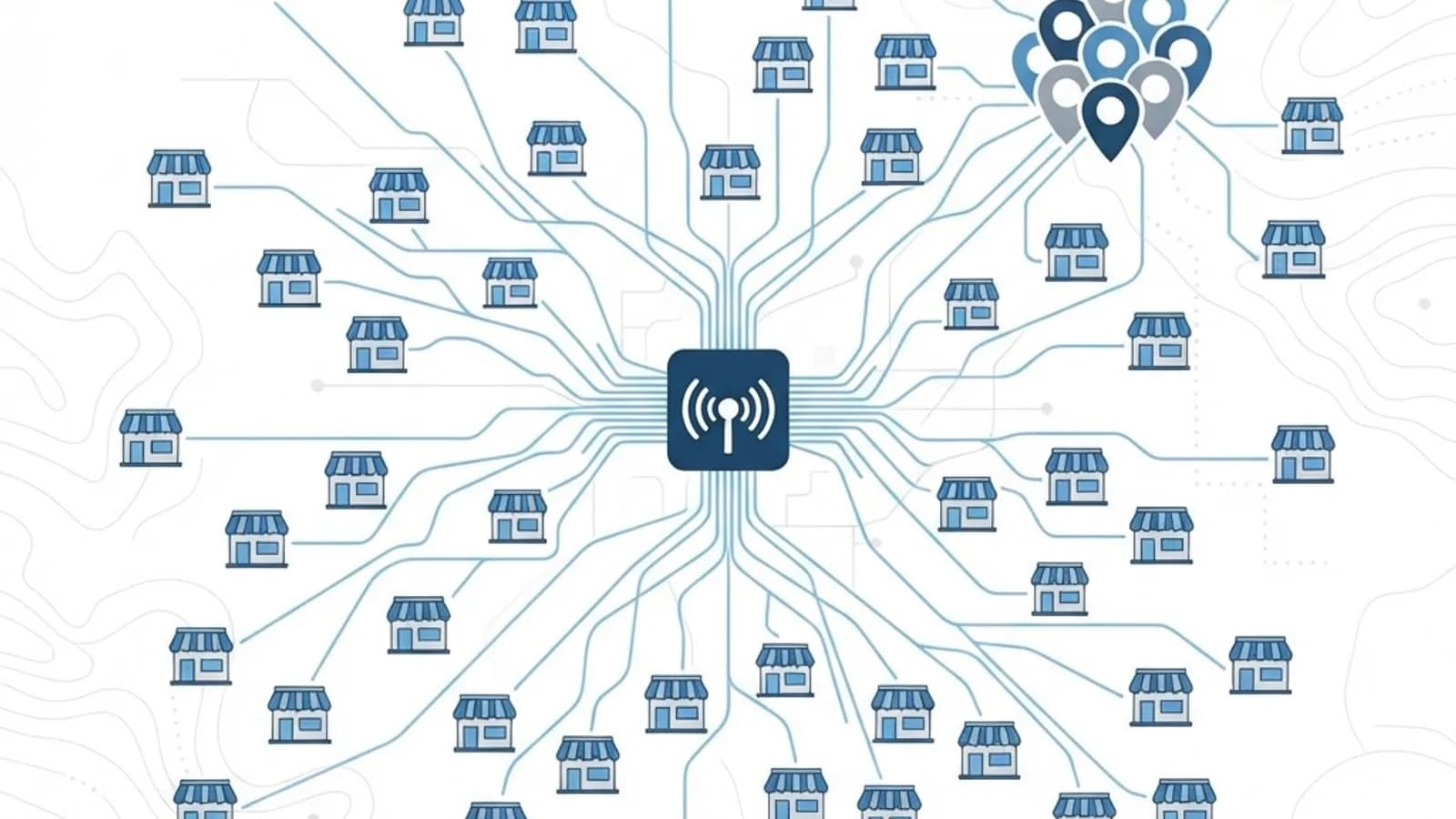
Franchise marketing is a balancing act nobody fully solves. Corporate wants brand consistency and national efficiency. Franchisees want leads in their territory this week. Push too far toward central control and locations feel generic; allow too much freedom and the brand fragments into a hundred inconsistent versions of itself.
Digital marketing for franchise systems works when it resolves that tension structurally — shared infrastructure, local flexibility, and transparent performance data for everyone.
Here is how successful multi-unit brands organize it.
What Is Franchise Digital Marketing?
It is a two-tier marketing system. The national tier builds brand awareness, manages the core website, and sets standards. The local tier drives location-level demand through maps, local search, and geographically targeted advertising.
The critical insight most brands learn late is that the majority of franchise revenue comes from local search, not national brand campaigns. Someone looking for a service near them will choose whichever nearby location looks most credible — even if they recognized your brand beforehand.
So the architecture of your location pages and listings matters more than the cleverness of your national creative.
Who Uses It?
Any multi-unit organization with independently operated locations faces these dynamics.
- Food and beverage franchises with dozens or hundreds of units
- Home service franchises in cleaning, restoration, and repair
- Fitness studios, salons, and wellness concepts
- Childcare, tutoring, and senior care networks
- Automotive service and quick-lube brands
Key Features of a Franchise Marketing System
Scalable Location Page Architecture
Every unit needs its own indexable page with unique content, local staff, real photos, service area, and embedded map. Templated pages with only the city name swapped perform poorly and can trigger duplicate content problems across the whole domain.
Centralized Listing Management
Hundreds of Google Business Profiles, Apple Maps entries, and directory listings must stay accurate through ownership changes, hour updates, and relocations. Managing this at scale requires a system, not a spreadsheet — often a custom internal web application connecting corporate data to local listings.
Co-Op Advertising Structures
Shared ad accounts with territory-level budgets let corporate maintain quality control while franchisees fund their own growth. Clear boundaries prevent locations from bidding against each other.
Brand-Compliant Local Creative
Franchisees need assets they can localize without breaking guidelines. A template library covering seasonal promotions, hiring posts, and community events prevents the homemade flyer problem.
How to Get Started
Build the shared foundation before scaling spend.
- Inventory every location's listings and correct inaccuracies across major platforms.
- Audit your location pages for genuinely unique content and local relevance.
- Establish one measurement standard so every unit is evaluated the same way.
- Create a co-op ad structure with defined territory boundaries and budget tiers.
- Build a creative asset library franchisees can access without corporate approval delays.
- Roll out a review generation process consistently at every location.
- Publish a shared performance dashboard visible to corporate and franchisees.
Benefits of a Unified Approach
System-wide coordination produces gains no single unit could achieve alone.
- Lower cost per lead through shared infrastructure and negotiated rates
- Consistent brand experience across every market
- Faster ramp-up for new units joining an established system
- Visibility into which locations underperform and why
- Stronger franchisee satisfaction and renewal rates
Potential Challenges
Franchise systems fail at digital marketing in predictable ways.
- Franchisees running rogue campaigns and websites outside brand standards
- Locations competing for the same search terms and inflating costs
- Inconsistent data quality as ownership and hours change
- Disputes over how shared marketing fund dollars are allocated
Best Practices and Tips
These principles keep large systems coherent.
- Give franchisees local flexibility within firm brand guardrails, never unlimited freedom
- Report results transparently — trust in the marketing fund depends on visible data
- Make review generation a required operating procedure, not a suggestion
- Keep visual identity locked down; consistent brand and logo design standards are what make a hundred locations feel like one company
Real-World Example
A home restoration franchise with forty-two units allowed each franchisee to build its own website. The result was forty-two inconsistent sites, several competing against the corporate domain for the same keywords, and no reliable way to measure anything.
Corporate consolidated everything onto a single domain with individual location pages, each containing local team photos, service area details, and genuine unit-level content. Listings were centralized and cleaned. A co-op ad program assigned non-overlapping territories with shared negative keyword lists.
Within a year, total organic visibility increased sharply because authority concentrated on one domain instead of fragmenting across forty-two weak ones. Cost per lead fell as internal bidding competition disappeared, and franchisees who had resisted the change became the program's strongest advocates once they saw their own dashboards.
Why It Matters
Franchise growth depends on unit economics. A location that cannot generate affordable leads struggles, and struggling units damage the brand's ability to sell new territories.
Effective digital infrastructure is therefore not just a marketing function — it is a core part of the franchise value proposition. Prospective franchisees increasingly evaluate a brand's marketing system before signing anything.
Frequently Asked Questions
Should franchisees have their own websites?
Generally no. Location pages on the corporate domain concentrate authority and rank better than dozens of separate small sites competing with each other.
How do we stop locations from competing in ads?
Define exclusive geographic targeting per unit, maintain shared negative keyword lists, and manage campaigns from a central account structure.
Who should pay for local digital marketing?
Most systems split it — the national fund covers brand, platform, and infrastructure, while franchisees fund local ad spend within their territory.
How do we get franchisee buy-in?
Transparency. Show each owner their leads, cost per lead, and conversion data. Resistance almost always stems from not seeing where the money goes.
Conclusion
Digital marketing for franchise brands succeeds when corporate builds the system and franchisees drive the local execution within it. Unify the domain, centralize the data, standardize measurement, and let each unit compete hard in its own territory.
If your locations are scattered across separate sites and inconsistent listings, consolidation is the single highest-impact move available. Pairing it with AI-powered marketing services can then automate reporting and content production across the entire network.
Enjoyed this article? Share it with others!