
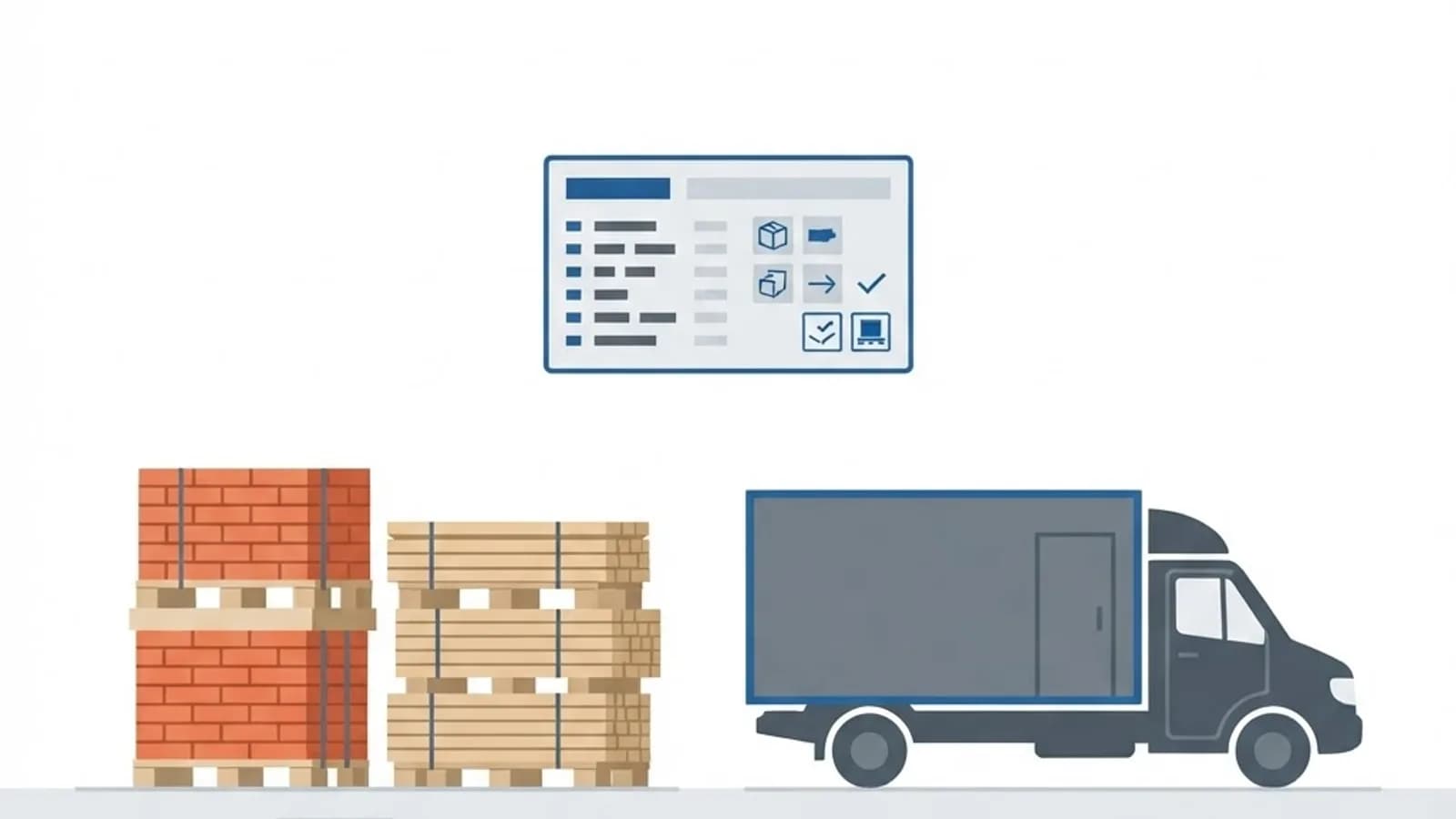
Building material supply is a relationship business with a purchasing process that has quietly moved online. Contractors still call their rep, but they check stock, compare specifications, and find new suppliers on a phone from the job site. Digital marketing for building material suppliers exists to serve that behaviour without disrupting the relationships that already work.
The temptation is to copy consumer ecommerce. That usually fails, because trade buyers care about availability, delivery windows, account pricing, and technical data far more than they care about lifestyle photography.
This guide covers what actually influences a trade buyer and how suppliers can build digital presence that supports the sales team instead of competing with it.
What Is It?
It is the use of online channels to reach specifiers, contractors, builders, and trade accounts with product information, availability, and expertise. The aim is usually account acquisition and order frequency rather than one-off transactions.
Product data is the single most valuable digital asset a supplier owns. Accurate specifications, dimensions, compliance certificates, installation guidance, and stock status drive more enquiries than any advertising campaign, because that is precisely what buyers search for.
Who Uses It?
The category spans a wide range of businesses with similar digital needs.
- Timber, steel, and aggregate merchants serving regional contractors
- Specialist product distributors in insulation, roofing, or glazing
- Manufacturers selling through a dealer network
- Plumbing, electrical, and HVAC wholesalers
- Suppliers expanding into a new geographic territory
Key Components
A Searchable Product Catalogue
Buyers search by product code, dimension, or specification. A catalogue that supports those searches and displays technical documents inline will capture enquiries competitors never see. Building this well is a data problem as much as a design one, and usually requires structured back-end web development.
Trade Account Portals
Letting account holders view their pricing, order history, delivery status, and reorder in a few clicks reduces phone volume and increases order frequency. It is also a genuine switching cost once adopted.
Technical Content and Guidance
Installation guides, compliance explainers, and material comparison pieces attract exactly the professional audience you want, and they get shared internally at contracting firms.
Local Visibility by Branch
Each depot or branch needs its own page and listing, because contractors search for what is available near the site they are working on today.
How to Get Started
Suppliers usually get the best results by fixing data before touching advertising.
- Audit your product data for accuracy, completeness, and consistent naming.
- Publish the full catalogue online with specifications and downloadable documents.
- Create a page per branch with stock focus, hours, and delivery radius.
- Build a simple trade portal for account customers, even a basic version.
- Publish technical content answering the questions your counter staff hear daily.
- Add live chat or a rapid quote request route for large orders.
- Integrate enquiries into the CRM so reps see digital activity.
Benefits
The returns tend to appear in operational efficiency as much as new sales.
- Fewer routine phone calls, freeing counter staff for higher-value work
- New trade accounts discovered through technical search traffic
- Higher order frequency from portal-enabled reorders
- Fewer returns caused by specification misunderstandings
- Better territory expansion without immediately hiring local reps
Potential Challenges
This sector has some genuine complications.
- Complex account-specific pricing that cannot be shown publicly
- Legacy ERP systems that resist integration
- Sales teams worried that digital ordering threatens their commissions
- Enormous product catalogues with inconsistent historical data
Best Practices and Tips
What separates suppliers who succeed online from those who stall.
- Show stock availability even if you do not show price publicly
- Let the portal complement reps by surfacing account activity to them
- Prioritise your top hundred SKUs before attempting the whole catalogue
- Make every technical document downloadable without a form gate
- Use clear infographic design for installation sequences and product comparisons
Real-World Example
A regional insulation distributor with four depots had a brochure website and no catalogue online. Their sales team was strong, but growth had stalled because every new customer required a rep visit to begin.
They started by publishing two hundred core products with full technical data and compliance certificates, each on its own indexable page. Within a year, those pages were attracting enquiries from contractors two counties away who had searched for a specific product code. Because the documents were freely accessible, specifiers began referencing the site during design stages, which pulled orders through later. The sales team ended up with warmer leads rather than fewer, and adoption resistance faded quickly.
Why It Matters
Trade buying decisions are increasingly made before any supplier conversation happens. If a contractor cannot confirm you stock the right product at two in the afternoon on a job site, they will call whoever they can confirm.
Digital presence in this sector is not about replacing relationships. It is about making sure you are still in consideration at the moment those relationships are formed.
Frequently Asked Questions
Should we sell online or just show products?
Many suppliers start with catalogue plus quote request, then add transactional ordering for account customers only. Full public ecommerce is rarely the right first step in trade supply.
How do we handle account-specific pricing?
Show list price or hide price entirely for public visitors, and display negotiated pricing only inside an authenticated portal tied to the account record.
Will a portal undermine our sales reps?
Structured properly it does the opposite. Reps spend less time taking repeat orders and more time on specification work and larger opportunities.
What content works best for contractors?
Practical, technical, and short. Installation sequences, compliance summaries, and material comparisons outperform general industry commentary by a wide margin.
Conclusion
Digital marketing for building material suppliers begins with clean product data and ends with a portal that makes reordering effortless. Advertising is the least important part of the equation.
Get the catalogue right and search traffic will find you, because very few competitors have done the same. When you are ready to connect that catalogue to your ordering systems, purpose-built ecommerce solutions are the practical next step.
Enjoyed this article? Share it with others!