
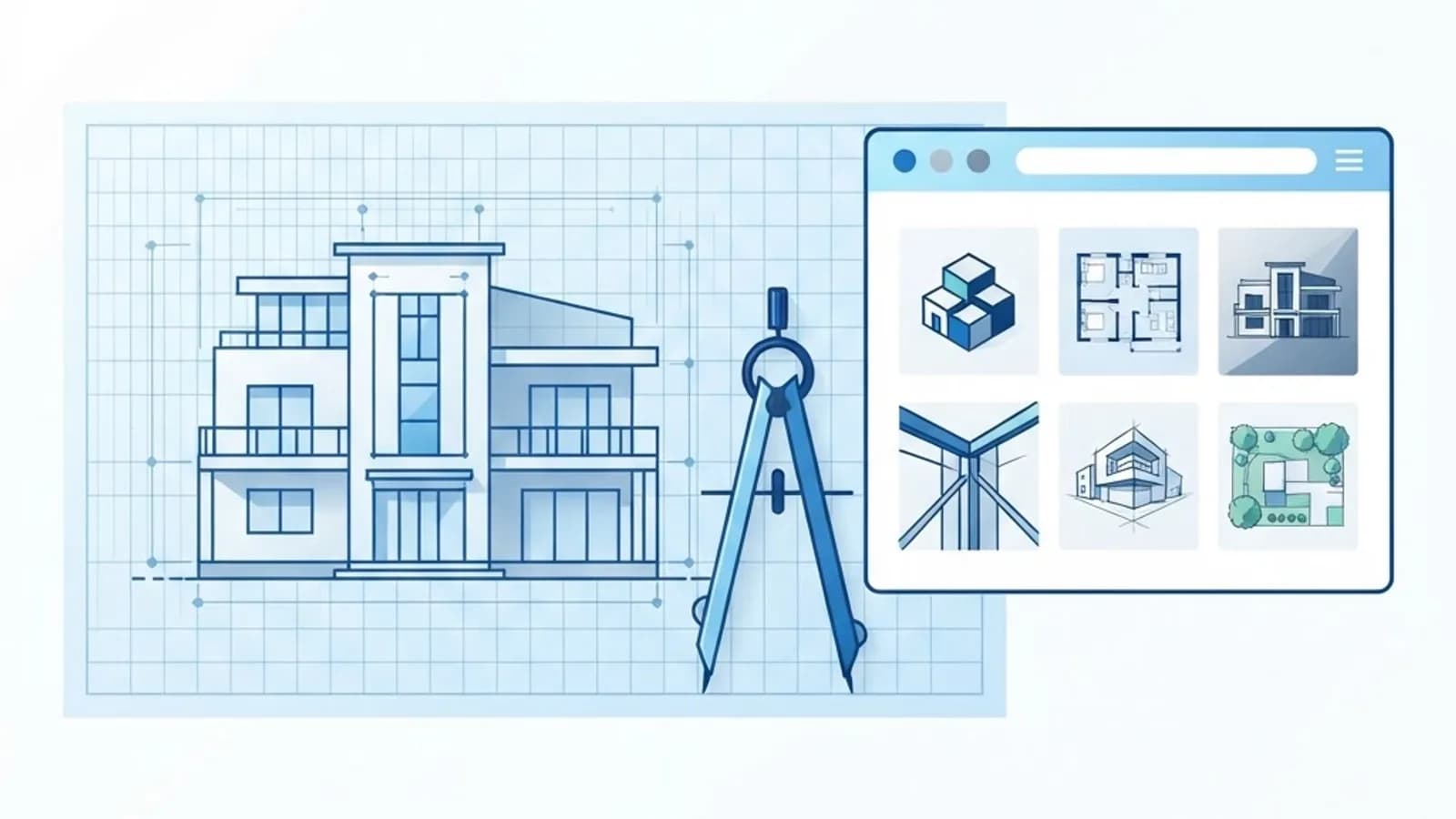
Architecture firms have historically grown through relationships. A satisfied developer refers another, a past client returns for a second building, and the pipeline sustains itself. That model still works — until it does not, usually right when a market cycle turns.
Digital marketing for architecture firms is insurance against that volatility. It builds a discoverable body of work and expertise so that new clients can find you without an introduction.
This guide covers what actually generates project inquiries for design practices, and what is just professional vanity.
What Is Digital Marketing for Architecture?
It is the practice of presenting a firm's expertise, portfolio, and point of view online so that prospective clients — developers, institutions, homeowners, or public agencies — can evaluate and contact you.
The dynamic is unusual. Architecture clients are often making one of the largest decisions of their professional lives, so trust and demonstrated relevance matter more than volume of traffic. Ten right visitors beat ten thousand wrong ones.
That places the portfolio at the center of everything. Not a gallery of pretty renders, but a set of project narratives explaining constraints, decisions, and outcomes.
Who Needs It?
Different practice types have different reasons to invest.
- Residential architects competing for high-end custom home commissions
- Commercial and multifamily firms pursuing developer relationships
- Institutional practices bidding on education, healthcare, and civic work
- Specialist studios in adaptive reuse, passive house, or historic preservation
- Young firms with talent but no established referral network
Key Features of Architecture Firm Marketing
Portfolio Presentation That Loads Fast
Architecture sites are image-heavy by nature, and many are painfully slow. Properly compressed assets, lazy loading, and a lean front end preserve both visual quality and patience. This is where thoughtful front-end web development separates a memorable site from an abandoned one.
Project Case Studies With Substance
For each project, explain the brief, the site constraints, the design response, and the measurable result — square footage, budget range, energy performance, schedule. Clients read these to see whether you have solved their problem before.
Search Optimization by Project Type and Region
Prospects search for practices by typology and geography. Dedicated pages for each specialty and market you serve capture that intent far better than a single services page.
Thought Leadership and Publication
Writing about zoning changes, material innovation, or sustainability standards builds authority and earns links from design publications — both of which strengthen rankings and reputation.
How to Get Started
Firms often over-plan this. A focused ninety-day effort accomplishes more than a year of committee discussion.
- Select your six strongest and most representative projects.
- Photograph or re-photograph them properly — image quality is non-negotiable in this field.
- Write a genuine case study for each, including problem, approach, and outcome.
- Rebuild or refine the site so those case studies load quickly and read well on mobile.
- Create service and typology pages targeting the work you want more of.
- Publish one substantive article per month on a topic your clients care about.
- Set up a simple inquiry form and track where each submission originated.
Benefits for Design Practices
The payoff is qualitative as much as quantitative.
- Inquiries from clients who already understand and want your approach
- Reduced dependence on a handful of referral sources
- Better recruitment — talented designers research firms before applying
- Stronger positioning in competitive interviews and RFP shortlists
- Control over your narrative rather than relying on third-party coverage
Potential Challenges
Architects face specific friction when marketing themselves.
- Heavy imagery causing slow load times and poor mobile performance
- Reluctance to publish budgets or constraints that clients actually want to know
- Long project cycles making content feel perpetually out of date
- Limited internal time — billable hours always win the calendar fight
Best Practices and Tips
A few principles keep the effort sustainable.
- Quality over quantity: six excellent case studies beat thirty thin ones
- Include people in project photography — buildings feel inhabited and relatable
- Write in your own voice; generic professional copy signals a generic practice
- Refresh the portfolio annually and retire work that no longer represents you
Real-World Example
A seven-person studio specializing in adaptive reuse of small commercial buildings had a beautiful but nearly invisible website. All work came from two developer relationships. When one paused activity, revenue dropped sharply.
The principals committed to a focused rebuild. They documented five reuse projects with detailed narratives covering structural surprises, permitting hurdles, and final cost per square foot. They added a page specifically about warehouse conversions and wrote quarterly pieces on local zoning shifts.
Over eighteen months, the firm began receiving inquiries directly from property owners who had searched for reuse expertise. Those leads were smaller individually but far more numerous, and they diversified the practice away from single-client dependency.
Why It Matters
Clients now shortlist firms before making a single call. Your website is the interview that happens without you in the room. If it fails to communicate capability and relevance, you are eliminated before you knew you were considered.
Firms that document their thinking publicly also compound authority over time — each project and article makes the next commission slightly easier to win.
Frequently Asked Questions
Do architecture firms really need SEO?
Yes, particularly for typology and location searches. Clients without an existing referral almost always begin with a search.
How much should we show about budgets?
Ranges are enough. Indicating scale helps qualify inquiries and saves everyone time on mismatched prospects.
Is Instagram sufficient as a marketing channel?
It builds visibility within the design community but rarely reaches serious clients making procurement decisions. Treat it as supplementary to a strong owned website.
Who should write our content?
Ideally a principal provides the substance and a professional shapes it. Outsourcing entirely tends to produce content that sounds like every other firm.
Conclusion
Digital marketing for architecture is fundamentally about making expertise legible. Show the problems you solved, explain how, and make it effortless to find.
If your portfolio is stunning but slow, start there. A rebuilt site backed by a flexible content system — such as a Strapi CMS website build — lets your team publish new projects without waiting on a developer.
Enjoyed this article? Share it with others!