
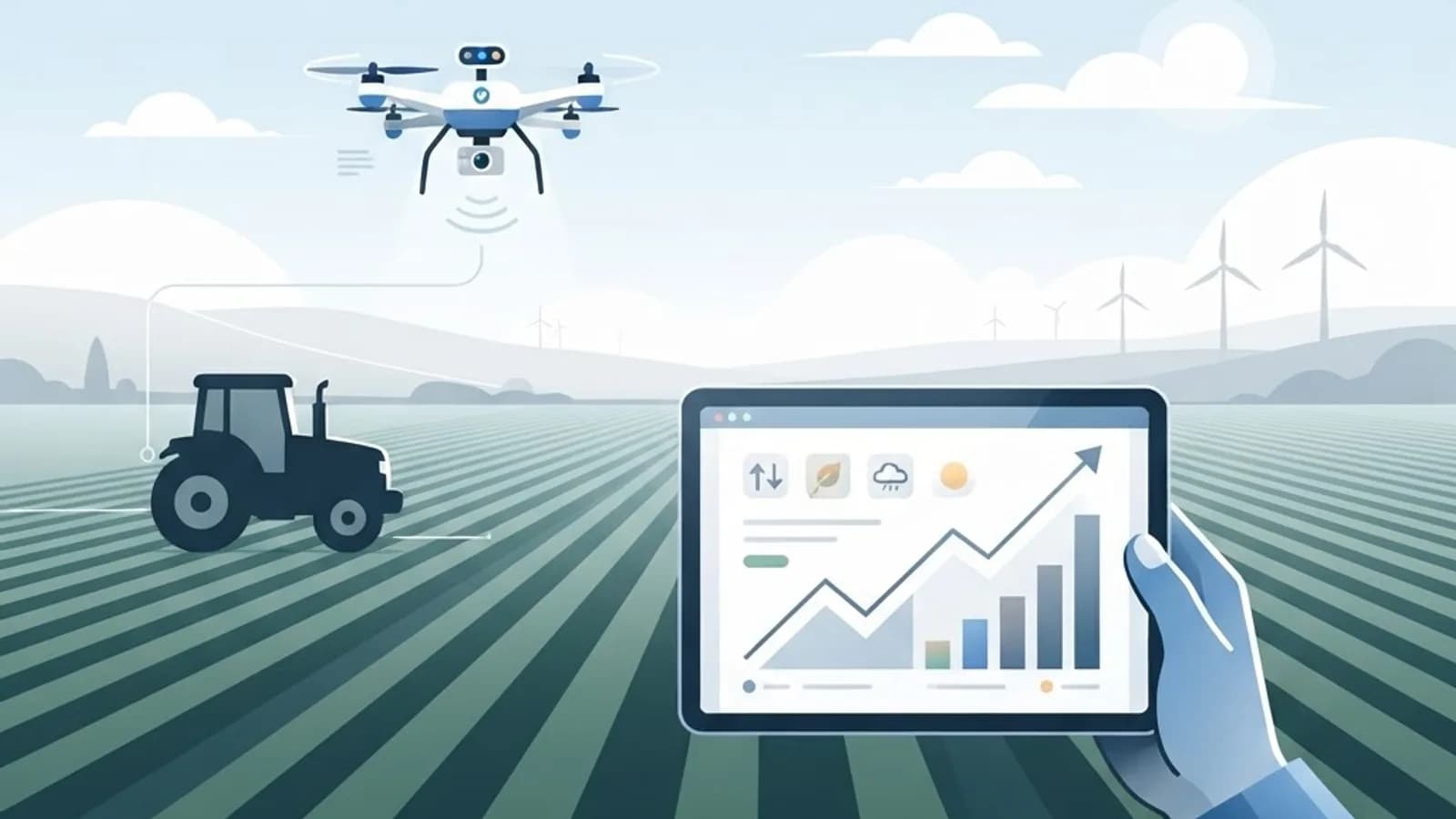
Farming has gone digital faster than most industries realize. Growers check commodity prices on their phones from inside a cab, compare seed varieties on manufacturer sites, and watch equipment walkthrough videos before ever calling a dealer. Yet many agricultural businesses still market as if the trade show is the only touchpoint that counts.
Digital marketing for agriculture closes that gap. It puts your products in front of producers during the research window — weeks or months before a purchase order exists.
This guide covers what works in ag specifically, where generic marketing advice fails, and how to build something that survives the seasonality of the business.
What Is Digital Marketing for Agriculture?
It is the use of search, content, email, video, and paid media to reach farmers, ranchers, cooperatives, agronomists, and agribusiness buyers. The audience is technical, skeptical of hype, and heavily influenced by peers.
That changes the content mix. Yield data, trial results, and honest comparisons outperform slogans. Credibility is the currency in agricultural marketing, and it is earned through specificity — soil types, application rates, regional conditions, real numbers.
The channel mix also differs. Long sales cycles mean email nurture and educational content carry more weight than impulse-driven social ads. YouTube matters enormously because equipment and technique are best explained visually.
Who Uses Agricultural Digital Marketing?
The category is broader than row-crop inputs.
- Seed, fertilizer, and crop protection manufacturers
- Equipment dealers and precision agriculture technology vendors
- Livestock genetics, feed, and animal health companies
- Cooperatives and grain handling operations
- Direct-to-consumer farms, CSAs, and specialty food producers
Key Features of Ag Marketing Programs
Technical Content and Trial Data
Publish agronomic content that a skeptical producer would actually read: multi-year trial summaries, regional performance breakdowns, failure cases and what caused them. This is the highest-trust content in the industry.
Video and Field Demonstrations
Nothing sells equipment or application technique like footage from the field. Short walkthroughs, before-and-after comparisons, and operator interviews travel well. Investing in proper video production services pays back across sales, training, and dealer support.
Seasonal Campaign Timing
Ag demand is calendar-locked. Pre-plant, side-dress, harvest, and off-season purchasing windows each require different messaging. Campaigns launched two weeks late are largely wasted.
Dealer and Distributor Enablement
Most ag products sell through a channel. Supplying dealers with ready-made assets, co-branded pages, and localized landing pages multiplies reach without multiplying headcount.
How to Get Started
Build from the customer's decision process backward.
- Map the buying calendar for your product and note the research window before each purchase.
- Identify the five questions producers ask before buying, and answer each thoroughly on your site.
- Fix site fundamentals — mobile speed matters when connectivity is rural and inconsistent.
- Produce two or three field videos demonstrating real use, not studio footage.
- Build an email list through genuinely useful resources like agronomic calculators or planting guides.
- Run paid search against specific product and problem terms, not broad category words.
- Track inquiries by region so you can see which territories respond.
Benefits of Digital Marketing in Agriculture
The advantages compound across a long sales cycle.
- Reach producers between trade shows, when most research actually happens
- Lower cost per qualified lead than print and event-only strategies
- Better dealer relationships because you deliver warm inquiries
- Data on which regions, crops, and problems drive demand
- Content assets that stay useful season after season
Potential Challenges
Agriculture presents obstacles that other industries do not.
- Rural connectivity limits heavy, script-laden websites
- Extremely seasonal demand creates long quiet periods in the data
- Regulatory constraints on claims for chemicals and animal health products
- Buyers who prefer phone and in-person contact for final decisions
Best Practices and Tips
A few rules keep ag marketing honest and effective.
- Never overstate yield or performance claims — the community fact-checks quickly
- Write at the technical level of your audience, not down to it
- Segment email lists by crop, region, and operation size
- Use clean, data-led visuals; well-built infographic design makes trial results far easier to absorb
Real-World Example
A regional cover crop seed supplier sold almost entirely through field days and word of mouth. Growth stalled because the owner could only attend so many events. He shifted strategy: published a dozen detailed articles on species selection by soil type, filmed six short videos of stands at different growth stages, and offered a free seeding-rate calculator behind an email signup.
Within two seasons, the calculator had collected several thousand emails segmented by state. Pre-season email campaigns to that list generated more order volume than the entire field day circuit, and the articles began ranking for long-tail species questions that competitors ignored entirely.
Why It Matters
The generation now making purchasing decisions on farms grew up online. They compare, they research, and they trust peer evidence over sales pitches. Companies that publish substantive, accurate information become the default reference — and the default vendor.
Meanwhile, precision agriculture is generating more data-driven buyers every year. Marketing that speaks in numbers will keep winning as that shift continues.
Frequently Asked Questions
Do farmers really research purchases online?
Extensively. Smartphone adoption in agriculture is near universal, and equipment, inputs, and software are all commonly researched online before any dealer conversation.
Which channel works best for agricultural products?
Search plus email for high-consideration inputs; video for equipment and technique; social for community and brand affinity. Most successful programs use all three with different roles.
How do I market when demand only exists three months a year?
Build audience during the off-season with education, then convert during the buying window. Email lists and content assets do the waiting for you.
Is social media worth it for agribusiness?
Yes, particularly for community building and recruiting. Farmer-to-farmer discussion in groups drives real influence, though attribution is harder to measure.
Conclusion
Digital marketing for agriculture works when it respects the audience — technical, practical, and unimpressed by fluff. Publish real data, show the product in the field, and time your campaigns to the calendar that governs the industry.
If your current site cannot support video, gated resources, or regional landing pages, that is the place to start. A capable back-end web development foundation makes every campaign that follows easier to run.
Enjoyed this article? Share it with others!