
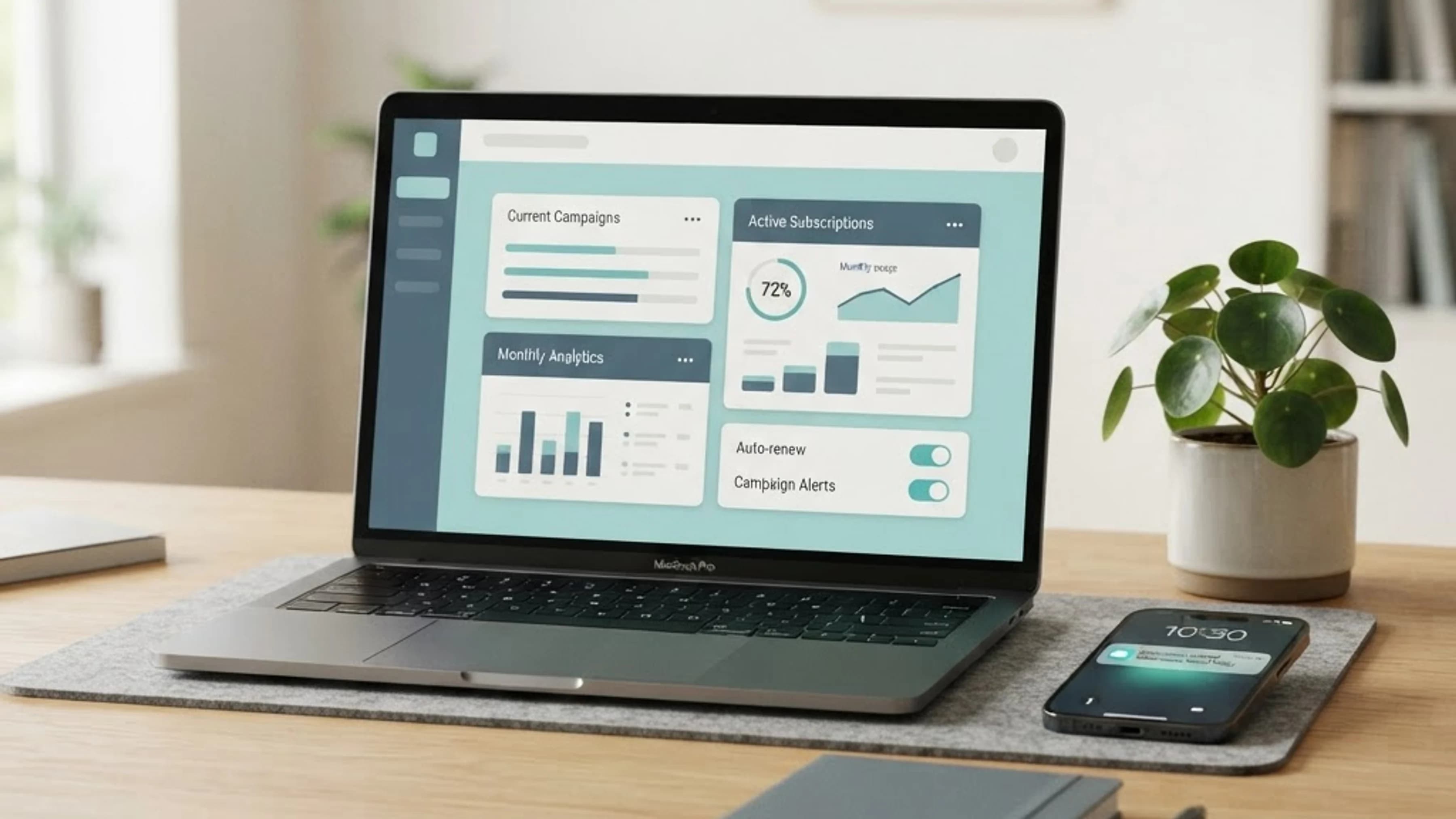
Software moved to subscriptions years ago. Marketing has been quietly following, and the result is a delivery model that looks less like a traditional agency retainer and more like a managed service you switch on.
Digital marketing as a service, sometimes shortened to DMaaS, packages strategy, execution, tooling and reporting into a predictable subscription with defined outputs. For many small and mid-sized companies it solves a genuine problem: needing five specialisms but only being able to afford one salary.
This guide explains how the model works, what it should include, where it fails, and how to judge whether it fits your business better than an agency or an internal hire.
What Is Digital Marketing as a Service?
Digital marketing as a service is a subscription arrangement in which an external provider delivers ongoing marketing execution across multiple channels, supported by shared tooling, standardised processes and transparent reporting.
It differs from a classic agency retainer in its productisation. Deliverables, service levels and escalation paths are defined up front, much as they would be in a software contract, rather than negotiated project by project.
The core promise is access to a full marketing capability at a fraction of the cost of building one, with the flexibility to scale up or down as demand changes.
Who Uses This Model?
DMaaS fits organisations that need consistent execution more than bespoke campaign creativity.
- Small and mid-sized businesses without an internal marketing department
- Startups needing to move quickly before justifying permanent headcount
- Companies with one overstretched marketer who needs specialist support
- Multi-location and franchise businesses requiring repeatable local execution
- Professional services firms with steady, predictable lead generation needs
Key Features of a Good DMaaS Offering
Defined Deliverables and Service Levels
A credible provider states exactly what arrives each month: content volume, campaign management hours, response times and reporting cadence. Vague promises of growth without specified output are the clearest warning sign.
Multi-Channel Coverage
The value of the model lies in breadth. A single subscription should reasonably cover search visibility, content, paid campaigns, social and email, so you are not stitching together four vendors.
Shared Technology Stack
Providers spread the cost of analytics, automation, design and reporting tools across clients. This is a genuine economic advantage, provided the accounts and data remain yours. Many providers also bundle professional graphic design capacity so creative work does not become a bottleneck.
Transparent Reporting and Dashboards
You should see performance continuously, not in a monthly slide deck. Live dashboards tied to business outcomes distinguish serious providers from those managing perception.
How to Get Started
Onboarding quality predicts engagement quality. A rushed start almost always produces mediocre results.
- Document your current channels, assets, tools and account ownership.
- Define two or three business outcomes you want the subscription to influence.
- Compare providers on specified monthly deliverables, not headline price alone.
- Confirm you retain ownership of all accounts, data, content and creative.
- Agree a ninety-day onboarding plan with clear milestones.
- Establish a single point of contact on each side and a fixed review rhythm.
- Review at ninety days against the defined outcomes and adjust scope.
Benefits
The model's appeal is mostly economic and operational rather than creative.
- Predictable monthly cost that is far lower than equivalent in-house salaries
- Immediate access to multiple specialisms without recruitment delay
- Faster execution through established processes and templates
- Ability to scale scope up or down without redundancy risk
- Continuity of activity when internal staff leave or go on leave
Potential Challenges
Productisation cuts both ways, and the trade-offs are real.
- Standardised playbooks may not suit unusual products or niche markets
- Shared resources mean you do not have exclusive attention during busy periods
- Deep institutional product knowledge builds more slowly than in-house
- Providers using heavy automation can produce generic, low-value output
Best Practices and Tips
Clients who get the most from DMaaS behave like partners rather than purchasers.
- Insist on account and data ownership in writing before you sign
- Give the provider genuine access to sales feedback, not just website analytics
- Start with a narrower scope executed well and expand once trust is established
- Review deliverable quality quarterly, not just performance metrics
Real-World Example
A twelve-person engineering firm had one marketing coordinator handling everything from trade show materials to the website. Output was inconsistent and the website had not been updated in over a year.
The firm adopted a DMaaS subscription covering content, search optimisation, paid search and email, keeping the coordinator as internal owner and subject matter liaison. Within two quarters the firm published consistently for the first time, organic enquiries roughly tripled from a low base, and the coordinator shifted from production to strategy. Total cost sat well below a single additional specialist salary.
Why It Matters
Marketing now requires more distinct skills than most mid-sized companies can reasonably employ. Technical search, paid media, design, analytics, automation and content each demand real expertise, and generalists struggle to be strong across all of them.
Digital marketing as a service exists because that skills gap is structural, not temporary. For businesses that need reliable execution rather than award-winning campaigns, it is often the most rational allocation of a limited budget, particularly when paired with dependable website maintenance and support.
Frequently Asked Questions
How much does digital marketing as a service cost?
Typical subscriptions run from around one thousand to eight thousand per month depending on channel coverage and content volume, with advertising budgets usually charged separately. Compare on deliverables per pound rather than headline rate.
How is DMaaS different from an agency retainer?
Agencies tend to sell bespoke campaigns and creative thinking. DMaaS sells standardised ongoing execution with defined outputs and service levels. Neither is superior; they suit different needs.
Will I lose control of my marketing?
Not if contracts are structured correctly. Retain ownership of all platforms, domains, data and creative assets, and require full handover documentation. Control is a contractual matter, not a model limitation.
Is DMaaS suitable for ecommerce?
Yes, particularly for ongoing feed management, campaign optimisation and lifecycle email. Larger stores often combine it with specialist ecommerce development solutions for platform-level work.
Conclusion
Digital marketing as a service turns an unaffordable team into an affordable subscription, provided you choose a provider with defined deliverables, transparent reporting and honest ownership terms. Start narrow, measure business outcomes, and expand what works.
To explore whether a managed subscription suits your business, look at scalable digital marketing services and begin with a ninety-day plan.
Enjoyed this article? Share it with others!