
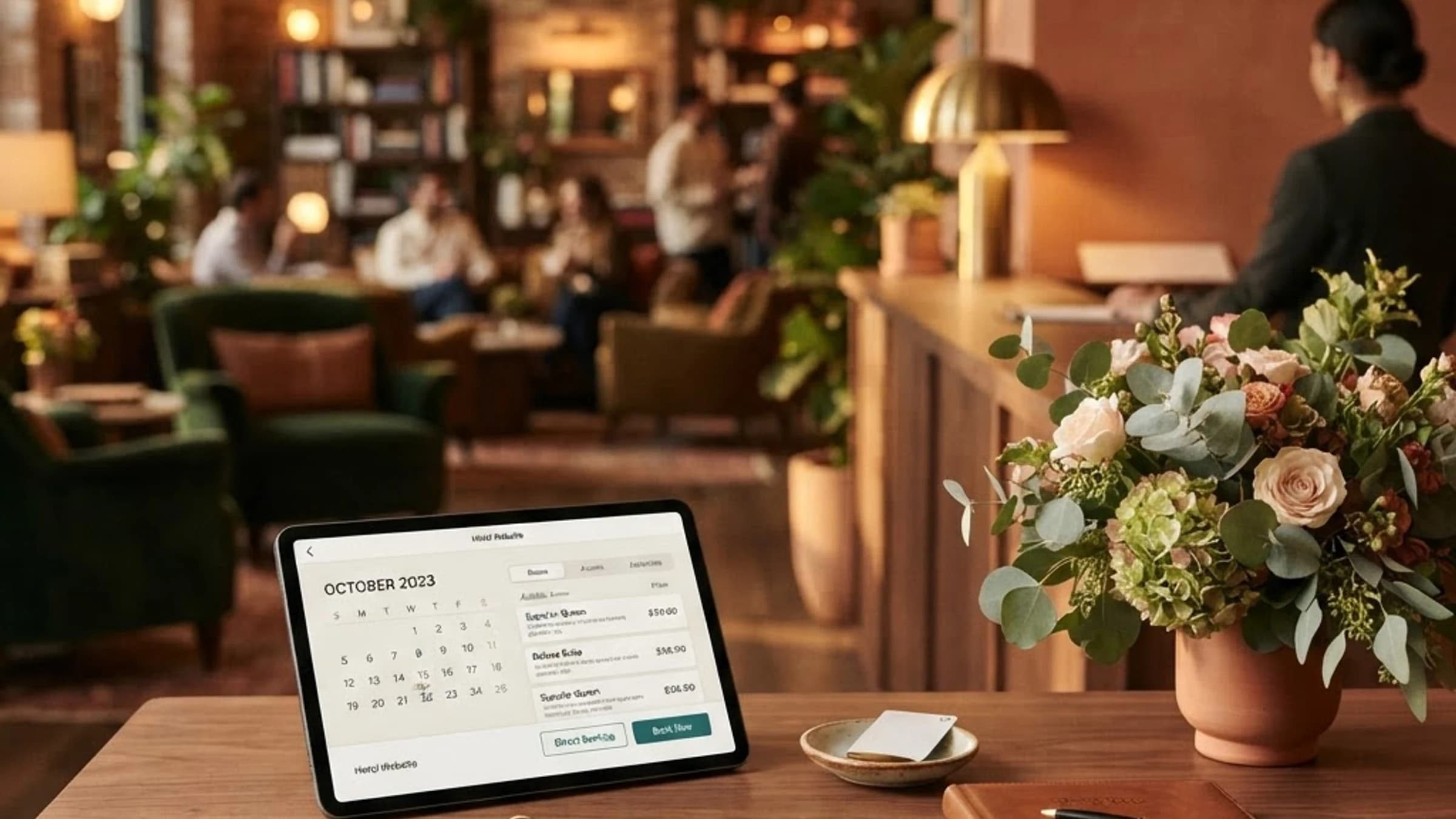
In hospitality, every booking arrives through a channel, and every channel takes a different cut. That single fact should shape your entire marketing strategy, because the difference between a direct reservation and an OTA reservation is often fifteen to twenty-five percent of the room rate.
Hospitality digital marketing exists to shift demand toward the channels you own, without losing the reach the big platforms provide. It is a balancing act rather than a war.
This guide covers the practical levers hotels, resorts, restaurants and short-stay operators can pull to increase direct bookings, improve rate integrity and build guest relationships that outlast a single stay.
What Is Hospitality Digital Marketing?
Hospitality digital marketing is the discipline of attracting, converting and retaining guests through online channels including search, maps, metasearch, social platforms, email and your own booking engine.
Unlike most retail marketing, it deals with perishable inventory. An unsold room tonight has zero residual value tomorrow, which makes timing, pacing and demand forecasting central to every decision.
The strategic goal is almost always the same: increase the share of profitable direct bookings while using paid and partner channels to fill the gaps intelligently.
Who Needs It?
Anyone selling time-bound guest experiences online will see measurable returns from a structured programme.
- Independent hotels and boutique properties competing with chain brands
- Resorts and spas selling packages with high average order values
- Restaurant groups relying on reservations and local discovery
- Serviced apartment and vacation rental operators managing multiple listings
- Event venues, glamping sites and experience-led hospitality businesses
Key Features of a Strong Programme
A Conversion-Focused Website and Booking Flow
Most hospitality sites lose guests between the room page and the payment screen. Fewer steps, transparent pricing, visible availability and mobile-first design consistently outperform beautiful but slow brochure sites. Properties serious about direct revenue often rebuild around a purpose-built high-performance booking website rather than patching an aging template.
Local SEO and Map Visibility
Guests search by place, not brand: hotels near a district, restaurants with a terrace, spas open Sunday. Optimised Google Business Profiles, accurate attributes, fresh photography and steady review flow drive an enormous share of walk-in and last-minute demand.
Metasearch and Rate Parity Management
Appearing on metasearch with a competitive direct rate captures guests who have already chosen your property but not yet chosen a channel. This is often the cheapest direct booking available to you.
Guest Data and Lifecycle Email
Your guest database is the only audience no platform can take away. Pre-arrival upsells, on-property offers and seasonal win-back campaigns turn one visit into a habit, and well-run email marketing campaigns routinely deliver the highest return of any hospitality channel.
How to Get Started
Begin with the leaks, not the campaigns. Fixing conversion before buying traffic makes every later pound work harder.
- Calculate your current channel mix and the true net revenue per channel.
- Test your booking flow on a mid-range phone and remove every unnecessary step.
- Complete your Google Business Profile with current photos, amenities and hours.
- Set up a review response routine covering all reviews within forty-eight hours.
- Connect your booking engine to metasearch with a rate that respects parity rules.
- Launch three lifecycle emails: pre-arrival, post-stay thank you and seasonal offer.
- Add branded and geo-targeted paid search to defend against OTA bidding.
Benefits
The payoff shows up in margin as much as in occupancy.
- Higher net revenue per booking as direct share increases
- Better rate control and less dependence on discount-driven demand
- Richer guest data for personalisation and forecasting
- Improved review scores through systematic feedback management
- More resilient shoulder-season occupancy from owned audiences
Potential Challenges
Hospitality marketing has structural difficulties that no tactic fully removes.
- OTAs outbid independents on branded search terms and out-resource them on content
- Seasonality makes month-over-month reporting misleading
- Fragmented systems, from PMS to channel manager, complicate attribution
- Frontline staff turnover disrupts review and data-capture routines
Best Practices and Tips
Consistency beats cleverness in this sector almost every time.
- Always give guests a concrete reason to book direct, such as flexibility or a perk, not just a vague promise
- Refresh photography annually and lead with real spaces rather than stock imagery
- Respond to negative reviews calmly and specifically; future guests read the reply, not the complaint
- Segment email by stay purpose, because business and leisure guests want entirely different offers
Real-World Example
A forty-room coastal hotel was taking roughly seventy percent of bookings through OTAs. Its website was attractive but the booking engine sat on a slow subdomain, and no email had been sent to past guests in two years.
Over a season the team moved to a faster integrated booking flow, added metasearch with a direct-rate perk, began capturing email at check-in, and sent a simple three-email lifecycle sequence. Direct share moved into the mid-forties, average stay length increased slightly through pre-arrival upsells, and commission savings alone paid for the project within one summer.
Why It Matters
Guests no longer discover properties through brochures or agents. They discover them through maps, reviews, photos and search, and they decide in minutes. If your digital presence is slower, older or less trustworthy than a competitor two streets away, you lose bookings you never knew existed.
Hospitality digital marketing is, in the end, about owning your own demand rather than renting it.
Frequently Asked Questions
How can independent hotels compete with OTAs?
Not by outspending them, but by owning branded search, offering genuine direct-booking value, capturing guest email and being excellent on maps and reviews. OTAs win reach; you win relationships.
Which channel gives hotels the best return?
Email to past guests almost always has the highest return on spend, followed by branded paid search and metasearch. Organic local visibility delivers the best long-term compounding value.
How important are reviews for hospitality bookings?
Extremely. Review volume, recency and management response all influence both platform ranking and guest choice. A steady trickle of fresh reviews outperforms a large but stale collection.
Should small properties invest in social media?
Yes, but selectively. Visual platforms build desire and support discovery, especially for distinctive properties, while managed social media programmes keep output consistent when staff time is limited.
Conclusion
Successful hospitality digital marketing is unglamorous discipline: a fast booking flow, accurate local listings, competitive direct rates, relentless review care and a guest database you actually use. Do those five things well and your channel mix will improve every season.
If you are ready to shift more revenue into channels you own, explore full-service digital marketing support built for high-competition local markets.
Enjoyed this article? Share it with others!