
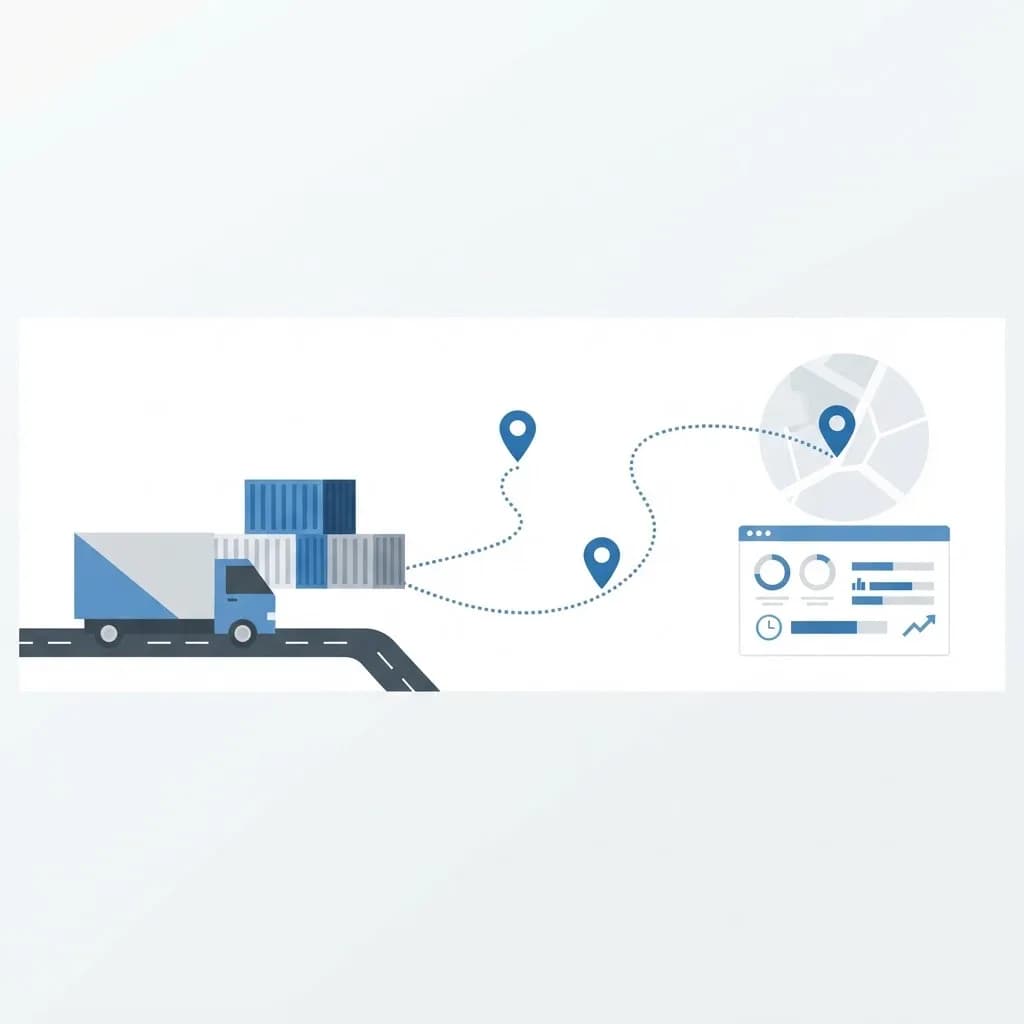
Freight is a relationship business that has quietly become a search business. Shippers evaluating a new 3PL now start with Google, compare five providers' websites, and shortlist before a single phone call is made.
That change is why a specialist digital marketing agency for logistics companies is no longer an unusual line item. Brokers, carriers and freight forwarders are competing for attention in a market where capacity, rates and service claims all look identical from the outside.
This guide covers how logistics marketing works on both sides of the equation — winning shippers and recruiting carriers — and what separates campaigns that produce loads from those that produce noise.
What Is Logistics Digital Marketing?
It is demand generation for freight and supply chain services, spanning shipper acquisition, carrier and driver recruitment, and brand positioning in a market where differentiation is genuinely difficult.
Logistics marketing has an unusual dual audience. One set of campaigns targets shippers with freight to move; another targets carriers and drivers with capacity to sell. These two audiences require entirely separate messaging, channels and landing experiences, yet many providers run them from the same generic website.
Layered on top is extreme market cyclicality. In a tight capacity market, carrier recruitment matters most; in a soft market, shipper acquisition does. Budget should move accordingly.
Who Needs It?
The sector covers many business models with distinct marketing requirements.
- Freight brokers competing for shipper contracts and carrier capacity simultaneously
- Asset-based carriers recruiting drivers in a persistently tight labour market
- Third-party logistics providers selling complex, multi-service contracts
- Freight forwarders handling international shipments and customs services
- Warehousing and fulfilment operators targeting ecommerce brands
- Last-mile delivery companies serving retail and grocery clients
Key Features Of A Logistics Programme
Lane And Service Specific Content
Shippers search by lane, mode and commodity — refrigerated freight from Laredo, flatbed capacity in the Southeast, LTL consolidation for a specific corridor. Content built around these specifics captures intent that generic "logistics solutions" pages never will.
Carrier And Driver Recruitment Campaigns
Driver recruitment is a marketing function operating with consumer-marketing mechanics: fast application flows, mobile-first design, pay transparency, and immediate follow-up. Slow response loses candidates within hours, not days.
Real-Time Visibility And Tech Positioning
Shippers increasingly select partners on technology as much as rate. Providers demonstrating tracking portals and integration capability win more RFPs, which is why many invest in customer-facing logistics web application development and then market it explicitly.
Trust And Compliance Signals
Authority numbers, safety ratings, insurance coverage and certifications should be visible and prominent. Shippers verify these before engaging, and burying them costs enquiries from exactly the buyers you want.
How To Get Started
Logistics marketing benefits from separating the two audiences before anything else.
- Split your website into distinct shipper and carrier journeys with separate navigation.
- Identify your five most profitable lanes or service types and build pages for each.
- Publish transparent capability data: equipment, coverage, insurance, certifications.
- Create a mobile-first carrier or driver application that takes under three minutes.
- Launch paid search separately for shipper terms and recruitment terms.
- Track cost per booked load and cost per hired driver as distinct metrics.
Benefits
A working programme reduces the volatility that makes freight so difficult to plan around.
- Inbound shipper enquiries that are not sourced from load boards or cold calling
- Lower driver recruitment cost compared with job board and referral bonuses
- Better margin per load when the relationship starts from capability rather than rate
- Improved brand recall during RFP cycles when procurement builds its vendor list
- Resilience across market cycles because demand generation is not purely relationship-based
Potential Challenges
Freight marketers work with some structural difficulties.
- Severe market cyclicality makes annual budget planning unreliable
- Commoditised perception means buyers often default to rate comparison
- Long procurement cycles for enterprise shipper contracts, often annual RFPs
- High churn in driver recruitment inflates apparent cost per hire
Best Practices
Providers that stand out tend to get specific where competitors stay vague.
- Name your lanes, equipment types and service areas explicitly rather than claiming nationwide everything
- Publish real performance data — on-time percentage, claims ratio, tender acceptance
- Respond to carrier and driver enquiries within minutes, not business days
- Keep marketing active through soft markets; that is when share is actually won
Real-World Example
A regional freight brokerage in Texas depended on load boards and outbound calling. Its website was a three-page brochure, and inbound shipper enquiries averaged one per month.
They built twelve lane-specific pages covering their strongest corridors, each with typical transit times, equipment availability and commodity experience. A separate carrier portal with a two-minute onboarding form replaced an email-based process. Within eight months inbound shipper enquiries reached 23 monthly, and carrier onboarding time fell from four days to under one. The measurable margin gain came from lane pages attracting shippers who valued specific expertise rather than the lowest quote.
Why It Matters
Freight buyers have more options and better information than ever. Digital freight platforms have raised expectations for transparency and speed across the entire market, including traditional providers.
Working with a digital marketing agency for logistics companies that understands both sides of the marketplace means competing on demonstrated capability rather than on rate alone — which is the only sustainable position in a commoditised industry.
Frequently Asked Questions
Does SEO work for freight brokers?
Yes, particularly for lane-specific and commodity-specific searches. Generic terms like "freight broker" are expensive and low-converting; specific corridors are where the value sits.
What is a reasonable cost per driver hire?
It varies by market and equipment type, but digital recruitment campaigns frequently outperform job boards once the application flow is optimised for mobile.
Should shipper and carrier sites be separate?
Separate sections on one domain works well and preserves search authority. What matters is that each audience gets its own navigation, messaging and conversion path.
How do we differentiate in a commodity market?
Through specificity and proof — named lanes, real performance metrics, visible technology. A polished customer tracking portal is often the most convincing differentiator available.
Conclusion
Logistics buyers are searching before they are calling. Being specific about what you move, where, and how well is the entire game.
Pick your three strongest lanes and build genuinely detailed pages for them this quarter. When your operational technology deserves to be seen by prospects, showcase it with scalable cloud infrastructure behind the scenes.
Enjoyed this article? Share it with others!