
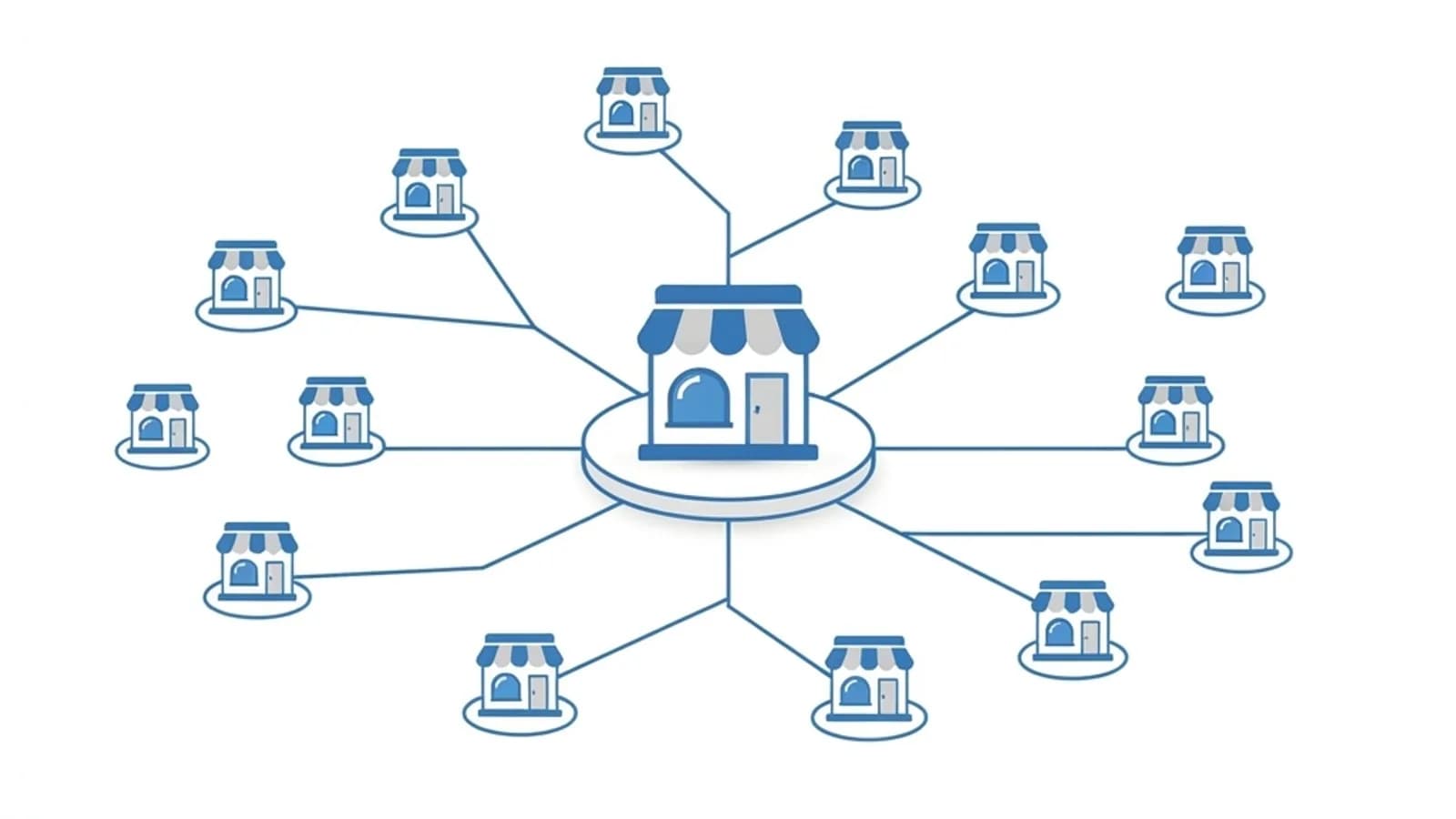
Running marketing for one business is hard. Running it for forty locations owned by forty different people is a completely different sport. Digital franchise marketing is the discipline that keeps a brand consistent at the national level while still winning the messy, hyper-local search results that actually bring customers through the door.
The tension is always the same. Corporate wants one voice, one logo, one promise. Franchisees want phones ringing in their territory this week. Good franchise marketing does not pick a side. It builds a system where both things happen at once.
This guide walks through how that system works in practice: the structure, the channels, the pitfalls, and the small operational habits that separate franchise brands that grow steadily from the ones that burn budget on scattered, uncoordinated spend.
What Is Digital Franchise Marketing?
Digital franchise marketing is a two-tier approach to online promotion. The corporate or franchisor level handles brand awareness, creative assets, national campaigns, and the technology stack. The franchisee level handles local execution: neighbourhood targeting, community relationships, reviews, and local offers.
What makes it distinct from ordinary multi-location marketing is ownership. A franchisee is an independent business owner, not a branch manager. They have their own budget, their own priorities, and the legal right to say no. So the system has to be good enough that franchisees want to use it, not just be told to.
In practice that means templated but flexible assets, shared data, transparent reporting, and a clear line between what is locked and what is local.
Who Needs Franchise Marketing Support?
Any brand with distributed ownership eventually hits the point where ad-hoc marketing stops scaling. It usually happens somewhere between the fifth and fifteenth location, when nobody can remember which franchisee is running what.
- Food and beverage franchises competing on delivery apps and local search
- Home service brands such as cleaning, pest control, HVAC, and lawn care
- Fitness studios, salons, and wellness concepts with membership models
- Education, tutoring, and childcare franchises with seasonal enrolment cycles
- Automotive, repair, and retail networks with territory-based catchments
Key Features of a Franchise Marketing System
A Centralised Brand Asset Library
Franchisees should never be designing from scratch. A shared portal with approved logos, colours, ad creative, and editable templates removes the single biggest source of brand drift. Many brands pair this with professional social media post and banner design so every location publishes work that looks like it came from the same company.
Location Pages That Actually Rank
Each franchise needs its own indexable page with unique content, local address data, staff details, and territory-specific services. Thin, duplicated location pages are the most common technical failure in franchise SEO. Building them properly usually means a scalable template handled through solid website design rather than a page bolted on per launch.
Shared Data and Attribution
Corporate needs to see cost per lead by market. Franchisees need to see their own numbers. One analytics layer, segmented by location, prevents the endless argument about whether leads are real.
A Co-Op Budget Model
Most networks pool a percentage of revenue into a national fund and let franchisees add discretionary local spend on top. The clearer the split, the fewer disputes.
How to Get Started
Starting from scratch is less daunting than it looks if you sequence it. The goal in the first ninety days is not perfection; it is a repeatable launch process any new franchisee can follow.
- Audit every existing location's digital footprint, including rogue social accounts and unclaimed listings.
- Claim and standardise business profiles with consistent name, address, and phone data.
- Build the location page template and populate it with genuinely unique local content.
- Create an asset library and a simple request process for custom needs.
- Launch one national brand campaign and one local lead-generation campaign as a pilot.
- Set reporting cadence: weekly for franchisees, monthly for corporate.
- Document the whole thing as an onboarding playbook for future locations.
Benefits of Getting It Right
When a franchise marketing system clicks, the results compound. Each new location joins an engine that already works instead of starting cold.
- Lower cost per lead through shared creative and pooled media buying
- Faster ramp-up time for new franchisees, which improves franchise sales
- Consistent brand perception across every market
- Cleaner data for forecasting and territory planning
- Less time wasted policing off-brand posts and unauthorised ads
Potential Challenges
None of this is frictionless. The recurring problems are predictable, which at least means you can plan for them.
- Franchisee resistance when corporate campaigns feel irrelevant to their market
- Cannibalisation, where two nearby locations bid against each other on the same keywords
- Review management falling through the cracks because nobody owns it
- Legal and compliance risk from unapproved claims in local ads
Best Practices and Tips
The brands that do this well tend to share a few habits, and none of them are expensive.
- Give franchisees a small, clearly defined zone of creative freedom so they feel ownership
- Geo-fence paid campaigns strictly by territory to stop internal bidding wars
- Publish a simple monthly scoreboard so top performers become internal case studies
- Invest in local content that mentions real neighbourhoods, landmarks, and events
- Support the whole system with reliable website maintenance and support so a broken form does not quietly kill lead flow
Real-World Example
Consider a regional car-detailing franchise with eighteen locations. Before restructuring, nine franchisees ran their own Facebook pages, four bought ads through different freelancers, and corporate had no visibility into cost per booking. Search results were dominated by a single legacy page that ranked for the brand name and nothing else.
The fix was unglamorous. Every location got a dedicated page with genuine local detail, listings were standardised, and paid budgets were consolidated into one account with strict geographic fencing. Within two quarters the network was tracking booking volume by territory, the weakest three locations had a clear diagnosis, and new franchisees were live in under three weeks instead of three months.
Why It Matters
Franchising is a promise that a proven system travels. If the marketing does not travel with it, franchisees end up reinventing the wheel in isolation, and the brand becomes eighteen small businesses sharing a logo.
A strong digital franchise marketing programme is therefore not just a growth channel. It is part of the product you sell to prospective franchisees, and often the deciding factor when someone compares two similar opportunities.
Frequently Asked Questions
Should franchisees run their own ads?
Ideally they should fund local campaigns but run them inside a shared account with corporate oversight. That keeps targeting clean, protects brand standards, and still lets each owner respond to local demand.
How do you stop locations competing with each other in search?
Strict territory mapping, negative keywords, radius-based targeting, and location pages that genuinely differ in content. Most overlap problems come from vague geographic targeting rather than genuine market overlap.
What is a realistic marketing budget for a franchise network?
Many systems pool two to four percent of gross revenue nationally, with franchisees adding a similar amount locally. The right figure depends on margin and sales cycle, so model it against cost per acquisition rather than copying another brand.
How long before a new location sees results?
Paid search can produce enquiries in days. Organic local visibility usually takes three to six months to stabilise, which is why most successful launches run both together.
Conclusion
Strong digital franchise marketing is a system, not a campaign. It gives every owner a proven starting point, gives corporate real visibility, and turns each new location into an addition to the engine rather than a project that starts from zero.
If your network is still stitching together freelancers and inherited accounts, start with the audit and the location-page template. Those two steps expose almost every other problem. When you are ready to build the platform behind it, professional web development support is the fastest way to turn the plan into something franchisees will actually use.
Enjoyed this article? Share it with others!