
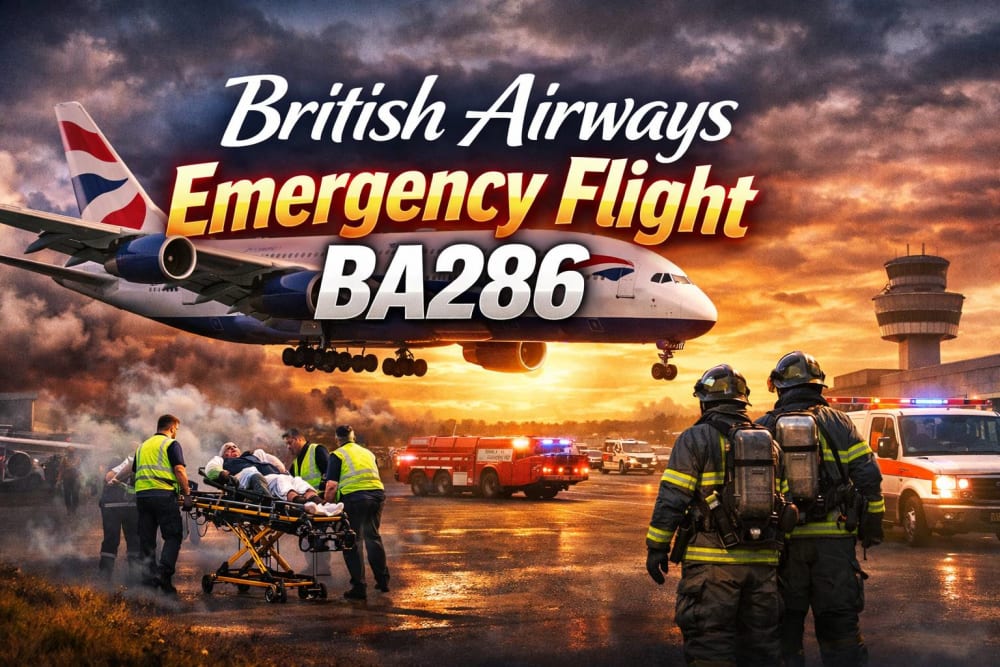
British Airways Emergency Flight BA286 is often discussed in the context of aviation safety and unexpected in-flight disruptions. It refers to a transatlantic service that has drawn attention due to incidents requiring urgent operational decisions, including diversions and onboard health concerns. While the flight number itself is routine, the situations linked to it provide insight into how modern aviation manages risk.
Understanding what actually happened helps avoid confusion created by fragmented online reports. More importantly, it offers a practical view of how airlines respond under pressure, how safety systems function, and what passengers can realistically expect. This article focuses on verified patterns, operational procedures, and how to interpret such events responsibly.
What happened during British Airways Emergency Flight BA286
The most credible reports indicate that the flight was diverted after crew members experienced health issues during the journey. This triggered a precautionary response, leading to an unscheduled landing so medical assistance could be provided quickly. The aircraft landed safely, and passengers were not placed in immediate danger.
Incidents like this are classified as operational emergencies, not disasters. Aviation protocols require crews to act early rather than wait for conditions to worsen. In this case, symptoms reported by staff were taken seriously, which reflects standard safety-first decision making rather than an unusual failure.
It is also important to recognize that a single flight number can be associated with different events over time. Not every mention refers to the same incident. This often leads to confusion when multiple stories are combined or exaggerated online.
A common mistake is assuming that an emergency declaration signals a critical failure. In reality, it often means the crew is taking preventive action. The distinction matters because it reflects how aviation prioritizes caution over risk.
Why do in-flight emergencies occur on long-haul routes
Long-haul flights increase exposure to variables such as crew fatigue, cabin air conditions, and extended system usage. These factors can contribute to situations where precautionary measures become necessary, even if no major fault exists. Duration alone changes the risk profile.
Medical issues are among the most frequent causes of diversions. With hundreds of people onboard for many hours, the probability of someone becoming unwell rises naturally. Crew health incidents, while less common, are treated with equal urgency due to their operational importance.
Technical alerts can also occur during extended flights. Aircraft systems are designed to detect irregularities early, sometimes before passengers notice anything. This can lead to decisions that appear sudden but are based on detailed cockpit data.
Many assume emergencies are rare and dramatic events. In practice, they are part of structured risk management. Aviation systems are built to identify small issues early, which reduces the chance of larger problems later.
How airlines and pilots handle emergency situations in real time
Pilots follow established procedures that prioritize safety, communication, and controlled decision making. When an issue arises, they assess severity, consult checklists, and coordinate with air traffic control to determine the best course of action. This process is systematic, not improvised.
Declaring an emergency allows the aircraft to receive priority handling. This includes direct routing, faster descent clearance, and immediate access to runway space. These measures reduce uncertainty and ensure the situation is resolved quickly.
Cabin crew play a critical role as well. They manage passenger communication, monitor conditions, and prepare the cabin if necessary. Their training ensures that even unexpected situations remain organized and calm.
A common misconception is that emergencies create chaos in the cockpit. In reality, training is designed to prevent that. Structured procedures and simulation-based preparation allow crews to respond with clarity, even under pressure.
What passengers typically experience during an emergency diversion
Passengers may notice changes such as a sudden announcement, a shift in flight path, or a quicker descent than usual. These signs can feel unsettling, but they are usually part of a controlled response rather than a sign of immediate danger.
Communication from the crew is often brief and focused. This is intentional, as the priority is managing the situation efficiently. While passengers may want detailed explanations, information is shared in stages to avoid confusion.
In most cases, the landing itself is smooth. Emergency landings are not necessarily dramatic events. Airports are prepared in advance, and ground teams are positioned to respond as soon as the aircraft arrives.
A frequent misunderstanding is expecting visible signs of crisis. Many emergencies are handled quietly, with minimal disruption beyond a delay. This reflects the effectiveness of aviation safety systems rather than a lack of seriousness.
How to evaluate reports and separate facts from speculation
Information about flight incidents often spreads quickly, but not all sources are equally reliable. Verified reports typically come from official airline statements, aviation authorities, or established news organizations. These sources focus on confirmed details rather than assumptions.
Online content can mix multiple events under one flight number, leading to misleading narratives. It is important to check dates, locations, and specific circumstances before drawing conclusions. Context is essential for accuracy.
Sensational language is another warning sign. Terms that suggest disaster or failure may not reflect the actual situation. Aviation reporting requires careful interpretation, especially when technical terms are simplified or misused.
A practical approach is to focus on outcomes. If the aircraft landed safely and procedures were followed, the event should be viewed as a successful safety response rather than a failure.
Conclusion
British Airways Emergency Flight BA286 highlights how modern aviation manages unexpected situations through structured procedures and cautious decision making. While the term “emergency” can sound alarming, it often reflects preventive action rather than a critical threat.
By understanding how these events occur, how crews respond, and how information is reported, it becomes easier to interpret such incidents with clarity. The key takeaway is that aviation safety relies on early action, not last-minute reactions, which is why outcomes are consistently controlled and passengers remain protected.
FAQs
1. What is British Airways Emergency Flight BA286?
British Airways Emergency Flight BA286 refers to a long-haul flight that required an emergency response due to onboard issues. It is most commonly linked to a diversion caused by crew health concerns, where safety procedures were followed and the aircraft landed without harm.
2. Why did the flight declare an emergency?
The emergency was declared as a precaution after crew members reported feeling unwell during the journey. Aviation protocols require immediate action in such cases to ensure both operational safety and access to medical support.
3. Was there any danger to passengers onboard?
Passengers were not in immediate danger during the incident. The situation was managed early, and the aircraft landed safely, which shows how preventive decisions reduce risk in aviation operations.
4. Do emergency landings mean something serious happened?
Not always, as many emergency landings are precautionary rather than critical. Pilots often act early to avoid complications, which is a standard part of aviation safety systems.
5. How common are emergency diversions on international flights?
Emergency diversions are relatively rare but not unusual in global aviation. They are handled routinely with strict procedures, ensuring that safety remains the top priority at all times.
Enjoyed this article? Share it with others!