
Selling to scientists is unlike selling to anyone else. The audience is small, highly educated, deeply sceptical of marketing language, and evaluates claims against published literature rather than testimonials.
That is why biotech digital marketing succeeds or fails on technical credibility. A campaign that would perform brilliantly for software will be ignored — or quietly mocked — by a room of principal investigators.
This guide covers how life sciences companies reach researchers, procurement committees, clinicians and investors online, and why the most effective tactics look more like scientific publishing than advertising.
What Is Biotech Digital Marketing?
It is the practice of building awareness, demand and partnership interest for life sciences products and platforms through digital channels, in markets where the total addressable audience may number only a few thousand people worldwide.
Two characteristics define it. Sales cycles run long — twelve to thirty-six months is normal for instrumentation and platform deals. And the buying committee is technically expert but rarely holds the budget, meaning content must satisfy both the scientist who specifies and the director who approves.
Precision beats reach entirely. Reaching 400 of the right cell biologists is more valuable than reaching 400,000 general professionals, and the channel strategy should reflect that ratio.
Who Uses It?
The sector covers a wide span of business models with quite different marketing needs.
- Reagent and consumables suppliers selling repeatedly to lab budgets
- Instrumentation manufacturers with long capital sales cycles
- Contract research and manufacturing organisations competing for outsourced programmes
- Therapeutics developers building investor and partnering visibility pre-commercial
- Bioinformatics and lab software platforms selling to computational teams
- Diagnostics companies bridging clinical, laboratory and payer audiences
Key Features Of A Life Sciences Programme
Technical Content With Real Data
Application notes, protocols, validation data and peer-reviewed citations are the currency. Scientists search for specific assays, antibodies, cell lines and methods — content organised around those terms converts. Marketing copy without data attached is filtered out instantly.
Narrow, Intent-Based Targeting
Paid campaigns work when aimed at precise search terms and specific institutional audiences rather than broad demographics. Combining publication-derived lists with conference attendance and search intent produces far better efficiency than volume-based targeting.
Scientific Visual Communication
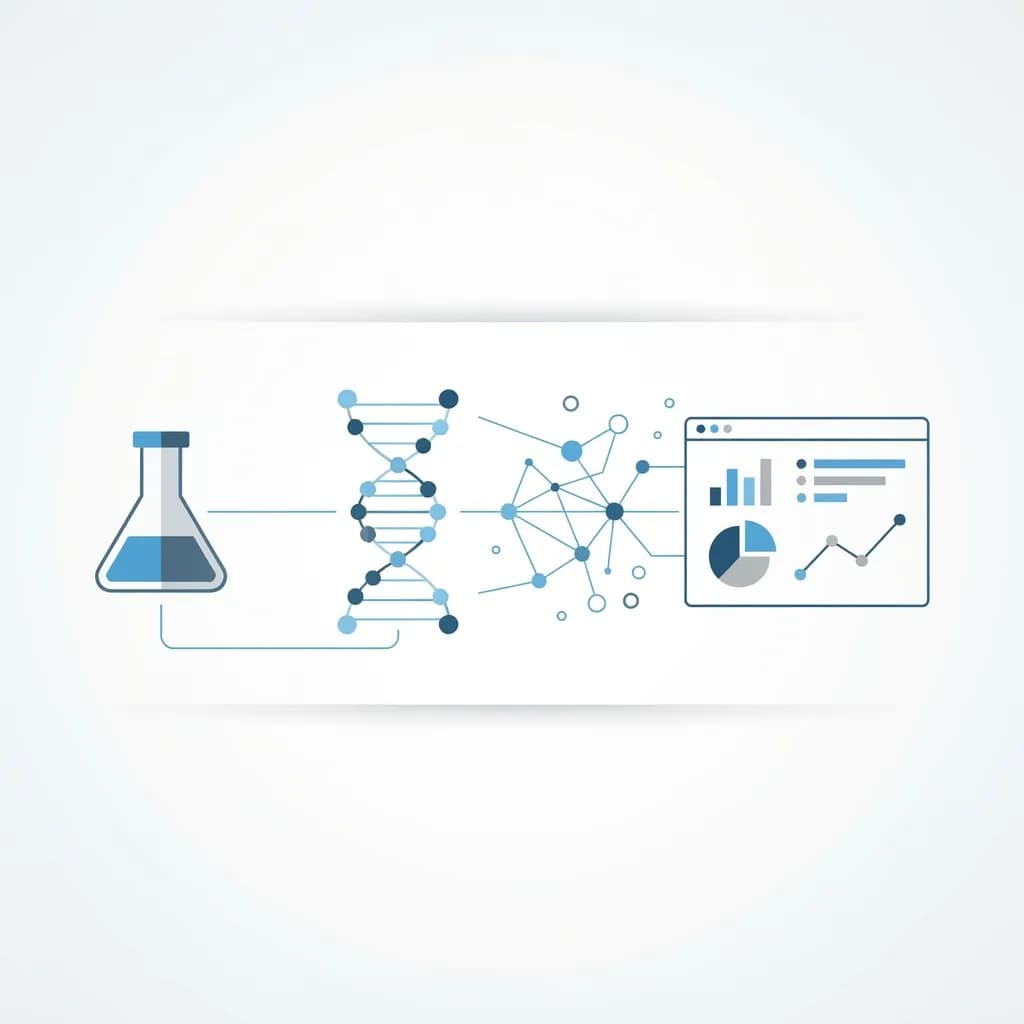
Mechanism diagrams, workflow schematics and data visualisations do heavy persuasive lifting in this sector. Investing in professional scientific infographic design makes complex mechanisms comprehensible in a single glance — often the difference between a downloaded paper and a booked demo.
Investor And Partnering Communication
For pre-revenue companies, the website serves investors and potential partners more than customers. Pipeline clarity, publication records, and leadership credentials matter more than product pages. Many teams support this with technical explainer video production for conference and roadshow use.
How To Get Started
Biotech marketing programmes should begin from the science, not from a channel plan.
- Define the exact research application and the job titles that specify it.
- Collect the technical questions your field application scientists answer most often.
- Turn those questions into searchable content with real data and citations.
- Build a gated library of protocols and application notes to capture qualified contacts.
- Layer narrow paid search on method and product-category terms.
- Nurture contacts with genuinely useful technical material rather than sales sequences.
Benefits
A disciplined digital programme changes the economics of a life sciences commercial team.
- Field scientists spend time on qualified opportunities instead of cold prospecting
- Technical content answers objections before the first call, shortening evaluation
- Global reach into institutions no field team could physically cover
- Compounding organic visibility on method-specific searches that competitors ignore
- Stronger investor perception through visible scientific authority
Potential Challenges
The obstacles here are structural rather than tactical.
- Scientific review of content is slow and often deprioritised against lab work
- Attribution across multi-year cycles is genuinely difficult to model
- Small audiences mean statistical significance in testing is rarely achievable
- Regulatory limits apply sharply once anything approaches clinical claims
Best Practices
Teams that make this work build marketing around their scientists rather than around a calendar.
- Put named researchers on content with their affiliations and publications visible
- Never overstate performance — one exaggerated claim damages credibility permanently
- Repurpose conference posters and webinars into indexed, searchable web content
- Measure qualified opportunities and pipeline influence, not lead counts
Real-World Example
A single-cell analysis company with a strong instrument struggled to generate inbound interest. Their site described the platform in general capability language; every competitor said something similar.
The marketing lead interviewed six customers and published eight detailed application notes covering specific workflows — tumour microenvironment profiling, immune repertoire analysis and others — each with full methods and figures. Organic traffic from researchers rose 210% in nine months, but the more telling metric was demo quality: 60% of requests now named a specific application from those notes, and the average sales cycle shortened by four months.
Why It Matters
Research budgets are tightening globally while the number of competing platforms increases. Scientists shortlist vendors long before contacting sales, using search, literature and peer recommendation.
Companies absent from that research phase never enter consideration. Serious biotech digital marketing ensures your technology appears where evaluation actually happens, supported by the evidence that audience requires.
Frequently Asked Questions
Does social media work for biotech?
LinkedIn is useful for recruiting, investor visibility and thought leadership. Scientific discussion has largely fragmented across niche communities, so broad social campaigns rarely produce pipeline.
Should technical content be gated?
Gate deep resources like full protocols and validation packages; leave summaries and application overviews open so they can rank in search and be cited by others.
How do we measure ROI on long sales cycles?
Track pipeline influence rather than last-click attribution. Record which content an opportunity engaged with before the first meeting, then analyse patterns across closed deals.
Is AI useful in life sciences marketing?
For research synthesis, audience analysis and content operations, yes. For generating scientific claims, no. Teams exploring this typically start with applied AI consulting focused on internal workflow rather than public output.
Conclusion
In life sciences, marketing credibility is scientific credibility. Publish what you can prove, organise it around how researchers actually search, and let precision replace reach.
Begin by documenting the questions your technical team answers weekly — that list is your content roadmap. When your digital presence needs to match the sophistication of your science, consider research-grade website design as the foundation.
Enjoyed this article? Share it with others!