
Software companies burn more marketing budget than almost any other sector, largely because growth expectations arrive before the marketing fundamentals do. A B2B SaaS digital marketing agency earns its fee by connecting marketing activity to pipeline and retention rather than to traffic charts.
SaaS marketing has its own physics. Recurring revenue means the cost of acquiring a customer must be recovered over months, so payback period and churn matter as much as lead volume.
This guide covers what specialist SaaS agencies actually do, which metrics they should be accountable for, and how to evaluate whether a prospective partner understands subscription economics or simply knows how to run campaigns.
What Is a B2B SaaS Digital Marketing Agency?
It is an agency specialising in growing software businesses that sell to other businesses, combining demand generation, content and search, product-led growth support, lifecycle marketing and revenue analytics.
The difference from generalist agencies is mainly in what they optimise. A SaaS specialist optimises for qualified pipeline and payback period, not for leads or clicks, because a subscription business can be destroyed by cheap leads that churn in month three.
Good ones also understand the interplay between self-serve signups and sales-assisted deals, which requires different messaging, different funnels and different measurement.
Who Needs One?
Specialist support pays off at identifiable points in a SaaS company's life.
- Seed to Series A companies with product-market fit but no repeatable acquisition motion
- Founder-led sales organisations needing inbound pipeline to scale beyond the founders
- Companies with strong signups but weak activation and conversion to paid
- Established SaaS businesses entering a new segment or geography
- Teams whose acquisition cost payback period has crept beyond sustainable levels
Key Features of SaaS Marketing Expertise
Category and Positioning Work
Most SaaS marketing problems are actually positioning problems. Before any campaign runs, a competent agency will pressure-test who the product is for, what it replaces and why anyone would switch.
Search Visibility for a Considered Purchase
Buyers search for problems, alternatives and comparisons. Content covering integrations, competitor comparisons and use-case guides captures buyers actively evaluating, and it compounds over years. Sustaining that output usually requires dedicated technical content writing capacity.
Product-Led Growth Support
When the product itself drives acquisition, marketing must extend into onboarding, activation emails and in-product messaging. This blurs the line between marketing and product, and requires an agency comfortable working alongside engineering.
Revenue Analytics and Attribution
Connecting marketing touchpoints to closed revenue across long cycles requires proper instrumentation. Expect work on tracking, CRM integration and reporting before campaigns scale, often involving real back-end engineering rather than tag manager configuration.
How to Get Started
A sensible engagement structure for a SaaS company hiring an agency.
- Document your current acquisition cost, payback period and net revenue retention.
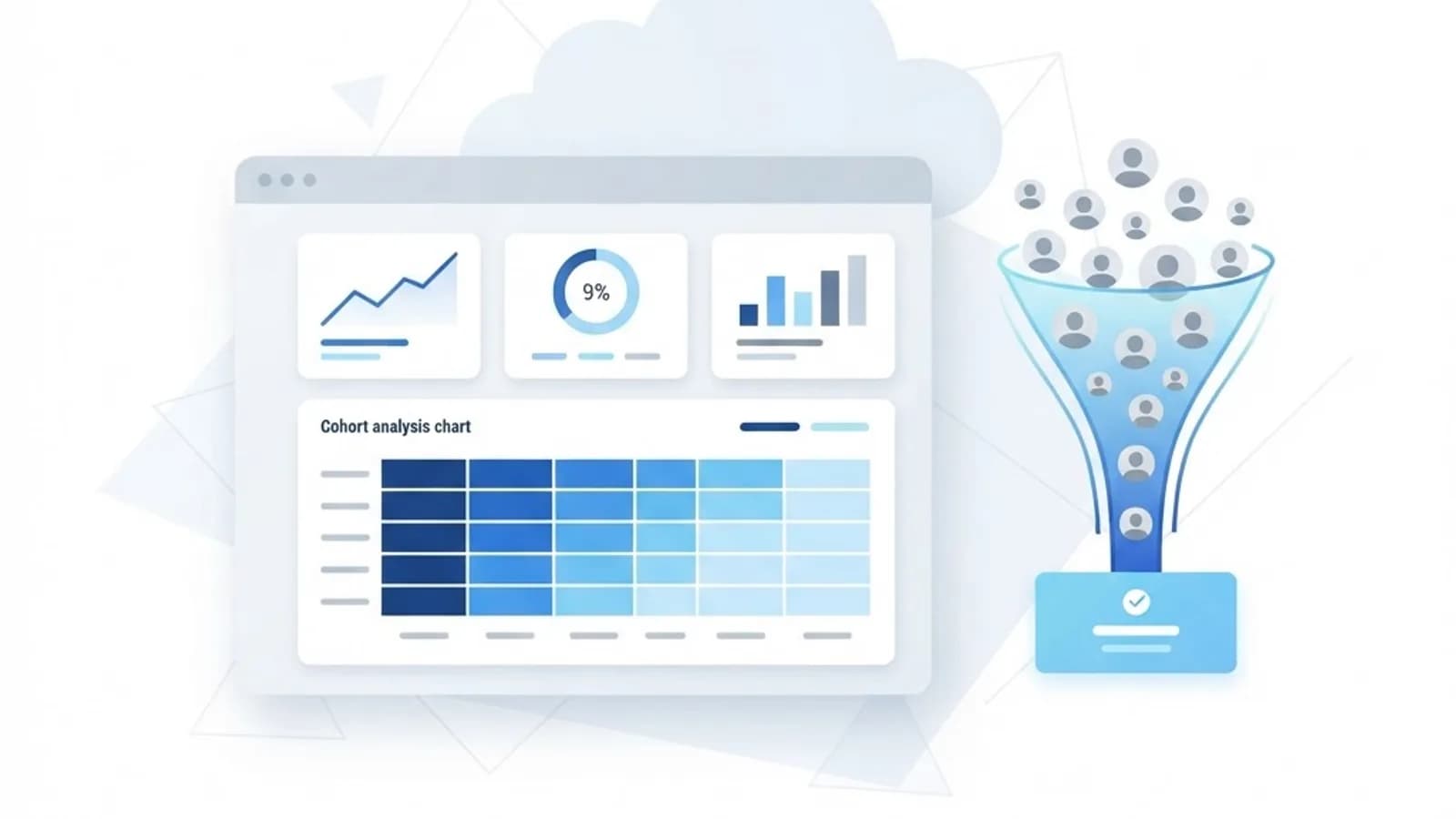
- Segment customers by cohort to identify which segments retain and expand best.
- Clarify positioning for your best-performing segment before increasing spend.
- Audit tracking from first touch to closed revenue and fix gaps in attribution.
- Prioritise one acquisition motion, either self-serve or sales-assisted, rather than both at once.
- Run a ninety-day engagement targeting qualified pipeline as the primary metric.
- Review cohort retention before scaling any channel that appears to be working.
Benefits
Specialist support changes the quality of growth, not just its rate.
- Pipeline that converts, because targeting is aligned to segments that actually retain
- Shorter payback periods through better conversion rather than cheaper clicks
- Compounding organic visibility on comparison and use-case searches
- Clearer board and investor reporting grounded in revenue metrics
- Faster experimentation, since specialists recognise patterns across many SaaS businesses
Potential Challenges
SaaS marketing engagements fail in predictable ways.
- Pressure for immediate pipeline conflicts with the time organic channels require
- Agencies without product access cannot influence activation, limiting their impact
- Attribution across long, multi-touch cycles remains genuinely imperfect
- Positioning problems get masked by campaign activity, delaying the real fix
Best Practices and Tips
Ways to get more from a SaaS agency relationship.
- Give the agency access to sales calls, since customer language is the highest-value input available
- Judge performance on pipeline and cohort retention, never on lead count alone
- Keep positioning decisions internal while using the agency to test and refine messaging
- Resist scaling any channel until a cohort has demonstrated acceptable retention
Real-World Example
A workflow automation platform was generating a healthy volume of free trial signups but converting under two per cent to paid. The instinct was to buy more trials. Analysis showed the problem sat in activation: users who completed one specific setup step converted at eight times the rate of those who did not.
Marketing effort shifted from acquisition to onboarding. They rebuilt the first-run experience, added a targeted email sequence prompting that specific step, and created comparison content aimed at buyers evaluating alternatives. Improved in-product guidance, delivered through focused web application development, lifted paid conversion several times over without any increase in trial volume.
Why It Matters
Software markets have become extremely crowded, and capital is less patient than it was. Growth that comes with poor retention no longer impresses anyone, and acquiring customers who leave quickly actively destroys value.
A capable B2B SaaS digital marketing agency is valuable precisely because it refuses to separate acquisition from retention. Getting that connection right is the difference between a company that scales and one that simply spends.
Frequently Asked Questions
When should a SaaS company hire an agency instead of a marketer?
Hire an agency when you need several specialisms simultaneously and cannot yet justify a full team. Hire in-house when one channel clearly dominates and requires daily product-adjacent involvement.
What metrics should an agency be accountable for?
Qualified pipeline, cost per qualified opportunity, payback period and contribution to net revenue retention. Traffic and lead counts are diagnostic, not outcomes.
How long before results appear?
Paid channels can produce pipeline within weeks but reveal true quality only after a full sales cycle. Organic search and content typically need six to twelve months to become a meaningful pipeline source.
Should the agency handle product marketing too?
Positioning and messaging benefit from external challenge but should remain owned internally. Agencies are well suited to executing launches, building assets and running AI-assisted personalisation across lifecycle campaigns.
Conclusion
A B2B SaaS digital marketing agency is worth hiring when it improves the quality of growth, not merely the volume of leads. Ask any candidate about payback period and retention in the first conversation; the answer is diagnostic.
Fix positioning and activation before scaling spend. A fast, well-engineered product marketing site gives every channel afterwards a far better chance of paying back.
Enjoyed this article? Share it with others!