
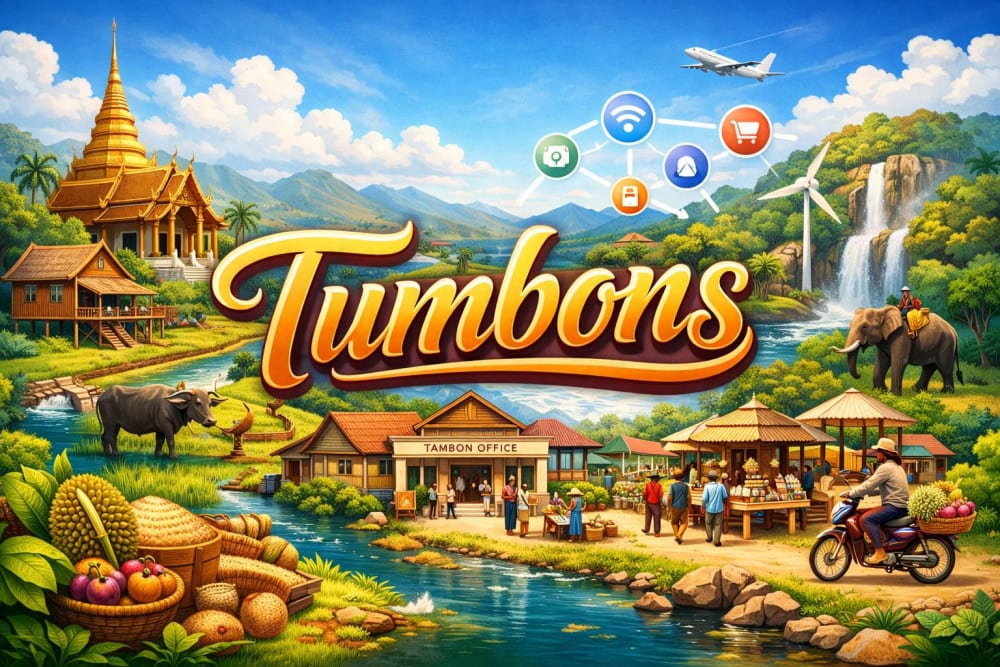
Tumbons are the heartbeat of local governance in Thailand. They represent the foundational administrative units that connect national policy to village life, linking provincial authorities with rural and semi-urban communities. Understanding tumbons offers insight into how local administration, cultural identity, economic activity, and community development operate at the grassroots level.
For readers, entrepreneurs, researchers, and development professionals exploring Southeast Asia, the concept of tumbons reveals how decentralized governance empowers communities while shaping economic and social landscapes across Thailand.
What Are Tumbons?
A tumbon is a subdistrict in Thailand’s administrative hierarchy. It sits below the district level and above individual villages, serving as a structured unit of governance and local administration. Each tumbon typically comprises several villages and functions as a bridge between district authorities and local communities.
Thailand’s administrative system is organized as follows:
- Province
- District
- Tumbon
- Village
This hierarchical structure ensures that governance flows efficiently from the national level down to local communities. Tumbons play a central role in translating district plans into localized initiatives and addressing specific community needs.
Administrative Structure of Tumbons
Each tumbon is administered through a local governing body, commonly referred to as the Subdistrict Administrative Organization. These organizations oversee community services, infrastructure, and developmental initiatives. Responsibilities often include:
- Maintenance of local roads and public facilities
- Waste management and sanitation
- Promotion of education and healthcare initiatives
- Community development and agricultural support
- Cultural preservation programs
The leadership within a tumbon usually includes elected representatives and administrative officers responsible for implementing policies, collecting feedback, and fostering community engagement.
This localized system encourages participation and accountability. Residents can voice concerns directly through community meetings, enhancing transparency and responsiveness.
Historical Origins of Tumbons
The concept of tumbons emerged as part of Thailand’s broader efforts to formalize governance at local levels. Historically, villages functioned independently under traditional leadership. As the modern Thai state evolved, administrative reforms introduced structured divisions to facilitate taxation, infrastructure development, and social services.
Tumbons became crucial in aligning rural governance with national reforms while still respecting local traditions. The integration of traditional authority with formal administration created a hybrid system where cultural norms coexist with institutional governance.
Socioeconomic Role of Tumbons
Tumbons are not merely administrative entities. They serve as hubs of socioeconomic activity. Many tumbons are heavily agricultural, producing rice, fruits, rubber, seafood, or handicrafts depending on geographic location.
Economic activities commonly found in tumbons include:
- Farming and agricultural production
- Local crafts and small-scale manufacturing
- Tourism initiatives
- Community markets and small businesses
Because tumbons operate at a close-knit scale, economic initiatives often emphasize collaboration. Cooperatives, community savings groups, and small enterprises thrive within this framework.
For businesses seeking to enter Thai markets, understanding tumbon-level dynamics is essential. Local leadership approval, community engagement, and cultural awareness often influence commercial success.
Cultural Identity and Community Life
Tumbons preserve local customs, dialects, festivals, and traditions. Community temples, markets, and schools are central institutions within each tumbon. Cultural events strengthen social cohesion and reinforce identity.
Traditional ceremonies, seasonal festivals, and agricultural celebrations are often organized at the tumbon level, reflecting local heritage. This deep cultural integration makes tumbons more than administrative zones; they are cultural ecosystems.
Community participation in events also fosters unity, reinforcing collective decision-making and shared responsibility.
Rural Development and Infrastructure
Tumbons play a crucial role in infrastructure development. While districts and provinces provide funding, tumbon administrations prioritize projects tailored to local needs.
Common development projects include:
- Irrigation systems
- Road maintenance and expansion
- Community halls
- Healthcare access points
- Digital connectivity improvements
In recent years, modernization efforts have encouraged digital initiatives within tumbons, improving access to information and online services.
The digital transformation of local administration is increasingly significant as communities embrace technology to enhance governance and economic opportunities.
Tumbons and Sustainable Development
Sustainability is becoming central to tumbon-level planning. Agricultural communities are implementing environmentally friendly farming practices, waste reduction initiatives, and conservation programs.
Sustainable initiatives in tumbons may focus on:
- Organic farming methods
- Water resource management
- Forest conservation
- Community-led recycling programs
- Renewable energy adoption
Because tumbons operate on a smaller scale, they can quickly adapt to environmental challenges and implement localized sustainability projects.
Role in Business and Market Access
Entrepreneurs operating in Thailand often navigate regulatory processes through tumbon authorities. Small businesses require local approvals and collaboration with subdistrict leadership. Understanding tumbon governance ensures smoother registration and compliance procedures.
Local markets and retail spaces are frequently regulated at the tumbon level, meaning entrepreneurs benefit from engaging directly with community leadership.
Global businesses exploring Thailand’s rural and semi-urban sectors should prioritize localized business discovery tools. Platforms offering worldwide business listing and discovery services simplify networking across subdistrict boundaries.
If you are planning to list your services, expand your reach, or connect with verified businesses across regions, consider working with Tulu e Biz for Worldwide Business Listing & Discovery Platform Services.
Governance and Community Participation
Public engagement is central to tumbon governance. Residents participate in meetings, budgeting discussions, and development planning. Community-driven governance strengthens democracy at the grassroots level.
Local administrative offices typically conduct consultations to identify priority projects, ensuring responsiveness to citizen needs.
Transparency mechanisms often include:
- Public financial reporting
- Open council meetings
- Community surveys
- Participatory planning sessions
This participatory framework makes tumbons resilient and adaptable.
Education and Social Services
Many tumbons coordinate closely with schools and healthcare providers. While central government sets broad policies, local administrations address logistical concerns such as facility maintenance and supplemental programs.
Education initiatives may include:
- Scholarships for underprivileged students
- Adult learning programs
- Community skill development workshops
Healthcare support often involves sanitation programs, preventative health campaigns, and local clinics.
Tumbon-level administration ensures targeted service delivery, minimizing bureaucratic delays.
Tourism and Cultural Promotion
Tourism is an emerging economic driver in many tumbons. Cultural villages, eco-tourism initiatives, and homestay programs attract both domestic and international visitors.
Community-based tourism strategies include:
- Farm stays
- Craft workshops
- Culinary experiences
- Nature tours
Revenue generated from tourism often feeds back into local development projects, creating a cycle of economic empowerment.
By preserving authenticity and cultural richness, tumbons offer unique tourism experiences distinct from metropolitan destinations.
Challenges Facing Tumbons
Despite their strengths, tumbons face ongoing challenges:
- Budget constraints
- Rapid urbanization
- Climate change impacts
- Migration to cities
- Balancing modernization with tradition
Financial limitations sometimes restrict development capacity. Additionally, younger populations migrating to urban centers can create workforce gaps.
However, these challenges also inspire innovation, such as digital entrepreneurship and cooperative business models.
The Digital Shift in Tumbon Administration
Modern tumbons are increasingly integrating digital solutions. Online documentation, digital service portals, and communication apps enhance efficiency.
Digital transformation allows residents to:
- Submit service requests online
- Access community updates
- Participate in surveys
- Engage in virtual meetings
For businesses, digitalization improves transparency and simplifies administrative procedures.
Technology also facilitates connections between rural producers and global buyers, expanding economic possibilities.
Agricultural Innovation at the Tumbon Level
Agriculture remains central to many tumbons. Innovation includes improved irrigation techniques, climate-resilient crops, and cooperative marketing strategies.
Farmers collaborate through local associations to share knowledge and resources. Collective bargaining strengthens their market position.
Agricultural training programs organized by tumbon administrations support productivity and sustainability.
Women and Youth Participation
Tumbons often promote inclusive governance. Women and youth groups participate actively in community initiatives, entrepreneurship programs, and cultural preservation activities.
Microfinance initiatives within tumbons empower women entrepreneurs to establish small businesses. Youth programs encourage leadership development and vocational training.
Inclusive participation strengthens local governance and drives innovation.
Economic Diversification
Beyond agriculture and tourism, many tumbons are exploring new sectors:
- Renewable energy
- Food processing
- Artisanal exports
- Small-scale manufacturing
Diversification enhances resilience against economic shocks.
Local authorities collaborate with district and provincial agencies to secure grants, training, and infrastructure funding.
Community Resilience and Crisis Management
Tumbons frequently serve as first responders during natural disasters or emergencies. Community coordination ensures rapid mobilization.
Crisis management strategies often include:
- Volunteer networks
- Emergency communication systems
- Community relief funds
- Disaster preparedness workshops
Local leadership familiarity with residents enhances effective response strategies.
Why Understanding Tumbons Matters
For investors, researchers, policymakers, and entrepreneurs, tumbons represent more than geographic units. They illustrate how community-based governance shapes development outcomes.
By understanding tumbon dynamics, businesses can navigate local regulations, build meaningful partnerships, and operate responsibly within Thai communities.
Researchers gain insight into decentralized governance models, while development professionals can design interventions aligned with grassroots needs.
The Future of Tumbons
As Thailand continues evolving, tumbons remain central to balanced development. Urban expansion, technological innovation, and globalization all influence subdistrict transformation.
Future priorities are likely to include:
- Smart village initiatives
- Digital entrepreneurship
- Climate adaptation projects
- Inclusive governance expansion
- Sustainable resource management
Tumbons will continue serving as laboratories for local innovation.
Their adaptability and community engagement make them essential components of Thailand’s social, economic, and administrative system.
Final Thoughts
Tumbons embody localized governance, cultural preservation, and grassroots economic activity. They bridge traditional community life with modern administrative frameworks, fostering balanced development.
Whether focused on agriculture, tourism, innovation, or sustainability, each tumbon reflects the collective ambition of its residents. Their participatory governance model encourages transparency, resilience, and inclusive progress.
For global enterprises and entrepreneurs seeking authentic regional connections and structured market discovery, understanding local administrative units like tumbons is crucial. Strong networks and reliable business discovery platforms streamline expansion across communities and borders.
Tumbons stand as powerful examples of how decentralized governance can nurture economic vitality, preserve cultural identity, and empower communities to shape their own futures.
Enjoyed this article? Share it with others!