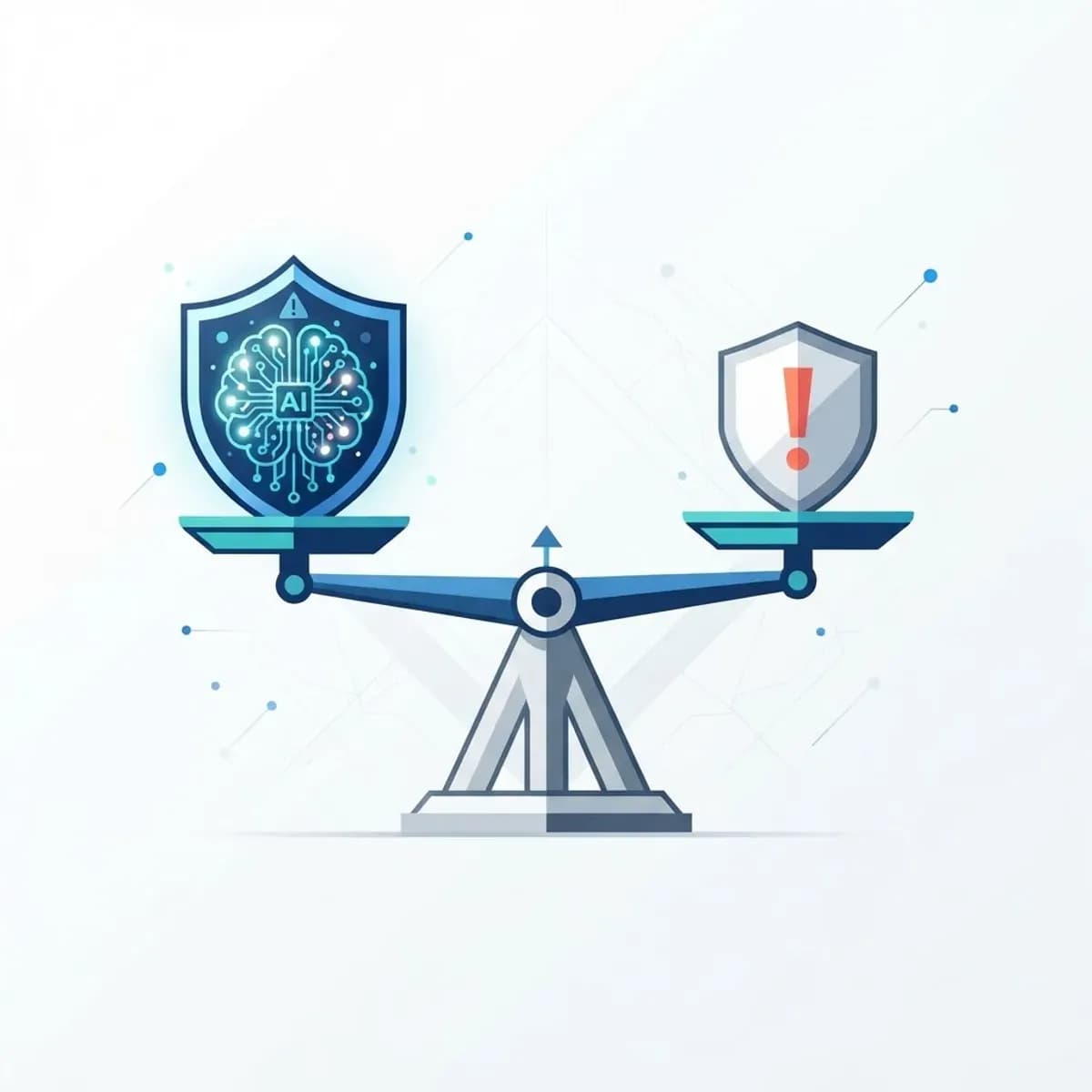
The risks of artificial intelligence are a growing concern as AI becomes part of everyday business, healthcare, finance, and communication. While the technology offers incredible benefits, ignoring its downsides can lead to serious problems.
In this guide, we take an honest look at the real risks of artificial intelligence, why they matter, and how to manage them responsibly. This is not fear-mongering, just practical awareness.
By understanding these challenges, you can use AI confidently while protecting your business, your data, and your users.
What Are the Risks of Artificial Intelligence?
The risks of artificial intelligence refer to the potential harms that can come from designing, deploying, or relying on AI systems without proper safeguards. These range from technical flaws to broad social impacts.
At the center of the issue is that AI systems learn from data, and flawed data creates flawed results. Bias, errors, and misuse can all stem from how a model is built and trained.
Recognizing these risks early is the first step toward using AI ethically and safely.
Who Should Care About These Risks?
AI risk is not just a concern for engineers. It affects nearly everyone who touches modern technology.
- Business leaders deploying AI tools
- Developers building AI systems
- Marketers using automated content and targeting
- Healthcare and finance professionals relying on AI decisions
- Everyday users whose data feeds these systems
Key Risks
Bias and Discrimination
AI trained on biased data can produce unfair outcomes in hiring, lending, and more. This is one of the most discussed risks of artificial intelligence today.
Privacy and Data Security
AI often relies on large amounts of personal data, raising real concerns about how that data is stored and protected. Strong cybersecurity practices are essential to reduce exposure.
Job Displacement
Automation can replace certain roles, requiring workers to reskill and adapt to new kinds of jobs.
Misinformation
AI can generate convincing fake content, making it easier to spread misinformation at scale.
How to Manage AI Risk
Managing the risks of artificial intelligence starts with a thoughtful, structured approach.
- Audit your data for bias and quality.
- Set clear ethical guidelines for AI use.
- Protect user data with strong security controls.
- Keep humans involved in critical decisions.
- Monitor systems continuously for unexpected behavior.
Benefits of Addressing AI Risks
Taking risk seriously does not slow you down. It actually strengthens your AI strategy.
- Greater trust from customers and users
- Reduced legal and compliance issues
- More accurate and fair outcomes
- Stronger data protection
- A more sustainable, future-proof AI approach
Potential Challenges
Managing AI risk comes with its own hurdles.
- Bias can be hard to detect and remove
- Regulations are still evolving
- Balancing innovation with caution takes discipline
- Ongoing monitoring requires time and resources
Best Practices and Tips
A few smart habits go a long way toward responsible AI.
- Use diverse, high-quality training data
- Be transparent about how AI is used
- Build in human oversight for key decisions
- Partner with experienced AI development experts when needed
Real-World Example
Consider a company that rolled out an AI hiring tool only to discover it favored certain candidates unfairly. The root cause was biased historical data used for training.
After auditing the data, adding human review, and retraining the model, the company restored fairness and rebuilt trust. It was a costly but valuable lesson in why AI risk management matters.
Why It Matters
AI is powerful, but power without responsibility creates danger. Understanding the risks of artificial intelligence helps organizations use it in ways that are safe, fair, and trustworthy.
As AI spreads into more decisions, responsible use is no longer optional. It is a competitive advantage.
Frequently Asked Questions
What is the biggest risk of artificial intelligence?
Bias is often cited as the most pressing risk because it can cause unfair, harmful outcomes at scale.
Can AI risks be eliminated?
Not entirely, but they can be significantly reduced with good data, oversight, and clear ethical guidelines.
Is AI dangerous for jobs?
AI changes the job landscape, replacing some roles while creating new ones that require reskilling.
How can businesses use AI safely?
By auditing data, protecting privacy, keeping humans in the loop, and monitoring systems continuously.
Conclusion
The risks of artificial intelligence are real, but they are manageable with awareness and responsible practices. By addressing bias, privacy, and oversight, you can harness AI safely.
If you want to build AI systems the right way, consider working with trusted AI development professionals who prioritize safety and ethics.
Enjoyed this article? Share it with others!