
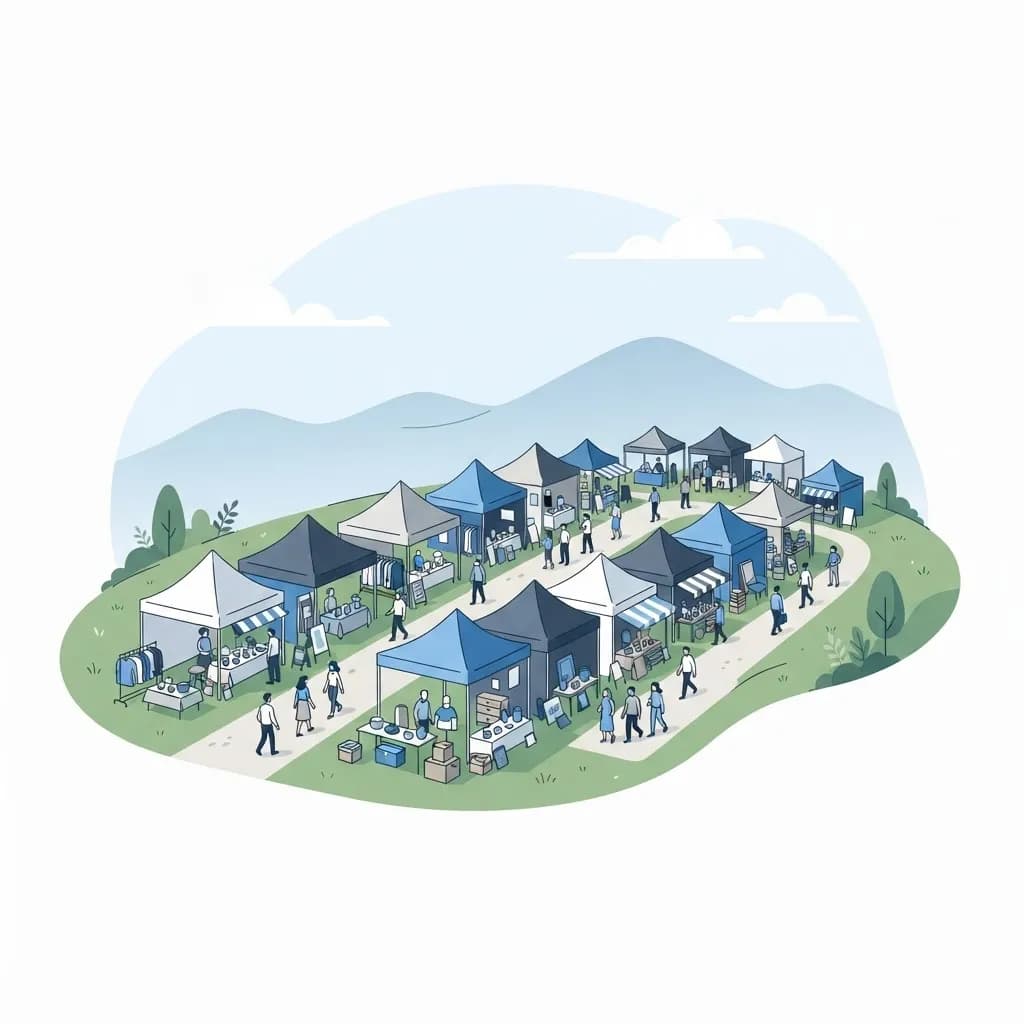
A mountain top flea market is one of the most rewarding shopping experiences you can have: sweeping views, fresh air, hundreds of vendors, and the constant possibility of finding a genuine treasure for a few dollars. The most famous example — the Mountain Top Flea Market near Attalla, Alabama — stretches across dozens of acres and draws crowds from several states every weekend.
Whether you're planning a visit to a well-known mountain top flea market or scouting smaller high-country markets, this guide covers what to expect, how to bargain, what sells, and how vendors can turn a weekend table into a real business.
What Is a Mountain Top Flea Market?
A mountain top flea market is an open-air marketplace located on elevated terrain where independent vendors rent spaces to sell goods directly to the public. The best-known example in the United States operates along U.S. Highway 278 in Alabama and is often described as one of the largest outdoor flea markets in the South, with vendor spaces stretching for what feels like miles.
These markets typically run on weekends, with Sunday being the traditional peak day. Inventory spans everything imaginable: antiques, tools, produce, clothing, collectibles, furniture, live plants, handmade crafts, and plenty of items that defy categorization.
What separates a flea market from a retail store is the direct, negotiable, person-to-person nature of every transaction. Prices are starting points, stories come free, and no two visits are ever the same.
Who Shops at Mountain Top Flea Markets?
The crowd is as varied as the merchandise:
- Bargain hunters looking for household goods, tools, and clothing at a fraction of retail.
- Collectors and pickers hunting antiques, vintage toys, coins, and rare finds to keep or resell.
- Families making a morning of it with food stands, produce, and people-watching.
- Small-scale farmers and gardeners buying plants, seeds, and farm-fresh produce.
- Online resellers sourcing inventory for eBay, Etsy, and Facebook Marketplace businesses.
Key Features of the Experience
Massive Vendor Variety
Large markets can host hundreds of sellers on a busy weekend. One aisle might offer hand tools and car parts; the next, quilts, cast iron cookware, and vintage vinyl. The variety is the attraction — you genuinely never know what you'll find.
Negotiable Prices
Haggling is expected and usually friendly. Most vendors build a little room into their prices, and polite negotiation is part of the culture, especially on multi-item purchases.
Food and Local Produce
Seasonal produce stands and classic concession food — boiled peanuts, barbecue, funnel cakes — are staples at Southern mountain markets and worth the trip on their own.
The Treasure-Hunt Factor
Stories of valuable antiques bought for pocket change keep pickers coming back. Even if you never strike gold, the hunt itself is the entertainment.
How to Plan Your Visit
A little preparation dramatically improves the experience:
- Go early. Serious buyers arrive at dawn; the best items often sell within the first two hours.
- Bring cash in small bills. Many vendors are cash-only, and exact change strengthens your bargaining position.
- Dress for terrain and weather. Mountain locations mean sun, wind, and uneven ground — comfortable shoes are non-negotiable.
- Bring a cart or sturdy bags. You'll regret carrying that cast iron skillet across forty acres by hand.
- Walk first, buy second. Do a full loop to compare prices before committing on common items.
Benefits of Shopping at a Mountain Top Flea Market
Beyond the fun, flea market shopping offers real advantages:
- Significant savings — tools, furniture, and household goods often sell for 50-80% below retail.
- One-of-a-kind finds — antiques and handmade items you simply cannot buy new.
- Sustainable shopping — buying secondhand keeps usable goods out of landfills.
- Supporting micro-businesses — every purchase goes directly to an independent seller.
- Free entertainment — admission is typically free or nominal, and the atmosphere is the show.
Potential Challenges
Set realistic expectations before you go:
- No returns — sales are final, so inspect items carefully before paying.
- Weather risk — rain can thin out vendors and turn walkways muddy.
- Variable quality — new merchandise at flea markets can include low-grade imports; know what you're buying.
- Crowds and parking — peak Sunday mornings test your patience at popular markets.
Best Practices and Tips
Seasoned flea market shoppers follow a few reliable rules:
- Research typical prices for collectibles you hunt so you can spot genuine bargains instantly.
- Be friendly first, negotiate second — rapport lowers prices faster than aggression.
- Bundle items from one vendor for a package discount.
- If you're a reseller, photograph and list items quickly; speed to market matters. Many pickers grow into full online stores with dedicated ecommerce solutions for their finds.
Real-World Example
Consider a typical reseller's Sunday: arriving at 6:30 a.m. with $200 cash, they spend three hours scanning tables. They buy a vintage tool chest for $35, a set of Pyrex bowls for $12, and a box of vinyl records for $20. Within a week, the tool chest sells online for $140 and the Pyrex for $65. The records become inventory for a booth they rent in an antique mall.
Vendors benefit from thinking digitally too. Sellers who promote their booth on social media — often with help from affordable social media management — report noticeably more foot traffic, and those who invest in a simple branded look, from signage to a professional logo design, get remembered and revisited week after week.
Why Mountain Top Flea Markets Matter
Flea markets are one of the last truly open marketplaces — no algorithms, no gatekeepers, just people trading goods face to face. They give micro-entrepreneurs a near-zero-cost way to start a business, preserve regional culture, and extend the useful life of countless goods. In rural areas especially, a major weekend market is a genuine economic engine.
Frequently Asked Questions
When is the best time to visit a mountain top flea market?
Early Sunday morning is traditionally the peak. Arrive at opening for the best selection, or late afternoon for the deepest discounts as vendors pack up.
Do flea market vendors accept credit cards?
Some do via mobile readers, but many remain cash-only. Bring plenty of small bills and expect ATMs on site to charge fees.
Can you negotiate prices at flea markets?
Yes — polite haggling is expected. A friendly "Is that your best price?" or bundling several items is the standard approach.
How do I become a vendor at a flea market?
Contact the market office about space rental, which is typically charged per day or weekend at modest rates. Many markets allow first-time sellers to simply show up early and rent an open space.
Conclusion
A mountain top flea market rewards early risers, patient browsers, and friendly negotiators with bargains, treasures, and a shopping experience no mall can match. Whether you're hunting antiques, sourcing resale inventory, or just enjoying a Sunday out, it's time well spent.
And if your flea market side hustle is ready to grow into a real online business, a team offering custom website design can help you sell your finds far beyond the mountain.
Enjoyed this article? Share it with others!