
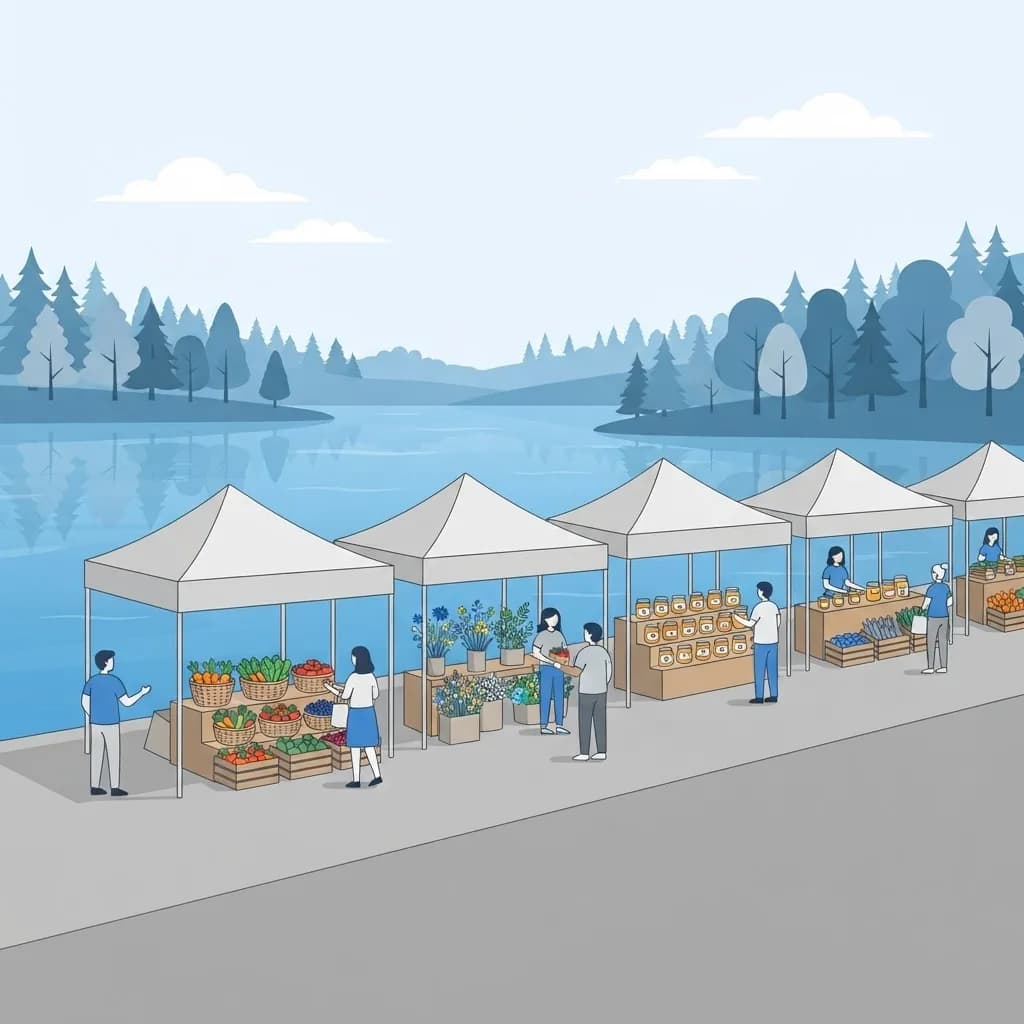
Lake St Louis farmers market is the kind of weekly ritual that defines a Missouri summer: canopy tents along the lakeside, tables of just-picked produce, local honey, fresh bread, and neighbors catching up in line.
Farmers markets in the St. Charles County area run on the regional growing calendar, which means the selection changes meaningfully from May through October. Knowing that rhythm is the difference between a frustrating trip and a great one.
This guide covers what to expect, how to shop efficiently, what is in season when, and why supporting a local farmers market delivers value well beyond the produce in your bag.
What Is a Farmers Market?
A farmers market is a recurring, usually open-air event where local growers and food producers sell directly to consumers. Vendors set up temporary stalls on a fixed schedule, most commonly on weekend mornings.
The defining rule at most true farmers markets is producer-only sales, meaning vendors must grow or make what they sell. This distinguishes them from resale markets where products are bought wholesale and marked up.
The core benefit is freshness and traceability. Produce often reaches the table within a day or two of harvest, and you can ask the grower directly about growing practices, varieties, and how best to store what you bought.
Who Shops the Market?
Lakeside markets attract a broad community mix, which is part of why they thrive.
- Families making a Saturday morning outing with kids in tow.
- Home cooks planning meals around genuinely seasonal ingredients.
- Health-focused shoppers prioritizing local and low-spray produce.
- Local chefs and caterers sourcing small-batch specialty items.
- Neighbors and retirees who treat the market as a social gathering.
What You Will Find at the Market
Seasonal Missouri Produce
Spring brings asparagus, lettuce, radishes, and strawberries. Summer delivers tomatoes, sweet corn, peaches, zucchini, peppers, and melons. Fall shifts to apples, winter squash, greens, and root vegetables. Shopping in season means peak flavor and the lowest prices.
Baked Goods and Prepared Foods
Sourdough loaves, pies, cinnamon rolls, jams, and salsas are market staples. These vendors often sell out first, so arriving early matters if you have a favorite. Many started as home bakers and grew into full businesses through market sales.
Local Meat, Eggs, and Honey
Pasture-raised eggs, small-farm beef and pork, and raw local honey appear at most established markets. Prices run above supermarket equivalents, but quality and provenance are verifiable in a way grocery labels rarely are.
Crafts, Plants, and Handmade Goods
Bedding plants, cut flowers, candles, soaps, and woodwork fill out the vendor mix. These stalls extend the market's appeal and often depend heavily on presentation, which is why thoughtful banner and signage design helps small vendors stand out.
How to Get Started
A short plan makes market mornings much smoother.
- Confirm the current season dates, day, and hours on the market's official page or social account.
- Arrive within the first hour for peak selection, especially for baked goods and berries.
- Bring reusable bags, a cooler for meat and dairy, and cash in small bills.
- Walk the full market before buying so you can compare quality and pricing.
- Ask each grower what is best that specific week and buy accordingly.
- Plan meals after shopping rather than before, letting availability guide the menu.
- Store produce properly at home — ask vendors for storage tips, they know best.
Benefits of Shopping Local
The advantages are practical and measurable, not just sentimental.
- Better flavor and nutrition from produce harvested days rather than weeks earlier.
- Direct support for area farms, keeping agricultural land in production.
- Lower food miles and less packaging waste than conventional supply chains.
- Access to varieties bred for taste rather than shipping durability.
- Genuine community connection with the people producing your food.
Potential Challenges
Market shopping requires some flexibility compared to a supermarket run.
- Limited hours, typically one morning per week, restrict convenience.
- Inventory is unpredictable and weather can reduce or cancel a market day.
- Some items cost more than discount grocery equivalents.
- Not all vendors accept cards, so cash planning is necessary.
Best Practices and Tips
Regulars figure these out quickly, and they make a real difference.
- Buy in bulk at peak season and freeze or can — summer tomatoes cost far less in August.
- Build relationships with two or three growers who will save items for you.
- Ask about seconds or imperfect produce, often discounted and ideal for cooking.
- Vendors: post attendance weekly online, since consistent social media management reliably drives market-day traffic.
Real-World Example
Imagine a family that shops the market every Saturday from May through October. In June they buy strawberries in flats and freeze half. In August they purchase a bushel of tomatoes at a bulk price and spend a Sunday canning sauce.
By winter they have frozen berries, home-canned sauce, and honey purchased at peak season — all at costs well below equivalent grocery products. Along the way the kids learn what actually grows locally and when.
That combination of savings, quality, and food literacy is what keeps farmers market households coming back year after year.
Why It Matters
Local food systems are fragile. Small farms operate on thin margins, and direct sales at markets often provide their best per-unit revenue by eliminating wholesale intermediaries.
For a community like Lake St. Louis, the market also functions as public space. It creates a regular reason for neighbors to gather, which is increasingly rare and genuinely valuable in suburban areas.
Frequently Asked Questions
When is the best time to arrive at a farmers market?
The first hour offers the widest selection, particularly for baked goods, berries, and eggs that sell out early. The final half hour sometimes brings discounts as vendors avoid repacking perishables.
What produce is in season in Missouri?
Spring features asparagus, lettuce, and strawberries. Summer brings tomatoes, sweet corn, peaches, and melons. Fall offers apples, squash, and hardy greens. Availability shifts with weather each year.
Do farmers markets accept credit cards or SNAP?
Many vendors now accept cards or payment apps, and numerous Missouri markets accept SNAP with produce-matching incentives. Bring cash anyway, since acceptance varies stall to stall.
Is farmers market produce always organic?
Not necessarily. Some growers are certified organic, others follow low-spray practices without certification, and some use conventional methods. The advantage is that you can simply ask the grower directly.
Conclusion
The Lake St Louis farmers market rewards shoppers who arrive early, stay flexible, and talk to growers. Let the season set your menu and you will eat better while spending less on peak-quality ingredients.
If you are a vendor wanting online preorders, pickup scheduling, or a simple seasonal storefront, explore modern MERN stack development to build a market presence that works all week long.
Enjoyed this article? Share it with others!