
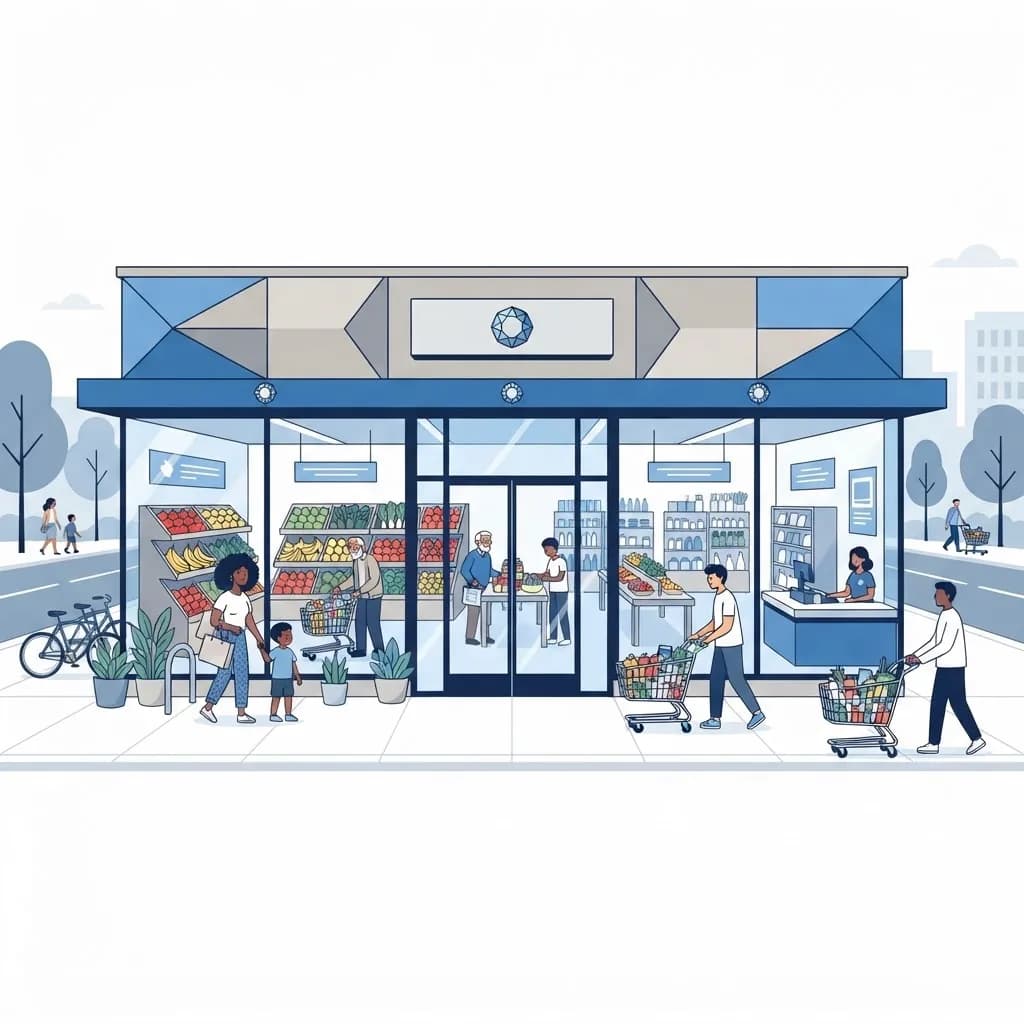
Gem City Market is a community-owned grocery cooperative in Dayton, Ohio, created to bring full-service food retail back to neighborhoods that had gone years without a nearby supermarket. It is one of the most cited examples of a co-op model directly addressing food access.
The store opened after years of organizing, fundraising, and community planning. Rather than waiting for a national chain to see profit in an underserved area, residents built the grocery themselves and kept ownership local.
This guide explains how the co-op model works, who it serves, the practical challenges of running a mission-driven grocery, and what other communities can learn from the effort.
What Is Gem City Market?
Gem City Market is a full-service grocery store structured as a consumer cooperative. That means the business is owned by its member-shoppers rather than outside investors, and each member holds a democratic vote regardless of how much they spend.
The market sells fresh produce, meat, dairy, pantry staples, and prepared foods. It also includes community-oriented features such as a teaching kitchen, health services partnerships, and nutrition programming.
The key distinction is purpose. A conventional grocery locates where margins are highest, while a co-op like this deliberately locates where food access needs are greatest, accepting thinner economics in exchange for community benefit.
Who Does It Serve?
The co-op's customer base reflects the neighborhoods it was built to support, plus supporters from across the region.
- West Dayton residents who previously traveled long distances for fresh groceries.
- Households using SNAP, WIC, and produce-incentive programs.
- Seniors and residents without reliable vehicle access.
- Community members who joined as owners to support local food equity.
- Local farmers and food producers gaining a consistent retail outlet.
Key Features of the Co-op Model
Community Ownership and Governance
Members purchase an ownership share and elect a board that sets direction. Decisions about product mix, pricing philosophy, and community programs answer to shoppers rather than distant shareholders, which changes priorities in visible ways.
Fresh Food in an Underserved Area
The store prioritizes a genuine produce department, fresh meat, and staples at accessible prices. That may sound basic, but in a neighborhood where the alternative was convenience stores and long bus rides, it is transformative.
Nutrition Education and Health Partnerships
A teaching kitchen and health-focused partnerships turn the store into more than a transaction point. Cooking demonstrations and nutrition guidance help shoppers use unfamiliar produce, which increases both health outcomes and repeat sales.
Local Sourcing and Job Creation
Buying from area producers keeps dollars circulating locally, and the store employs neighborhood residents. Both effects compound over time, strengthening the local economy beyond the grocery itself.
How Community Grocery Co-ops Get Started
Launching a co-op grocery is a multi-year civic project. The general path looks similar across cities.
- Document the need with real data on store distance, transit access, and health outcomes.
- Form a steering committee of residents, nonprofits, and food-retail advisors.
- Sell member-owner shares to build capital and prove community demand.
- Assemble layered financing from grants, loans, local government, and philanthropy.
- Secure a site with adequate space, loading access, and transit connections.
- Hire experienced grocery management — mission alone cannot run perishables.
- Launch with strong local marketing and sustained community engagement.
Benefits of a Community-Owned Market
The model produces returns that a conventional store cannot easily replicate.
- Improved access to fresh food, reducing travel time and transportation cost.
- Local jobs with community accountability for wages and conditions.
- Profits reinvested locally rather than extracted to outside shareholders.
- Reliable retail channel for regional farmers and small food brands.
- A trusted community space for health, education, and gathering.
Potential Challenges
Mission-driven groceries operate on famously thin margins, and the difficulties are real.
- Grocery net margins are low, leaving little room for operational error.
- Purchasing volume is small relative to chains, raising wholesale costs.
- Perishable shrink from spoilage can quickly erase profitability.
- Balancing affordable pricing with financial sustainability is a constant tension.
Best Practices and Tips
Communities pursuing this model can improve their odds significantly.
- Hire seasoned grocery operators early; retail food is a technical discipline.
- Plan for multiple years of operating subsidy rather than assuming immediate breakeven.
- Maximize enrollment in SNAP, WIC, and produce-incentive programs to lift purchasing power.
- Invest in clear communication and outreach — consistent digital marketing keeps member engagement and store traffic strong.
Real-World Example
Think about a senior resident living a mile and a half from the nearest full grocery with no car. Before the co-op opened, that meant a bus trip each way, limited to what could be carried, often supplemented by expensive convenience-store purchases.
With a full-service market within walking distance, the same shopper can buy fresh produce twice a week instead of shelf-stable food once a month. Multiply that across thousands of households and the neighborhood's food landscape shifts fundamentally.
That is the practical measure of success for a project like this — not just sales figures, but changed daily routines.
Why It Matters
Food access gaps are a persistent structural problem in American cities, and conventional retail economics rarely solve them on their own. Community-owned markets demonstrate an alternative path where residents supply the capital, governance, and demand.
Gem City Market has become a reference case for planners, nonprofits, and cooperative developers nationwide. Its lessons — about financing, staffing, and realistic timelines — save other communities from repeating expensive mistakes.
Frequently Asked Questions
Do you have to be a member to shop at Gem City Market?
No. Community grocery co-ops are open to all shoppers. Membership provides ownership, voting rights, and certain benefits, but anyone can walk in and buy groceries.
How does a grocery co-op differ from a regular supermarket?
Ownership and purpose differ most. Co-ops are owned by member-shoppers who elect the board, so decisions weigh community benefit alongside profit, and surplus is reinvested locally.
Does the market accept SNAP and WIC?
Community grocery co-ops typically accept SNAP and WIC and often participate in produce-matching incentive programs that increase purchasing power for fresh fruits and vegetables.
Can another city replicate this model?
Yes, and many have. Success generally requires documented community need, multi-year organizing, layered financing including grants, experienced grocery management, and patience through early operating losses.
Conclusion
Gem City Market shows what happens when a community decides not to wait for the market to serve it. Local ownership, careful planning, and stubborn persistence turned a food access gap into a functioning neighborhood grocery.
If your cooperative or nonprofit needs a clear online presence for membership, programs, and store information, consider professional Next JS web development to build a fast, accessible site that serves your whole community.
Enjoyed this article? Share it with others!