
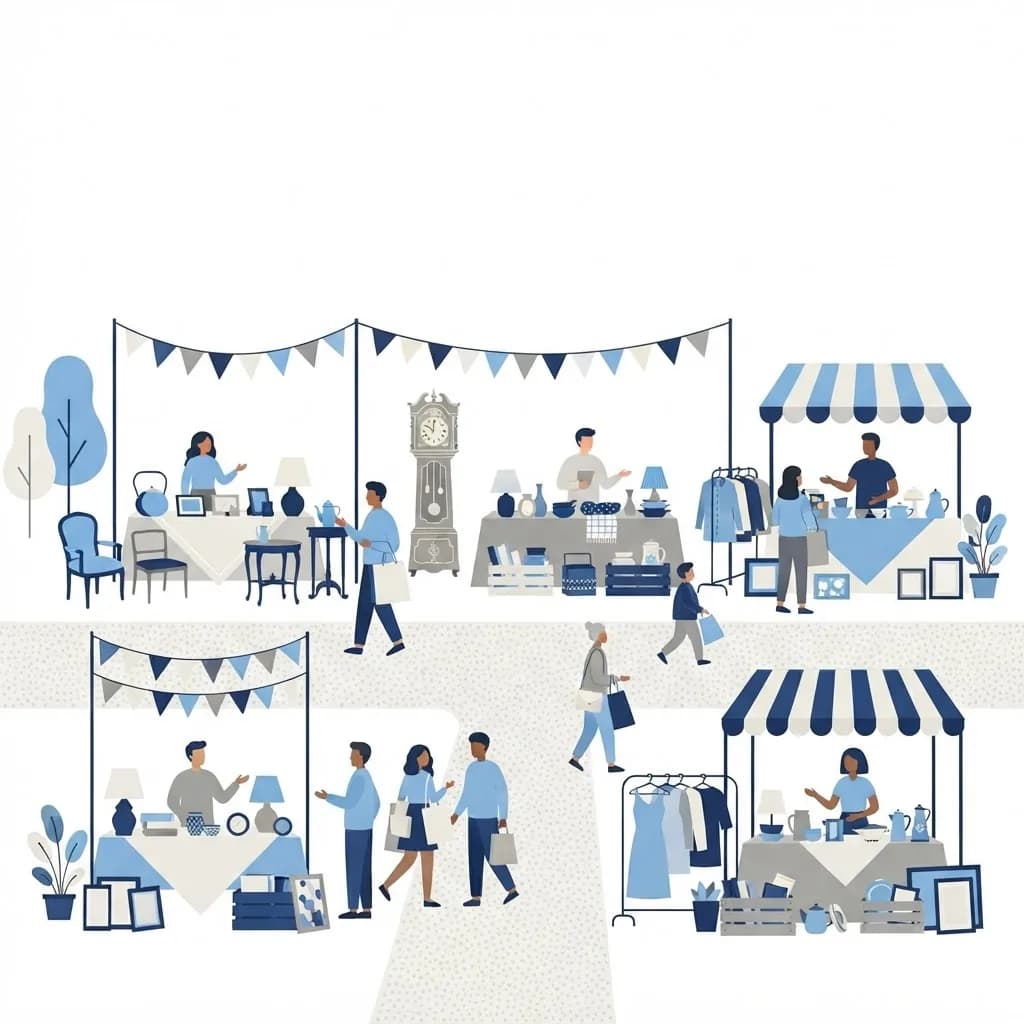
Searching for a flea market Tiffin shoppers actually recommend usually means you are after two things: genuine bargains and the thrill of an unexpected find. Northwest Ohio has a strong tradition of flea markets, antique malls, and seasonal outdoor sales, and Tiffin sits in good territory for it.
Flea markets reward patience and a bit of knowledge. The same table can hold a mass-produced reproduction and a legitimately valuable piece of pressed glass, and telling them apart is the skill that separates casual browsers from serious collectors.
This guide explains how flea markets work, what to look for around Tiffin, how to negotiate fairly, and how to avoid the common mistakes that cost first-timers money.
What Is a Flea Market?
A flea market is a gathering of independent sellers offering secondhand goods, antiques, collectibles, crafts, and surplus merchandise. Vendors rent space by the day, weekend, or season, and inventory changes constantly.
Some markets operate outdoors in fields or fairgrounds during warm months. Others run year-round inside converted warehouses or barns. Tiffin's region includes both formats plus scheduled antique shows that draw regional dealers.
What makes flea markets distinct is unpredictable inventory and negotiable pricing. Unlike retail, no two visits are the same, and the listed price is usually a starting point rather than a final figure.
Who Shops Flea Markets in Tiffin?
The crowd is a mix of practical buyers and passionate hobbyists, often shopping side by side.
- Antique collectors hunting glassware, pottery, and Ohio-made pieces.
- Resellers sourcing inventory for online marketplaces and booths.
- Homeowners furnishing rooms affordably with solid used furniture.
- Crafters and upcyclers looking for raw material to restore or repurpose.
- Families and weekend visitors treating the market as inexpensive entertainment.
What You Will Find at the Market
Antiques and Collectibles
Expect glassware, crocks, cast iron, vintage tools, advertising signs, postcards, and vinyl records. Ohio has notable glass and pottery history, so regional pieces surface regularly and often at reasonable prices.
Furniture and Household Goods
Solid wood dressers, dining chairs, and cabinets appear frequently at a fraction of new-furniture cost. Older construction often uses better joinery than modern flat-pack equivalents, making these among the best value purchases available.
Tools, Parts, and Practical Surplus
Hand tools, hardware, fasteners, and machine parts fill many tables. For anyone maintaining an older home or vehicle, this category alone justifies the trip.
Crafts, Produce, and New Merchandise
Many markets mix in handmade goods, baked items, seasonal produce, and closeout new products. This blend widens appeal and keeps foot traffic steady even when antique inventory is thin.
How to Shop a Flea Market Successfully
A structured approach dramatically improves your results and reduces regret purchases.
- Confirm dates and hours in advance; many Ohio markets are seasonal or weekend-only.
- Arrive early for the best selection, or near closing for the deepest discounts.
- Bring cash in small denominations — most vendors prefer it and some accept nothing else.
- Pack a tape measure, flashlight, tote bags, and hand sanitizer.
- Do a fast full walkthrough first, noting items to revisit rather than buying immediately.
- Research questionable items on your phone before committing to a higher price.
- Negotiate politely by bundling several items from one vendor for a better total.
Benefits of Flea Market Shopping
The appeal goes well beyond saving money, though the savings are real.
- Significant cost savings on furniture, tools, and decor versus retail.
- Access to unique items with history that cannot be bought new anywhere.
- Environmental benefit from reusing goods rather than manufacturing replacements.
- Direct support for local vendors and small family businesses.
- Real education — conversations with dealers teach you to identify quality quickly.
Potential Challenges
Flea markets operate on very different rules than retail stores.
- Sales are almost always final, with no returns or warranties.
- Reproductions and misattributed items are common, so verification matters.
- Outdoor markets are fully weather dependent and can be uncomfortable or canceled.
- Large finds require transport planning — a truck or trailer is often necessary.
Best Practices and Tips
Experienced flea market shoppers follow a few consistent rules.
- Inspect thoroughly in good light: check for cracks, repairs, water damage, and missing parts.
- Set a firm budget before entering and stick to it, since momentum encourages overspending.
- Build relationships with vendors; regulars get first look at fresh inventory.
- If you resell, photograph finds well and list them promptly — strong ecommerce solutions turn weekend hauls into steady income.
Real-World Example
Consider a shopper who arrives at a Tiffin-area market at opening with 200 dollars in cash and a tape measure. During the first loop they spot a solid oak dresser priced at 120 dollars, a box of cast iron pans at 45 dollars, and a crate of vintage glass.
Instead of buying immediately, they finish the loop, find a second dresser of similar quality at 90 dollars, and return to bundle the cheaper dresser with two pans for 115 dollars total. A quick phone search confirms one glass piece is a common reproduction, so they skip it.
The result is roughly 400 dollars of usable furniture and cookware for under 150 dollars — achieved through patience, comparison, and one avoided mistake.
Why It Matters
Flea markets keep goods in circulation and money in local hands. Every dresser restored instead of discarded is one less item in a landfill and one less new product manufactured.
For small towns like Tiffin, these markets also drive weekend visitors who spend at nearby restaurants and shops. They are modest economic engines with a genuine community function.
Frequently Asked Questions
What is the best time to arrive at a flea market?
Arrive at opening for the widest selection, since serious collectors and resellers shop first. Come in the final hour if price is your priority, because vendors would rather discount than repack inventory.
Is it acceptable to negotiate prices?
Yes, negotiation is expected at most flea markets. Be respectful, avoid insulting lowball offers, and get better results by bundling multiple items from the same vendor into one cash offer.
How can I tell if an antique is genuine?
Look for age-appropriate wear, maker's marks, tool marks, and construction methods consistent with the claimed era. Perfectly uniform edges, modern screws, and flawless condition on supposedly old items are common red flags.
Do flea market vendors accept cards?
Some accept cards or payment apps, but many remain cash-only. Bring enough cash in small bills, since on-site ATMs are unreliable and often charge high fees.
Conclusion
A good flea market Tiffin trip combines preparation with curiosity: arrive early, inspect carefully, negotiate kindly, and know when to walk away. Do that consistently and you will build a home full of quality pieces for a fraction of retail cost.
If you sell at markets and want to reach buyers online between events, explore professional website design services to showcase your inventory to a much wider audience.
Enjoyed this article? Share it with others!