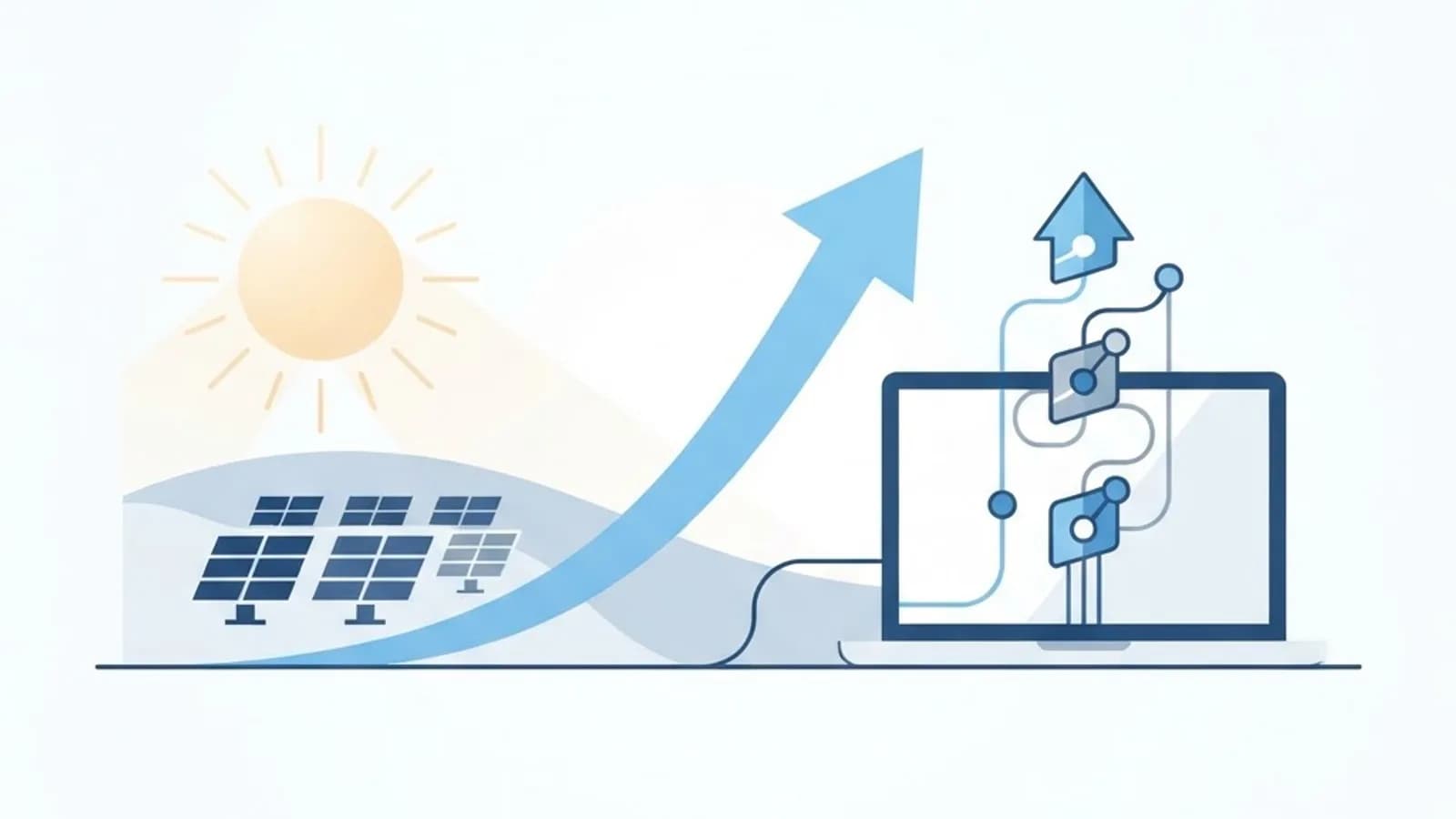
Solar is one of the most competitive lead generation markets in the world. Customer acquisition cost is the number that decides whether an installer thrives or quietly closes. Digital marketing for solar is, above all, the practice of lowering that number while keeping lead quality high.
Most installers start by buying leads. Many never escape that model, and margins suffer accordingly. The alternative is building owned channels that produce exclusive enquiries at a fraction of the cost.
This guide covers how to build that engine, from search visibility through to closing the sale.
What Is Digital Marketing for Solar?
It is the use of search engines, paid media, educational content and automated nurture to attract homeowners and businesses considering renewable energy, and to convert them into signed installation contracts.
The defining difficulty is the gap between interest and commitment. Someone who requests a quote today may not sign for four months, after comparing three proposals and checking incentive eligibility. Nurture, not lead volume, is where most solar companies lose money.
Incentives, financing options and utility rules also vary enormously by region, so generic national messaging performs badly against locally specific content.
Who Needs It?
Everyone across the solar value chain competes for the same limited pool of ready buyers.
- Residential installers working a defined service territory
- Commercial and industrial solar developers with long project cycles
- Solar and battery storage combination specialists
- EPC contractors seeking direct-to-owner projects
- Maintenance and panel cleaning service providers
Key Features
Location-Specific Incentive Content
Pages explaining rebates, net metering rules and payback periods for a specific state or utility attract genuinely high-intent traffic, because that is exactly what a serious buyer searches for.
Savings Calculators and Interactive Tools
An estimate tool that captures an address and roof details converts visitors far better than a plain contact form. Building one requires solid React web application development, but it becomes the most valuable asset on the site.
Long-Cycle Nurture Automation
Given multi-month decision timelines, an automated sequence of educational emails and timely check-ins keeps you present when the buyer is finally ready.
Transparent Proposal Processes
Solar sales carries a reputation problem created by aggressive door-to-door tactics. Clear, no-pressure proposals and honest payback maths become a genuine competitive advantage.
How to Get Started
Reduce dependency on purchased leads step by step rather than all at once.
- Calculate your true cost per signed contract across every existing channel.
- Build detailed incentive and payback pages for each state or utility you serve.
- Add a savings estimate tool that captures contact details mid-flow.
- Launch paid search on high-intent installation keywords in your service area.
- Create a nurture sequence lasting at least ninety days for unconverted quotes.
- Collect and publish installation photos and customer stories continuously.
- Shift budget gradually from purchased leads to owned channels as they mature.
Benefits
Owned demand generation transforms solar unit economics.
- Exclusive leads that are not being sold to three competitors simultaneously
- Materially lower cost per signed installation over time
- Higher close rates because prospects arrive already educated
- Resilience against sudden changes in lead marketplace pricing
- A content library that keeps producing enquiries with no incremental spend
Potential Challenges
Solar marketing carries real risks worth naming.
- Policy and incentive changes can reshape demand almost overnight
- Industry reputation issues create buyer scepticism from the first contact
- Extremely high advertising competition in mature solar markets
- Seasonal swings tied to weather, energy prices and incentive deadlines
Best Practices and Tips
Honesty is genuinely the highest-performing tactic in this category.
- Publish realistic payback ranges rather than best-case scenarios
- Explain financing options plainly, including total cost over the term
- Segment nurture content by roof type, ownership status and motivation
- Run targeted performance marketing campaigns that are measured on signed contracts, not clicks
Real-World Example
A residential installer completing roughly fifteen systems a month purchased every lead from two aggregators. Close rates sat below ten percent because each contact had already spoken to several rivals, and margin pressure forced constant discounting.
Over nine months the company built a set of county-level incentive guides, added a roof-based savings estimator, and introduced a ninety-day nurture sequence for anyone who requested a quote but did not sign. Purchased lead spend was reduced in stages as organic enquiries grew. Close rates on owned leads ran several times higher than marketplace leads, and because those enquiries arrived exclusive and informed, the company stopped competing purely on price.
Why It Matters
Solar demand is strong but the cost of reaching it keeps rising. Companies that rent their lead flow are permanently exposed to someone else's pricing decisions.
Digital marketing for solar builds an asset the business owns. Rankings, tools, content and an email list retain value regardless of what the lead marketplaces do next quarter.
Frequently Asked Questions
Are purchased solar leads ever worth buying?
They can fill capacity gaps while owned channels are being built, but they should be treated as a temporary supplement rather than a permanent strategy.
How long does it take to rank for solar keywords?
Local and county-level terms can move within four to six months with focused content. Broad national terms are far slower and rarely worth chasing for an installer.
What is the most effective page on a solar website?
A savings or payback estimator, followed closely by locally specific incentive guides. Both capture buyers at the moment they are seriously evaluating.
How long should a solar nurture sequence run?
At least ninety days, and ideally longer with periodic value-led touches. Many contracts are signed months after the original enquiry.
Conclusion
The installers growing profitably are the ones who stopped renting leads and started earning them. Build locally relevant content, give prospects a real tool, and stay in touch through a long decision cycle.
If you want a site that can carry that strategy, start with conversion-focused website design and turn interest into signed installations.
Enjoyed this article? Share it with others!