
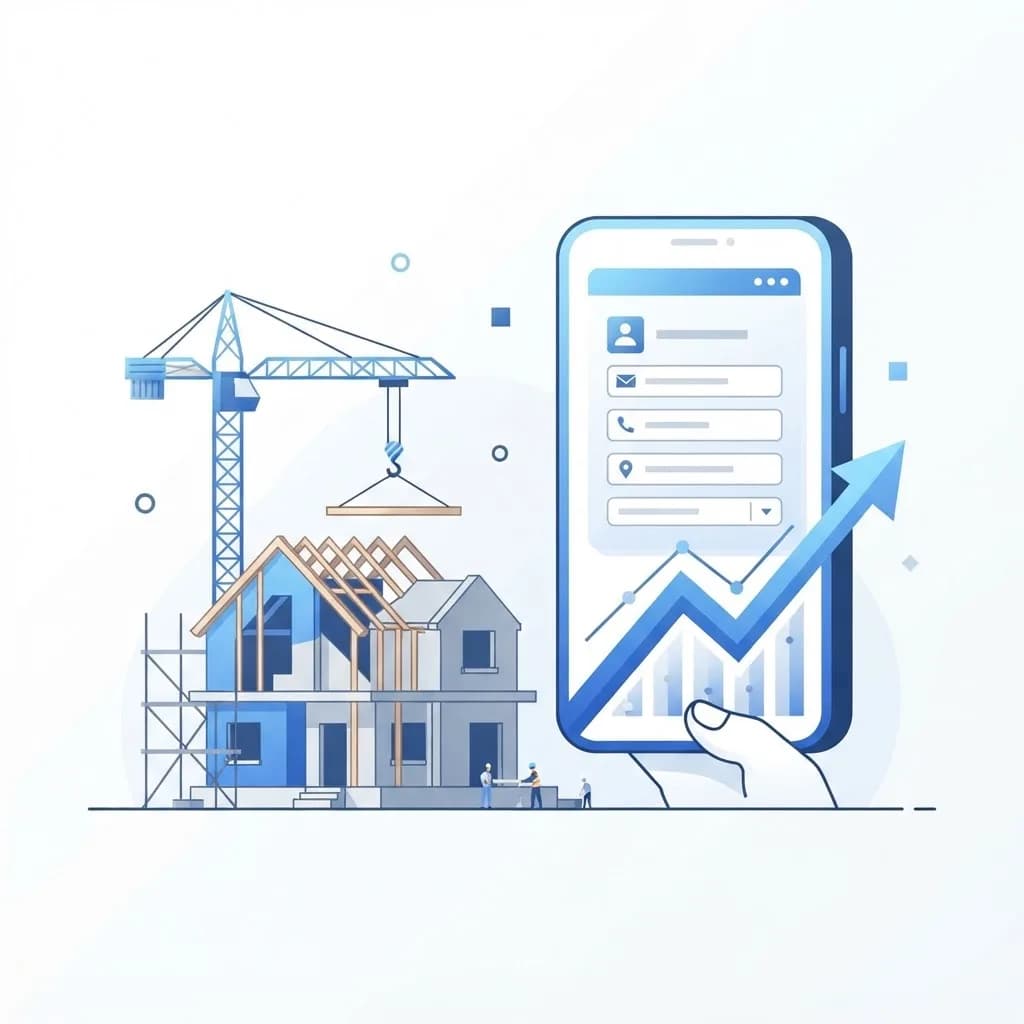
Referrals built the construction industry, and they still work. The problem is that referrals arrive when they arrive — not when your crew has a gap in three weeks. That is why digital marketing for builders has stopped being optional.
Homeowners now research contractors for weeks before calling anyone. They read reviews, compare project photos, check whether your licence is visible, and quietly eliminate builders whose websites look abandoned.
This guide covers what actually generates enquiries for custom home builders, remodelers, and general contractors — and what is a waste of a busy builder's time.
What Is Digital Marketing for Builders?
Digital marketing for builders is the set of online channels used to get in front of homeowners and developers at the moment they start planning a project, then convert that attention into booked consultations.
It differs from ecommerce marketing in one crucial way: the sales cycle is long and the ticket size is large. A single kitchen remodel may be worth 60,000 dollars, and a custom home far more. When one closed job pays for a year of marketing, the goal is qualified enquiries, not cheap clicks.
The channels that matter most are local search, your project portfolio, review platforms, and fast follow-up. Everything else is secondary.
Who Needs It?
Any builder whose pipeline depends on inbound interest rather than a single repeat commercial client benefits from a deliberate marketing system.
- Custom home builders competing on craftsmanship and design rather than price.
- Remodeling and renovation contractors serving a defined metro area.
- Design-build firms that need to explain a longer, higher-value process.
- Specialty trades — roofing, decks, basements, ADUs — with clear searchable demand.
- Growing builders hiring crews who now need predictable work volume to keep them.
Key Features of a Builder Marketing System
A Portfolio That Sells the Work
Photography is the single highest-return investment for builders. Homeowners buy the outcome they can see. Each project should have its own page with before-and-after images, scope, timeline, neighbourhood and materials — which also happens to create genuinely useful pages for search engines.
Local Search Visibility
Most builder enquiries begin with a location-based search. That means a complete Google Business Profile, consistent name and address details, service-area pages, and steady review collection. Local SEO is unglamorous and it outperforms almost everything else.
A Website Built for Trust and Speed
Slow, image-heavy builder sites lose visitors before the gallery loads. A clean, fast build with visible licence details, service areas and a simple enquiry form converts far better than a flashy template. Many firms handle this with professional website design and then add project pages themselves over time.
Fast, Structured Lead Follow-Up
Speed to first response is the most under-managed metric in construction. Enquiries answered within an hour convert dramatically better than those answered the next day. A simple shared inbox, an automatic acknowledgement email and a call-back rule beat any advertising tweak.
How to Get Started
You do not need every channel at once. Build in this order and stop whenever the pipeline is full.
- Fix the foundations. Clean website, clear service areas, working forms, visible phone number, licence and insurance details.
- Photograph three signature projects. Hire a professional for one day. Get exteriors, interiors, details and one drone shot per project.
- Claim and complete your Google Business Profile. Correct categories, service areas, hours, and at least twenty photos.
- Build service and area pages. One page per major service, one per major town you serve — written for humans, not stuffed with place names.
- Start collecting reviews systematically. Ask at project handover, every time, with a direct link.
- Add paid search selectively. Bid on high-intent terms like "kitchen remodel contractor" plus your city, with tight negative keywords to block job seekers and DIY searches.
- Measure and prune quarterly. Track enquiries by source and drop whatever produces tyre-kickers.
Benefits
Done properly, marketing changes the economics of a construction business, not just its enquiry count.
- Predictable pipeline so you can schedule crews instead of reacting to gaps.
- Better project mix — you can market toward the work you want rather than accepting whatever arrives.
- Higher perceived value, which supports premium pricing and reduces haggling.
- Less dependence on referral timing and on any single builder relationship.
- Recruiting advantage, because skilled trades prefer firms that look established and busy.
Potential Challenges
Builders face specific obstacles that generic marketing advice ignores.
- No time. You are on site all day. Marketing tasks must be delegated or automated or they will not happen.
- Long sales cycles. A lead from March may sign in September, which makes month-to-month reporting misleading.
- Unqualified enquiries. Without budget qualification on the form, you will spend evenings on calls that go nowhere.
- Seasonality. Demand and ad costs swing hard by season, so budgets need to flex.
Best Practices and Tips
A few habits separate builders who get results from those who quit after two months.
- Put a budget range question on your enquiry form. It reduces volume and increases closed jobs.
- Answer every enquiry within one business hour, even if only to schedule a proper call.
- Reuse project photography everywhere — site, profile, proposals and social. Well-designed social media post and banner design keeps that library working across channels without extra shoots.
- Publish one project case study per month. Twelve a year makes you the most credible builder in your market online.
Real-World Example
A three-crew remodeling firm outside Charlotte was running entirely on word of mouth and had two open weeks in its schedule. It made three changes: professional photos of four completed projects, six new pages covering specific services and towns, and a rule that every enquiry got a phone call within an hour.
Within five months, organic enquiries roughly doubled and average project value rose because the gallery attracted higher-end remodels. The firm added a small paid search budget only after organic worked, spending on two campaigns and pausing them each December. Nothing exotic happened — they simply made the work visible and stopped losing leads to slow replies. Firms wanting a heavier online storefront for spec homes or design packages often extend this with custom web development once the basics are producing.
Why It Matters
Homeowners are making a five- or six-figure decision with a stranger. Everything they can find online is evidence, and absence of evidence is a reason to call someone else.
Digital marketing for builders is really trust engineering at scale: proof of craft, proof of process, proof that you answer the phone. Builders who supply that proof consistently win the projects they want at the prices they want.
Frequently Asked Questions
How much should a builder spend on marketing?
Most healthy small construction firms invest between 3 and 8 percent of revenue, weighted toward website quality, photography and local search before paid ads. Start at the low end and increase only when you can trace enquiries to a source.
Is SEO or paid advertising better for builders?
Local SEO usually wins on long-term cost per lead, while paid search fills gaps faster. Fix your site and profile first, then add paid campaigns for high-intent searches when you need immediate volume.
Do builders need social media?
It helps, but it is a supporting channel. Use it to showcase progress photos and finished projects to people who already know you, and keep your primary effort on search visibility and follow-up speed.
How long before marketing produces jobs?
Paid search can generate enquiries within days. Organic search improvements typically take three to six months to show clearly, and project close times add several more weeks on top.
Conclusion
Digital marketing for builders comes down to four things: show the work, be findable locally, make the site fast and trustworthy, and answer enquiries immediately. Do those before experimenting with anything clever.
If you want a site and lead system built specifically for construction sales cycles, start with a conversation about website maintenance and support so the pipeline you build keeps running while you are on site.
Enjoyed this article? Share it with others!