
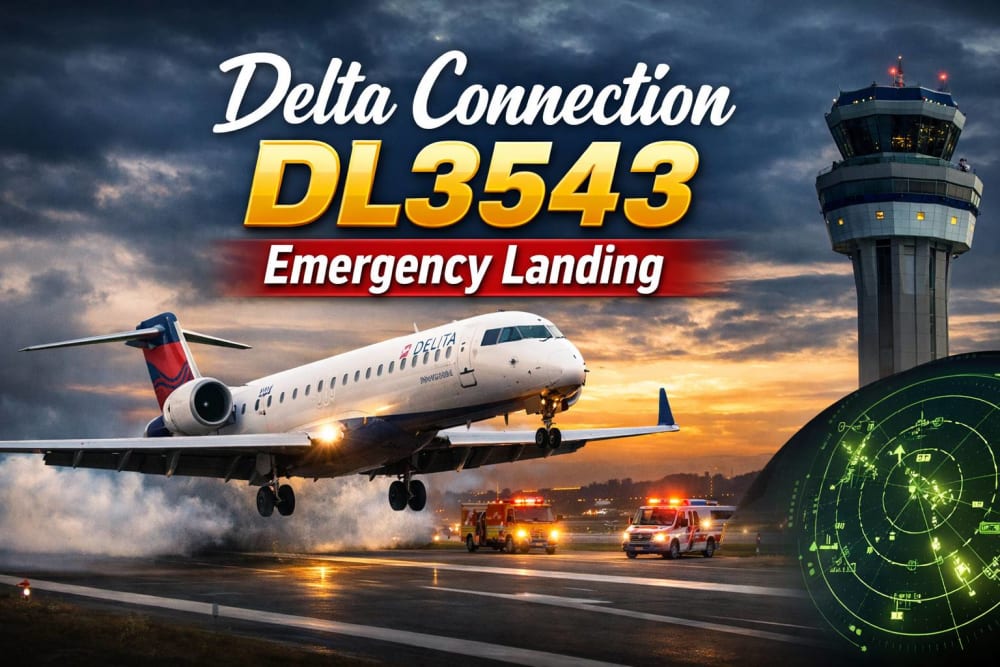
The aviation world was recently abuzz with news surrounding Delta Connection DL3543, which made an emergency landing due to unforeseen circumstances. This incident, which occurred during a routine flight, highlights the intricate processes that airlines and crew follow to ensure passenger safety. In this article, we take an in-depth look at the sequence of events, the safety measures involved, the response of Delta Connection, and what passengers need to know about emergency landings in general.
Overview of Delta Connection DL3543
Delta Connection DL3543 is a regional flight that connects key destinations across the United States. Operated under the Delta Connection brand, the flight is managed in collaboration with regional carriers to ensure seamless connectivity and a consistent passenger experience. While the flight is usually routine and uneventful, aviation operations always carry inherent risks due to weather, technical issues, or medical emergencies.
The recent incident brought attention to how well-prepared airlines are to handle emergencies. When a flight like DL3543 experiences a critical situation mid-air, the crew relies on rigorous training, standardized procedures, and constant communication with air traffic control to navigate the scenario safely.
Timeline of Events
Reports indicate that Delta Connection DL3543 was en route when the flight crew identified a technical malfunction. The exact nature of the issue was related to the aircraft’s mechanical systems, which triggered a precautionary protocol. Once the problem was detected, the crew immediately informed air traffic control and began preparations for an emergency landing.
During the descent, cabin crew performed standard safety procedures, ensuring passengers were informed and secured in their seats. Passengers recalled announcements instructing them to remain calm, fasten their seat belts, and follow all crew instructions. These procedures, while routine in training, are critical during real-life emergencies to minimize panic and potential injuries.
Emergency Landing Procedures
An emergency landing is a highly controlled maneuver that differs significantly from a standard landing. Airlines, including Delta, train their crews extensively on how to handle various emergencies, including engine failure, hydraulic issues, or cabin depressurization. For DL3543, the crew followed established guidelines:
- Immediate Assessment: Upon detecting the malfunction, pilots performed a quick assessment to determine if the aircraft could continue to its destination safely or needed an immediate diversion.
- Communication: Pilots coordinated with the nearest airport, providing information about the aircraft’s status and required support on the ground.
- Cabin Preparations: Flight attendants ensured all passengers were briefed, seats were upright, and emergency equipment was ready.
- Landing Execution: The aircraft made a controlled descent to the designated airport, maintaining communication with air traffic control throughout.
- Post-Landing Protocols: Emergency services were on standby to provide medical aid if needed, and passengers were safely deboarded.
The execution of these steps is testament to the training and discipline inherent in commercial aviation.
Passenger Experience
While emergency landings are inherently stressful, the accounts from passengers on Delta Connection DL3543 highlight the professionalism of the crew. Several passengers reported that the crew remained calm and reassuring throughout the descent. Children and elderly passengers were assisted carefully, and clear communication helped prevent panic.
It’s worth noting that incidents like this, while alarming, are statistically rare. Airlines, especially major carriers like Delta, maintain rigorous safety standards and equipment inspections to prevent emergencies before they occur. In fact, the airline industry is considered one of the safest modes of transportation worldwide due to these stringent protocols.
Delta’s Response and Safety Commitment
Delta Airlines promptly issued a statement confirming the emergency landing of DL3543 and emphasizing that no serious injuries occurred. The airline also highlighted its commitment to passenger safety, explaining that all crew members underwent extensive training to handle such situations.
Beyond immediate response, Delta initiated a full technical inspection of the aircraft to identify the root cause of the malfunction. This inspection ensures that any potential issues are addressed before the aircraft returns to service. The airline’s transparent communication during this incident reflects the broader commitment of Delta Connection to passenger trust and aviation safety.
Understanding Aircraft Emergencies
To contextualize the significance of the DL3543 emergency landing, it’s useful to understand how commercial aircraft handle emergencies. Modern aircraft are equipped with redundant systems, multiple engines, and advanced avionics, all designed to maintain control even under abnormal circumstances. Pilots are trained for:
- Engine Failures: Aircraft are capable of flying safely with one engine in many cases.
- Hydraulic System Issues: Multiple backups exist to ensure control of critical flight surfaces.
- Medical Emergencies: Cabin crew are trained in first aid and have access to onboard medical equipment.
- Severe Weather: Pilots and flight planners use real-time weather data to adjust flight paths proactively.
Such redundancies mean that while an emergency landing may be necessary, the likelihood of catastrophic outcomes is extremely low.
Legal and Regulatory Aspects
Incidents like Delta Connection DL3543 Emergency Landing also involve regulatory oversight. Aviation authorities, including the Federal Aviation Administration (FAA), require airlines to file detailed reports after any emergency landing. These reports analyze the cause, the crew’s response, and the effectiveness of existing procedures.
These regulations serve multiple purposes:
- Safety Improvement: Each incident contributes to industry-wide knowledge, helping prevent similar occurrences.
- Passenger Protection: Regulatory frameworks ensure that airlines prioritize passenger welfare during emergencies.
- Operational Transparency: Public reporting builds trust and reassures passengers about the airline’s safety standards.
By adhering to these regulations, Delta Connection demonstrates compliance with both national and international aviation safety standards.
Psychological Considerations for Passengers
Experiencing an emergency landing can be traumatic for some passengers, even if no one is injured. Aviation psychologists note that clear communication from the crew, understanding of procedures, and prior exposure to safety instructions can reduce stress levels significantly. Passengers are encouraged to:
- Remain seated and follow crew instructions.
- Focus on breathing techniques to manage anxiety.
- Avoid speculation or rumors during the event, which can heighten panic.
- Seek support after the flight if needed, as airline personnel are trained to provide post-incident assistance.
These strategies contribute to overall passenger safety and well-being.
Lessons for Future Travel
The DL3543 incident underscores several lessons for travelers:
- Pay Attention to Safety Briefings: Instructions given at the start of flights are critical, even for frequent flyers.
- Stay Calm: Panicking reduces the ability to follow instructions and can endanger yourself and others.
- Trust the Crew: Flight attendants and pilots are trained extensively to handle emergencies.
- Prepare for Unforeseen Events: Keeping essential items accessible, knowing emergency exits, and understanding seatbelt operations can enhance personal safety.
While emergencies are rare, informed passengers can make a significant difference in the outcome of such situations.
Conclusion
The Delta Connection DL3543 Emergency Landing serves as a reminder of the meticulous planning and training behind commercial aviation. From technical assessments to passenger management, the crew’s professionalism ensured a safe outcome for everyone on board. Such incidents also reinforce the broader aviation safety infrastructure, which relies on rigorous standards, regulatory oversight, and continuous improvement.
For businesses and entrepreneurs looking to expand their reach safely and effectively, leveraging reliable platforms for visibility is crucial. Hire Tulu e Biz for Worldwide Business Listing & Discovery Platform Services to ensure your business is discoverable, trusted, and connected globally.
The aviation industry, much like the business world, thrives on preparation, adaptability, and resilience. Learning from incidents such as DL3543 helps both travelers and businesses approach challenges with confidence and diligence.
Enjoyed this article? Share it with others!