
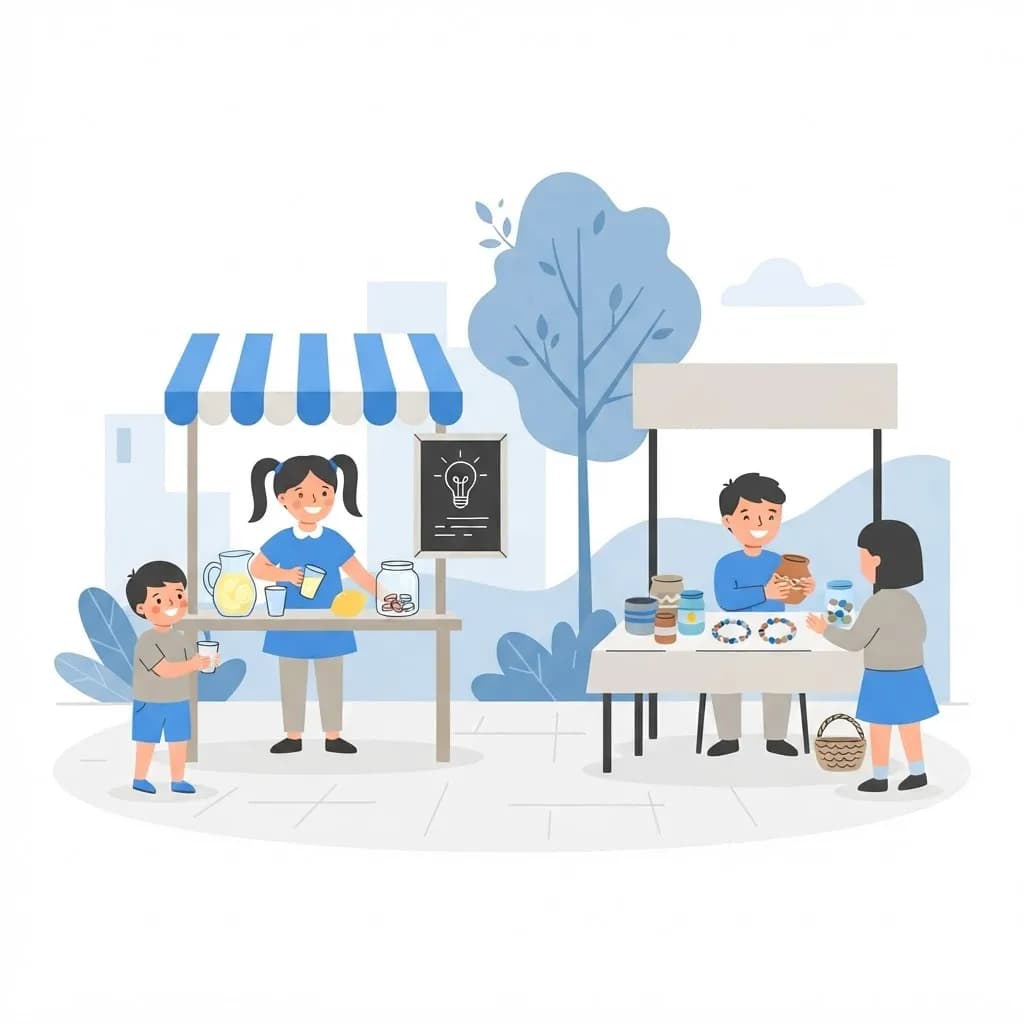
A children's entrepreneur market is one of the most effective hands-on business lessons a child can experience. Kids create a product or service, set prices, build a booth, and sell to real customers, learning more about money, communication, and resilience in one afternoon than most classrooms teach in a semester.
This guide explains how these markets work, how your child can participate, what they gain, and how parents can help without taking over.
What Is a Children's Entrepreneur Market?
A children's entrepreneur market is an organized event where kids, typically ages 5 to 17, run their own market booths selling products or services they created themselves. The best-known organizer is the Children's Entrepreneur Market network, which hosts hundreds of events across the United States, but schools, churches, farmers markets, and community groups run similar kid-vendor events everywhere.
The core rule is simple: the child does the work. Kids make or source the product, set prices, handle money, and talk to customers. Parents may assist with logistics and safety, but the business belongs to the child.
Typical offerings include baked goods, lemonade, crafts, jewelry, art, slime, plants, and simple services like face painting.
Who Can Participate?
These markets are designed for broad access:
- Kids roughly 5 to 17, with younger children supported by a parent nearby
- First-time sellers with a single simple product
- Repeat kid vendors building an ongoing small business
- Homeschool groups and school entrepreneurship clubs
- Families seeking practical financial education
Key Elements of a Successful Kid Booth
A Product Kids Can Explain
The best products are ones the child made and can talk about with genuine pride. Customers at these markets buy the story and the effort as much as the item.
Simple, Visible Pricing
Round numbers ($2, $5) speed transactions and make change easy for young cashiers. A clear price sign removes the awkwardness of customers having to ask.
An Eye-Catching Booth
A tablecloth, a hand-made banner, and tidy product displays dramatically outperform bare tables. Some families create simple printed signs; a clean logo design for a repeat kid business teaches branding early and makes the booth memorable.
A Practiced Pitch
One rehearsed sentence, what it is, why it is great, what it costs, transforms shy sellers into confident ones by the third customer.
How to Get Started: Step by Step
From idea to market day:
- Find an event: search for children's entrepreneur market plus your city, or ask local farmers markets about kid vendor days.
- Register early; popular events cap booth numbers and fees are usually small.
- Help your child choose one product they can produce in quantity.
- Build a simple budget together: supply costs, price per unit, break-even count.
- Practice transactions and the pitch at home with real coins and bills.
- After the event, count earnings together and discuss what to change next time.
Benefits for Kids
The learning is broad and sticks because it is real:
- Financial literacy: costs, pricing, profit, and making change
- Communication skills from dozens of real customer conversations
- Resilience when items do not sell and adjustments are needed
- Work ethic connected directly to visible reward
- Confidence that transfers to school and social settings
Potential Challenges
Prepare for the realistic bumps:
- Slow sales days that test a child's morale
- Parents over-helping and accidentally taking ownership
- Underpricing that turns effort into losses; use it as a math lesson
- Food items may face local health rules; check event guidelines
Best Practices for Parents
Your role is coach, not co-founder:
- Let your child answer customer questions, even imperfectly
- Debrief with questions, not verdicts: what worked, what would you change?
- Split proceeds intentionally: spend, save, and reinvest buckets teach money management
- Celebrate effort and learning over revenue totals
Families whose kids catch the bug sometimes grow the venture online. A simple store built with an ecommerce solution, with parents handling accounts and safety, can extend market-day lessons year-round, and fun product photos and graphic design touches make it feel real.
Real-World Example
Nine-year-old Maya sold hand-painted rock magnets at her first children's entrepreneur market. She spent $14 on supplies, priced magnets at $3, and sold 22 of them, netting $52. More valuable than the money: she noticed animal designs outsold patterns three to one, so her next market featured an animals-only lineup and sold out.
That is genuine market research, product iteration, and inventory planning, executed by a fourth grader.
Why It Matters
A children's entrepreneur market compresses the essential loop of business, make something, offer it, listen, improve, into an experience kids actually enjoy. The financial confidence and communication skills built at a folding table follow them for decades, whatever career they choose.
Frequently Asked Questions
What age can kids join a children's entrepreneur market?
Most events welcome ages 5 to 17. Younger children participate with a parent close by, while teens often run booths fully independently.
How much does it cost to get a booth?
Registration fees are typically modest, often in the $10 to $30 range depending on the organizer, plus the cost of your child's supplies.
What sells best at kids' markets?
Handmade items with personality: baked goods, crafts, jewelry, art, slime, and plants. Products the child clearly made themselves consistently outsell resold goods.
Can parents help at the booth?
Yes, with logistics, setup, and safety. But event rules and the spirit of the market expect the child to sell, handle money, and talk to customers.
Conclusion
A children's entrepreneur market turns abstract lessons about money and work into a day of real customers, real dollars, and real pride. Register for a local event, keep the product simple, and let your child own the outcome, wins and stumbles alike.
And when a young founder is ready for a bigger stage, a simple, well-designed website is the perfect next lesson in building something that lasts.
Enjoyed this article? Share it with others!