
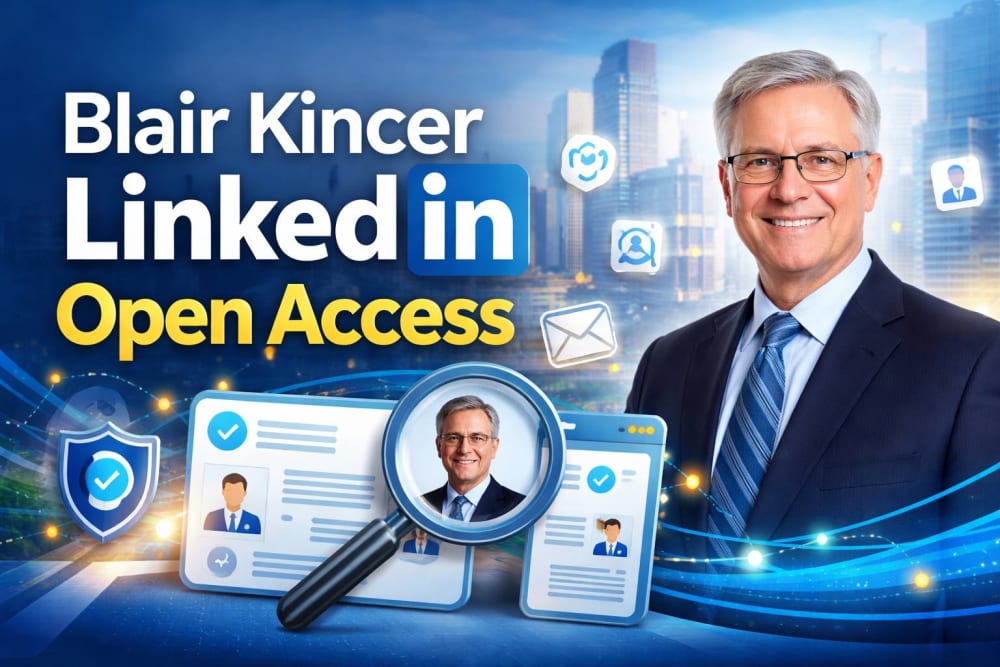
“Blair Kincer LinkedIn Open Access” appears to be a search phrase people encounter when trying to view or verify a professional profile online. It is not a formal feature or official label but rather a combination of a person’s name and a loosely used term suggesting public visibility. This kind of phrasing often shows up in blog posts, shared links, or indexing pages that aim to direct traffic toward publicly accessible profiles.
Understanding what this phrase represents requires separating the individual from the wording around it. In most cases, it points to a legitimate professional profile that is accessible without restrictions. However, the surrounding language can create confusion, especially for users who expect some form of exclusive access or hidden information. A careful evaluation helps avoid misinterpretation and unnecessary risk.
What does this phrase actually refer to
The phrase generally refers to a publicly accessible LinkedIn profile associated with a specific individual. It does not indicate a special feature, tool, or permission system. Instead, it is commonly used by third-party websites or search results to describe profiles that can be viewed without logging in or with minimal restrictions.
In practical terms, “open access” simply means the profile visibility settings allow broader viewing. Many professionals choose this option to improve discoverability, especially in consulting, finance, or advisory roles. It helps recruiters, clients, and researchers find relevant experience quickly.
A common mistake is assuming the phrase represents an official LinkedIn program or a unique database. This misunderstanding often leads users to click on unfamiliar links expecting added value. In reality, the value comes from the profile itself, not the label attached to it.
Is there a real profile behind the name
Yes, there is a real professional associated with this name. H. Blair Kincer is known for experience in consulting and valuation advisory, particularly within sectors tied to finance and development programs. Profiles like this typically reflect long-term industry involvement and are often cited in event listings or professional directories.
When evaluating such a profile, the key is consistency. Look for a clear career timeline, recognizable organizations, and detailed role descriptions. These elements signal authenticity more effectively than the presence of any keyword or label.
Another important factor is external validation. Professionals with established careers often appear in conference materials, publications, or company pages. If the profile aligns with these external references, it strengthens credibility and reduces the likelihood of impersonation.
Why are people searching for it online
People usually search for this phrase because they encounter it in articles, social posts, or unfamiliar websites. The wording creates curiosity, especially when paired with promises of access or insight. In some cases, users are simply trying to confirm whether the individual exists or if the link is legitimate.
Search behavior also reflects a broader pattern. Users today are more cautious about digital identity and professional claims. They want to verify credentials before trusting information, making names combined with access-related terms more likely to trend in search queries.
Another driver is indexing behavior. Content platforms often generate pages using names and generic phrases to attract search traffic. This does not always mean there is new or exclusive information. It often indicates an attempt to capture attention using familiar professional networks.
Is it safe or trustworthy to engage with such links
The safety of these links depends on the source, not the phrase itself. A legitimate LinkedIn profile accessed through the official platform is generally safe. Problems arise when the phrase is used on third-party sites that redirect users or request unnecessary permissions.
A reliable approach is to avoid clicking unfamiliar links that promise special access. Instead, search for the individual directly on LinkedIn or through well-known professional directories. This reduces the risk of encountering misleading pages or data collection attempts.
A common mistake is assuming that all search results are equally trustworthy. In reality, some pages are designed to mimic professional platforms or exaggerate access claims. Paying attention to the domain, page structure, and intent can help you distinguish between genuine and questionable sources.
How should you verify similar profiles in the future
The most effective way to verify a profile is to cross-check information across multiple credible sources. Start with LinkedIn itself, then look for mentions in company websites, event listings, or industry publications. Consistency across these platforms is a strong indicator of authenticity.
Focus on substance rather than labels. A real professional profile will include detailed experience, specific roles, and a logical career progression. Vague descriptions or missing details should prompt further verification before drawing conclusions.
It is also helpful to consider context. If a name appears in connection with a specific field, such as finance or consulting, check whether the profile reflects relevant expertise. This alignment between name, experience, and external references builds trust and reduces uncertainty.
Conclusion
“Blair Kincer LinkedIn Open Access” is best understood as a descriptive search phrase rather than a formal concept. It typically points to a publicly visible professional profile, not a special feature or exclusive system. The real value lies in evaluating the individual’s credentials, not the wording used around them.
By focusing on verification, consistency, and source reliability, you can navigate similar phrases with confidence. This approach helps you avoid confusion, recognize legitimate profiles, and make informed decisions when assessing professional information online.
FAQs
1. What is Blair Kincer LinkedIn Open Access?
Blair Kincer LinkedIn Open Access refers to a publicly visible LinkedIn profile for H. Blair Kincer. It is not an official LinkedIn feature but simply a way people describe profiles that can be viewed without logging in or with minimal restrictions. This phrase often appears in search results or third-party websites highlighting accessible professional profiles.
2. Who is H. Blair Kincer?
H. Blair Kincer is a business professional with experience in consulting and valuation advisory, particularly in finance and development programs. His profile often appears in industry directories, speaking events, and conference listings, which helps verify professional credibility.
3. How can I safely view a public LinkedIn profile?
The safest way is to access the profile directly through LinkedIn or trusted professional directories. Avoid clicking on third-party links promising “open access,” as they may redirect to unsafe pages or request unnecessary permissions.
4. Why do people search for LinkedIn profiles with “open access”?
Users search with “open access” when trying to confirm credentials, view public experience, or access professional information without logging in. It often reflects curiosity or a need to validate professional claims seen in articles, social posts, or search results.
5. How can I verify the authenticity of professional profiles online?
Check for consistency across multiple platforms, such as LinkedIn, company websites, industry events, and publications. Look for detailed experience, clear career progression, and external references. Authentic profiles align with credible sources and avoid vague or incomplete descriptions.
Enjoyed this article? Share it with others!