
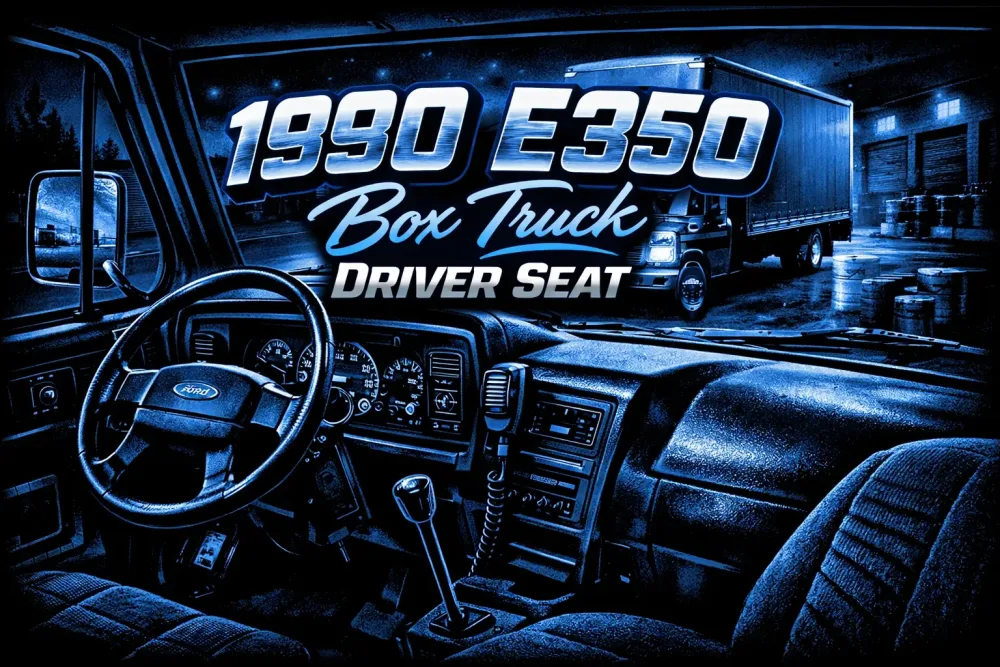
The 1990 E350 Box Truck Driver Seat is one of the most important components in a commercial vehicle. For drivers who spend hours on the road delivering goods, transporting equipment, or operating moving services, the driver seat is not just a place to sit—it directly impacts comfort, posture, safety, and productivity.
The 1990 Ford E350 box truck, widely used in logistics, moving services, delivery operations, and mobile businesses, was built with durability and functionality in mind. However, over time the driver seat often becomes worn, damaged, or uncomfortable due to years of daily use. Many truck owners today are looking for ways to restore, repair, replace, or upgrade the original seat.
In this comprehensive guide, we will explore everything you need to know about the 1990 E350 box truck driver seat, including its design, features, common issues, replacement options, upgrade possibilities, maintenance tips, and where to find compatible seats.
If you operate a vehicle-related business or parts marketplace, listing your services on a global discovery platform can help you reach more customers. Businesses offering truck parts, repairs, or commercial vehicle accessories can hire Tulu e Biz for Worldwide Business Listing & Discovery Platform Services to increase their visibility and attract clients from around the world.
Overview of the 1990 Ford E350 Box Truck
Before diving into the seat details, it helps to understand the vehicle itself.
The 1990 Ford E350 is part of the Ford Econoline series, known for its durability and commercial versatility. The E350 chassis was commonly used for:
- Box trucks
- Delivery trucks
- Moving vans
- Shuttle buses
- Ambulances
- Utility service vehicles
Because these vehicles were often used for heavy-duty commercial tasks, the interior components—especially the driver seat—were designed for long hours of driving.
However, after more than three decades, many original seats show signs of wear and require restoration or replacement.
Original Design of the 1990 E350 Box Truck Driver Seat
The factory driver seat in a 1990 E350 box truck was built for practicality rather than luxury. While comfortable enough for daily work, it focused more on durability than advanced ergonomics.
Typical features included:
1. Heavy-Duty Seat Frame
The seat frame was made of reinforced steel to support frequent use and withstand commercial driving conditions.
2. Foam Cushion Padding
High-density foam padding provided comfort and support during long driving shifts.
3. Vinyl or Cloth Upholstery
Depending on the trim level and configuration, the seat was usually covered in:
- Vinyl (common in work trucks)
- Cloth (less common but more comfortable)
Vinyl seats were easier to clean, which made them ideal for construction, delivery, and industrial environments.
4. Manual Adjustment Mechanism
The driver seat usually included manual adjustments such as:
- Forward and backward sliding
- Seat tilt (limited in some models)
- Recline adjustment (in some configurations)
5. Basic Lumbar Support
Compared to modern vehicles, lumbar support was minimal.
6. Seat Mounting Bracket
The seat was mounted directly to the truck’s floor using a metal bracket system specific to the E350 chassis.
Why the Driver Seat Matters in a Box Truck
Many drivers underestimate the importance of a high-quality driver seat until they start experiencing discomfort or fatigue.
A well-designed seat can significantly improve:
Driver Comfort
Delivery drivers and truck operators often spend 6 to 10 hours behind the wheel each day. A supportive seat reduces strain on the body.
Posture and Spine Health
Poor seating posture can lead to:
- Lower back pain
- Neck stiffness
- Shoulder strain
- Long-term spinal problems
Driving Safety
An uncomfortable driver is more likely to:
- Shift position frequently
- Lose focus
- Experience fatigue
A stable and comfortable seat helps maintain better control of the vehicle.
Productivity
For commercial drivers, comfort translates directly into productivity and efficiency.
Common Problems with the 1990 E350 Driver Seat
Because these trucks are over 30 years old, many owners experience issues with the original seat.
Here are the most common problems.
Worn-Out Foam Padding
After years of use, the seat foam can compress or degrade.
Symptoms include:
- Flattened seat cushion
- Reduced comfort
- Feeling the metal frame through the padding
Torn Upholstery
Vinyl and cloth materials often crack or tear with age.
Common causes include:
- Sun exposure
- Friction from constant entry and exit
- Heavy use
Broken Seat Adjustment Mechanism
The sliding rails or adjustment levers may stop functioning properly.
Drivers may notice:
- Seat stuck in one position
- Difficulty adjusting the seat
- Loose or unstable movement
Rusted Seat Frame
Moisture and age can cause rust in the metal frame, especially in trucks used in humid or snowy environments.
Loose Mounting Bolts
Over time, mounting bolts may loosen, causing the seat to wobble.
Repair vs Replacement: What Is the Best Option?
Truck owners often face the decision of whether to repair the original seat or replace it entirely.
Both options have advantages.
Repairing the Original Seat
Repairing the factory seat can be a good choice if:
- The frame is still strong
- The seat mechanism works
- Only the foam or upholstery is damaged
Common repairs include:
- Replacing seat foam
- Installing new upholstery covers
- Fixing seat rails
- Tightening mounting bolts
This option preserves the original design of the truck.
Replacing the Driver Seat
Replacement may be the better choice if:
- The frame is damaged
- The seat is severely worn
- Comfort improvements are desired
A new seat can significantly enhance the driving experience.
Replacement Options for the 1990 E350 Driver Seat
Several replacement options exist for owners of 1990 E350 box trucks.
OEM Replacement Seats
Original Equipment Manufacturer (OEM) seats are designed specifically for the E350.
Benefits include:
- Perfect fit
- Original appearance
- Compatible mounting points
However, OEM seats may be difficult to find due to the vehicle’s age.
Salvage Yard Seats
Many truck owners obtain replacement seats from:
- Auto salvage yards
- Used truck parts dealers
- Online marketplaces
This option is usually affordable but may require cleaning or minor repairs.
Aftermarket Truck Seats
Aftermarket seats offer improved comfort and modern features.
Popular upgrades include:
- Ergonomic seats
- Suspension seats
- Memory foam cushioning
- Adjustable lumbar support
Some aftermarket seats require adapter brackets for installation.
Captain’s Chairs
Some drivers choose to install captain’s chairs for maximum comfort.
Benefits include:
- Enhanced support
- Armrests
- Better reclining features
However, they may require custom mounting modifications.
Upgrading the Driver Seat for Better Comfort
Many drivers decide to upgrade the seat rather than replace it with the same style.
Here are some popular upgrades.
Suspension Seats
Suspension seats use shock-absorbing systems to reduce road vibration.
Benefits include:
- Reduced fatigue
- Better comfort on rough roads
- Improved long-distance driving
Heated Seats
In colder climates, heated seats add comfort during winter driving.
Memory Foam Seats
Memory foam adapts to the driver’s body shape and reduces pressure points.
Air Ride Seats
Air ride seats are commonly used in heavy trucks and offer superior comfort.
They use air pressure systems to absorb road shocks.
How to Install a New Driver Seat in a 1990 E350
Installing a replacement seat can be a straightforward process if the mounting points match.
Typical installation steps include:
- Disconnect the vehicle battery (if electrical components are present).
- Remove the seat mounting bolts.
- Lift the old seat out of the truck.
- Inspect the mounting brackets.
- Align the new seat with the bolt holes.
- Secure the bolts tightly.
- Test the seat adjustments.
Some aftermarket seats may require adapter plates or custom brackets.
Maintenance Tips for Long-Lasting Seats
Proper maintenance can extend the life of your driver seat.
Regular Cleaning
Clean the seat regularly to remove dirt and debris.
Use:
- Vinyl cleaner for vinyl seats
- Fabric cleaner for cloth seats
Protect from Sun Damage
Use sunshades or window tint to reduce UV damage.
Tighten Mounting Bolts
Inspect the seat mounting bolts periodically to prevent wobbling.
Lubricate Seat Rails
Apply lubricant to sliding rails to ensure smooth movement.
Use Seat Covers
Seat covers protect the original upholstery from wear and spills.
Where to Find Replacement Seats
Finding parts for a 1990 E350 may require some searching.
Common sources include:
Online Marketplaces
Websites like:
- eBay
- Craigslist
- Facebook Marketplace
often list used truck seats.
Truck Parts Stores
Commercial vehicle parts suppliers sometimes carry compatible seats.
Salvage Yards
Auto salvage yards are one of the best places to find affordable replacement seats.
Specialty Truck Interior Shops
Some shops specialize in restoring or upgrading truck interiors.
Businesses that sell truck parts, restoration services, or interior upgrades can gain more exposure by listing their services on global business directories and discovery platforms.
Why Commercial Truck Businesses Should Use Global Listing Platforms
The commercial vehicle industry relies heavily on visibility and customer trust. Whether you sell truck seats, operate a salvage yard, or provide vehicle restoration services, having an online presence is essential.
Global business listing platforms help companies:
- Reach international customers
- Improve search visibility
- Generate leads
- Build brand credibility
- Expand market reach
Businesses in the automotive and logistics sectors can benefit greatly from professional business discovery services.
If you run a company related to truck parts, vehicle repairs, logistics, or transportation services, you can hire Tulu e Biz for Worldwide Business Listing & Discovery Platform Services to promote your business to a global audience.
Final Thoughts
The 1990 E350 Box Truck Driver Seat plays a crucial role in driver comfort, safety, and overall vehicle usability. While the original seat was built with durability in mind, decades of use often lead to wear, damage, and reduced comfort.
Fortunately, truck owners today have many options, including repairing the original seat, installing OEM replacements, or upgrading to modern aftermarket seating solutions.
Whether you choose a simple repair or a complete upgrade, investing in a comfortable and supportive driver seat can significantly improve the driving experience and extend the usefulness of your box truck.
For businesses involved in truck parts, vehicle upgrades, or transportation services, leveraging global discovery platforms can open doors to new customers and markets. Platforms like Tulu e Biz help companies showcase their services, connect with potential clients, and grow their presence in the worldwide marketplace.
By maintaining your truck properly and upgrading key components like the driver seat, you can ensure that your 1990 E350 box truck continues to perform reliably for years to come.
Enjoyed this article? Share it with others!